
The Pantanal wetlands in Brazil are a paradise for wildlife lovers and safari adventurers. As the world’s largest tropical wetland, the Pantanal spans over 150,000 square kilometers, offering one of the highest concentrations of wildlife in South America. Jaguars, capybaras, giant river otters, caimans, and hundreds of bird species roam its rivers, marshes, and grasslands, making it a must-visit destination for anyone seeking unforgettable encounters with nature. Whether traveling by boat, 4×4, or on foot, a Pantanal safari immerses visitors in a landscape of unparalleled beauty and biodiversity.
Thank you for reading this post, don't forget to subscribe!Why the Pantanal is Unique
Unlike other South American destinations, the Pantanal is relatively flat, which makes wildlife spotting easier and more predictable. Seasonal floods transform the landscape, creating a mosaic of ponds, rivers, and islands where animals congregate. This natural rhythm means that the best time for wildlife viewing is during the dry season (May–September), when animals are concentrated near water sources.
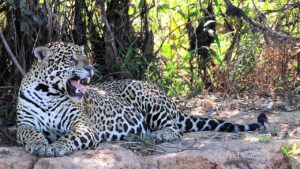
Highlights of the Pantanal include:
- Jaguars: The Pantanal is one of the best places in the world to see these elusive predators. Guided safaris increase the chances of spotting a jaguar along riverbanks.
- Birdwatching: Over 650 bird species call the Pantanal home, including the iconic hyacinth macaw, jabiru storks, and herons.
- Aquatic Wildlife: Caimans, giant otters, and capybaras are commonly seen along the rivers and wetlands.
- Other Wildlife: Marsh deer, tapirs, ocelots, and giant anteaters inhabit the grasslands and forest edges.
Best Activities in the Pantanal
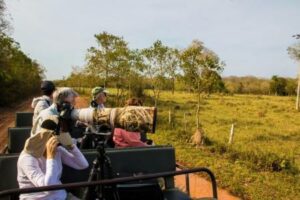
- Wildlife Safaris: Guided 4×4 tours are ideal for exploring the vast wetlands and spotting jaguars, giant river otters, and other animals.
- Boat Tours: Canoe or motorboat trips allow close encounters with aquatic wildlife and bird colonies.
- Horseback Riding: Explore remote parts of the Pantanal while riding through open grasslands and along riverbanks.
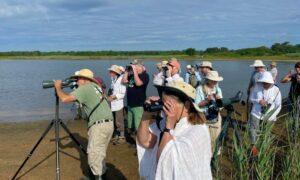
- Birdwatching Expeditions: Dedicated tours with local guides ensure sightings of rare and colorful birds.
- Photography Tours: Sunrise and sunset offer perfect lighting for capturing dramatic wildlife and wetland landscapes.
Best Time to Visit
- Dry Season (May–September): Ideal for wildlife spotting as animals gather near water.
- Wet Season (October–April): Flooded areas create beautiful scenery, but wildlife is harder to locate.
Where to Stay
- Lodges and Pousadas: Many eco-lodges provide all-inclusive packages with meals, guided tours, and comfortable accommodations.
- Luxury Safari Camps: Offer upscale amenities, private guides, and wildlife-focused excursions.
- Budget-Friendly Options: Smaller pousadas and guesthouses are available in nearby towns such as Cuiabá or Poconé.
Safari Essentials – What to Bring
Clothing & Gear:
- Lightweight, breathable clothing

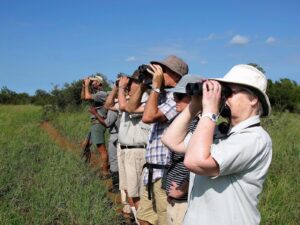
Safari-goers use binoculars to spot wildlife during a South American adventure. - Long-sleeve shirts and pants (protection against insects and sun)
- Waterproof jacket for river excursions
- Sturdy hiking boots and quick-dry socks
- Wide-brimmed hat and polarized sunglasses
Wildlife & Adventure Equipment:
- Binoculars for spotting distant animals
- Camera with telephoto lens
- Insect repellent and sunscreen
- Reusable water bottle
Health & Safety:
- Personal first-aid kit
- Prescription medications
- Travel insurance covering adventure activities
- Water purification tablets
Suggested Photos / Alt Text
- Jaguar walking along a riverbank – Alt: “Jaguar prowling along the Pantanal wetlands in Brazil.”
- Capybaras near a water pool – Alt: “Capybaras resting near a pond in Brazil’s Pantanal wetlands.”
- Birdwatching in the wetlands – Alt: “Hyacinth macaws perched in a tree in the Pantanal.”
- Sunset over flooded grasslands – Alt: “Sunset reflecting over the Pantanal wetlands, Brazil.”
Closing Paragraph
A safari in the Pantanal is a journey into one of South America’s most extraordinary natural habitats. From
the elusive jaguar to playful capybaras and the kaleidoscope of birdlife, every day in the Pantanal offers new discoveries. Whether you’re a wildlife enthusiast, a birdwatcher, or a photographer, this vast wetland promises unforgettable adventures and memories that will last a lifetime. Proper preparation, the right gear, and guidance from experienced local guides ensure your Pantanal safari is both safe and spectacular.
 Disclosure
As an Amazon Associate, I earn from qualifying purchases. This website also contains other affiliate links,
and we may earn a small commission if you make a purchase through them — at no extra cost to you. We only recommend products and services we trust and believe will enhance your outdoor adventures. Thank you for supporting our work!  50 Must Have Water Adventure Items
50 Best Drone Gear & Accessories
Drone Use: Know Before You Fly
Drone regulations vary widely depending on the location. Some parks, natural areas, and landmarks prohibit drones to protect wildlife, visitors, and sensitive environments, while others may allow them with certain restrictions or permits. Always check local, state, and federal rules before flying, respect no-fly zones, and prioritize safety, privacy, and environmental care during your adventure.  Visit the Ultimate Outdoor Adventure Mega Hub
Leave a Reply