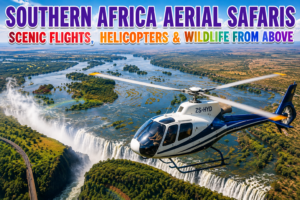
Southern Africa is famous for wildlife-rich game reserves, enormous river systems, dramatic deserts, wetlands, waterfalls, and landscapes that seem to stretch forever.
Thank you for reading this post, don't forget to subscribe!Most safari travelers experience these destinations from the ground. But seeing Southern Africa from the air provides an entirely different perspective.
Aerial safaris can reveal winding rivers cutting through wilderness, elephants moving across floodplains, herds gathering near waterholes, enormous waterfalls disappearing into mist, desert dunes reaching toward the horizon, and remote landscapes that are difficult to appreciate from a vehicle.
From helicopter flights over Victoria Falls to small-aircraft journeys across Botswana’s Okavango Delta, aerial adventures can become one of the most memorable parts of a Southern Africa safari.
This guide explores scenic flights, helicopter adventures, aerial wildlife viewing, photography opportunities, destinations, planning considerations, and ways to combine an aerial safari with traditional wildlife experiences.
🎥 Watch Southern Africa Aerial Safaris
Experience Southern Africa from above with scenic flights, helicopter adventures, spectacular waterfalls, rivers, wildlife and vast African landscapes.
▶️ Watch the Video:
👉 Southern Africa Aerial Safaris
🌍 Why Experience Southern Africa from Above?
Southern Africa contains landscapes that are almost designed to be seen from the sky.
From ground level, travelers might see one section of a river, a herd of elephants, or a distant mountain range. From above, those individual features become part of a much larger landscape.
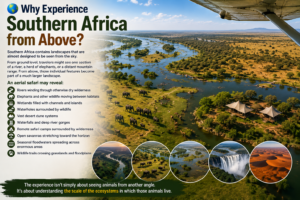
An aerial safari may reveal:
- Rivers winding through otherwise dry wilderness
- Elephants and other wildlife moving between habitats
- Wetlands filled with channels and islands
- Waterholes surrounded by wildlife
- Vast desert dune systems
- Waterfalls and deep river gorges
- Remote safari camps surrounded by wilderness
- Open savannas stretching toward the horizon
- Seasonal floodwaters spreading across enormous areas
- Wildlife trails crossing grasslands and floodplains
The experience isn’t simply about seeing animals from another angle. It’s about understanding the scale of the ecosystems in which those animals live.
🐘 Wildlife from Above
Wildlife viewing from an aircraft is very different from watching animals during a traditional game drive.
Individual animals can sometimes be difficult to spot, but larger wildlife and groups can stand out against open landscapes.
Depending on the destination and season, aerial travelers may potentially see:

- Elephants
- Buffalo
- Giraffes
- Zebras
- Antelope
- Hippos
- Crocodiles
- Wildebeest
- Large bird colonies
- Herds gathering near rivers and waterholes
Elephants can be particularly impressive from above.
Aerial views can sometimes reveal family groups walking between feeding areas, crossing open terrain, or gathering along rivers and wetlands.
Giraffes offer another unusual perspective. Their height is less obvious from the air, but their shapes and shadows can make them distinctive against open savanna.
The goal of an aerial safari should not necessarily be getting close to individual animals. The broader landscape and wildlife patterns are often the real attraction.
🛩️ Scenic Flights Across Southern Africa
Small aircraft play an important role in Southern African safari travel.
Many remote camps and wilderness areas are far from major roads. Travelers may fly between destinations rather than spending many hours driving.
These transfers can become adventures themselves.
Instead of simply traveling from one lodge to another, passengers may look down over rivers, wetlands, savannas, mountains, deserts, and wildlife habitat.
Some flights are specifically designed as sightseeing experiences, while others are transfers that happen to provide spectacular scenery.
Either way, having a window seat and a camera ready can transform transportation into another part of the safari.
🚁 Helicopter Safaris – A Different Kind of Adventure
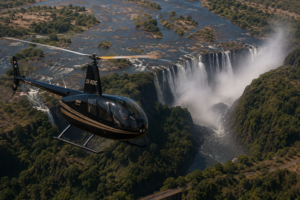
Helicopters offer advantages that traditional fixed-wing aircraft cannot always provide.
They can fly at different elevations, maneuver around scenic landmarks, and provide excellent views of landscapes that are difficult to appreciate from the ground.
Popular helicopter experiences can include:
- Waterfall sightseeing
- River and gorge flights
- Wetland exploration
- Desert landscapes
- Wildlife habitat viewing
- Photography flights
- Remote wilderness excursions
For photographers, helicopters can provide particularly interesting opportunities because routes may offer changing angles over a relatively short period.
Exact routes, operating rules, flight heights, and wildlife-viewing practices vary by destination and operator.
🌊 Victoria Falls from the Air
Few natural attractions demonstrate the value of an aerial perspective better than Victoria Falls.
Located along the Zambezi River between Zambia and Zimbabwe, the waterfall is enormous, yet ground-level viewpoints reveal only portions of the overall formation at a time.
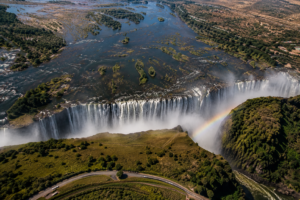
From above, travelers can appreciate how the Zambezi spreads across the landscape before reaching the falls.
Then suddenly the river plunges into a narrow gorge.
An aerial flight may reveal:
- The broad upper Zambezi
- Islands immediately upstream
- The waterfall’s long curtain of water
- Clouds of rising mist
- Deep gorges below the falls
- The zigzagging Zambezi downstream
- Surrounding woodland and river habitat
During periods of substantial water flow, the rising mist can become a major part of the scene.
The contrast between the broad river above the falls and the narrow gorge below is one of the most striking features visible from the air.
For travelers already including Victoria Falls in a Southern Africa itinerary, a scenic flight can provide a completely different perspective from walking the viewpoints.
🌿 Botswana’s Okavango Delta from
Above
The Okavango Delta is one of Southern Africa’s great aerial landscapes.
From the ground or from a traditional mokoro excursion, travelers experience individual channels, islands, wetlands, and wildlife areas.
From the air, the entire structure begins to make sense.

Aerial views can reveal an enormous network of:
- Water channels
- Lagoons
- Floodplains
- Islands
- Grasslands
- Wildlife trails
- Seasonal wetlands
The contrast between water and surrounding dry landscapes can be remarkable.
Depending on conditions, travelers may also spot elephants, buffalo, hippos, antelope, giraffes, and other wildlife.
Small-aircraft transfers are common between remote safari camps, meaning travelers can experience spectacular aerial scenery even when their primary purpose is transportation.
A dedicated scenic flight can provide additional opportunities for photography and wildlife observation.
🐘 Chobe and the Chobe River from Above
Northern Botswana’s Chobe region is famous for elephants and river-based wildlife viewing.
From above, travelers can see how important the river is to the surrounding ecosystem.
The landscape can reveal channels, floodplains, islands, grasslands, and wildlife corridors extending away from the water.
During suitable conditions, elephants and other animals may be visible near the river.
This creates an excellent combination:
Aerial safari → ground game drive → river safari.
Each experience reveals a different layer of the same ecosystem.
🏜️ Namibia – Flying Over Desert Landscapes
Namibia offers a completely different aerial experience.
Instead of wetlands and lush river systems, much of the attraction comes from the scale and patterns of its desert landscapes.
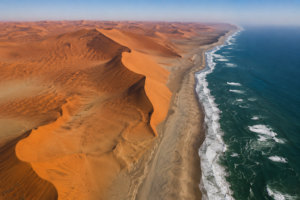
From the air, travelers may see enormous dunes, dry riverbeds, Rocky Mountains, salt pans, isolated vegetation, and long stretches of Atlantic coastline.
Sossusvlei and the Namib Desert
The dunes around Sossusvlei are spectacular from ground level, but the air reveals their extraordinary patterns.
Light and shadow can create dramatic shapes across the dunes, particularly when the sun is relatively low.
From above, travelers can appreciate how individual dunes connect into an enormous desert system.
Skeleton Coast
Namibia’s Skeleton Coast offers another striking contrast.
Desert meets ocean along an extremely remote coastline.
Aerial views may reveal beaches, dunes, fog, rocky areas, dry river systems, and enormous stretches of largely undeveloped coastline.
For landscape photography, Namibia can be one of the strongest aerial destinations in Southern Africa.
🦓 Aerial Safari Views Over South Africa
South Africa provides numerous opportunities to combine scenic flying with traditional safari experiences.
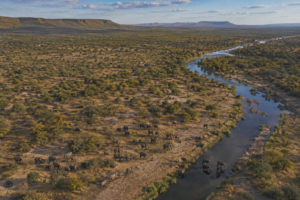
The country’s landscapes range from wildlife reserves and river valleys to mountains, coastlines, and open savannas.
Areas around major wildlife regions can provide views of:
- Bushveld
- Rivers
- Waterholes
- Wildlife habitat
- Mountain escarpments
- Agricultural landscapes
- Remote wilderness
The Greater Kruger region is especially interesting because travelers can combine traditional game drives with scenic aerial transportation between safari destinations.
Flights also demonstrate just how large Southern Africa’s protected landscapes can be.
🇿🇼 Zimbabwe From Above
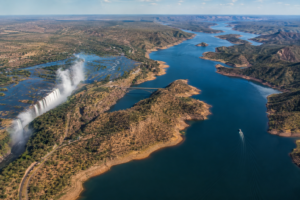
Zimbabwe combines major wildlife areas with spectacular river landscapes.
The Zambezi dominates many aerial experiences in the country’s north.
Travelers may encounter scenic flights around:
- Victoria Falls
- Zambezi River
- Lake Kariba
- Mana Pools region
- Wilderness areas and wildlife reserves
Lake Kariba can be especially impressive from above because of its immense scale and irregular shoreline.
Meanwhile, aerial views near Mana Pools can reveal floodplains and channels associated with the Zambezi ecosystem.
🇿🇲 Zambia and the Zambezi Landscape
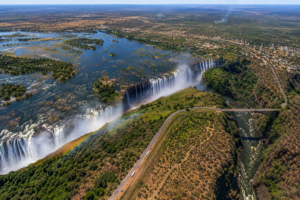
Although this series focuses strongly on Southern Africa destinations including South Africa, Botswana, Namibia, and Zimbabwe, Zambia naturally enters the aerial story because it shares Victoria Falls and the Zambezi River with Zimbabwe.
Aerial experiences around Livingstone can provide spectacular views of Victoria Falls and the surrounding river landscape.
This also creates opportunities to combine flights with:
- River adventures
- Wildlife safaris
- Victoria Falls sightseeing
- Zambezi cruises
- Photography
- Ground excursions
It makes the Victoria Falls region particularly suitable for travelers who want several adventure styles in one destination.
📸 Aerial Safari Photography
Aerial photography presents completely different challenges from ground photography.
You may be moving quickly, shooting through a window, dealing with reflections, or photographing wildlife from considerable distance.
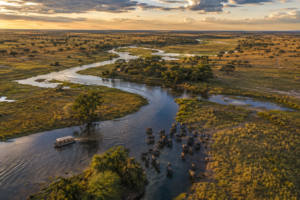
Instead of concentrating exclusively on close-up animal portraits, consider capturing the relationship between wildlife and landscape.
Interesting subjects include:
- Elephant herds beside rivers
- Wildlife trails through wetlands
- Boats surrounded by enormous waterways
- Waterfalls and mist
- River bends
- Delta channels
- Desert patterns
- Dune shadows
- Wildlife around waterholes
- Floodplain patterns
- Remote safari camps
- Sunrise and sunset landscapes
Wide environmental photographs can sometimes tell the aerial safari story better than tightly cropped wildlife images.
📷 Camera Gear for an Aerial Safari
Useful photography equipment may include:

- Camera with fast autofocus
- Wide-angle lens for landscapes
- Telephoto lens for wildlife
- Extra batteries
- High-capacity memory cards
- Lens cleaning cloth
- Protective camera bag
- Smartphone for quick photographs and video
- Action camera where permitted
Try to avoid carrying unnecessary equipment into a small aircraft.
Space and weight can be limited, particularly on bush flights.
Operators may impose strict baggage restrictions, so travelers should always check requirements before packing.
👕 What to Wear on an Aerial Safari
Comfort matters more than complicated safari clothing during most flights.
Consider:
- Lightweight breathable clothing
- Comfortable shoes
- Sunglasses
- Hat for before and after the flight
- Light jacket or layer
- Sun protection
Temperatures can vary considerably between early morning, midday, and evening.
If the aerial excursion is part of a larger game drive or wilderness activity, dress for the entire day’s conditions rather than only the flight.
🌅 Sunrise or Sunset Aerial Safaris
Early morning and late afternoon can create spectacular aerial scenery.
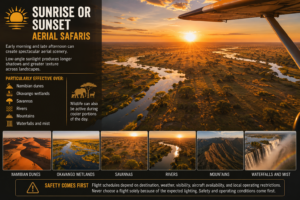
Low-angle sunlight produces longer shadows and greater texture across landscapes.
This can be particularly effective over:
- Namibian dunes
- Okavango wetlands
- Savannas
- Rivers
- Mountains
- Waterfalls and mist
Wildlife can also be active during cooler portions of the day.
However, flight schedules depend on destination, weather, visibility, aircraft availability, and local operating restrictions.
Never choose a flight solely because of the expected lighting. Safety and operating conditions come first.
🌦️ Weather and Flight Conditions
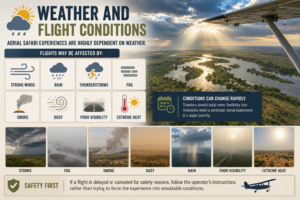
Aerial safari experiences are highly dependent on weather.
Flights may be affected by:
- Strong winds
- Rain
- Thunderstorms
- Fog
- Smoke
- Dust
- Poor visibility
- Extreme heat
Conditions can change rapidly.
Travelers should build some flexibility into itineraries when a particular aerial experience is a major priority.
If a flight is delayed or canceled for safety reasons, follow the operator’s instructions rather than trying to force the experience into unsuitable conditions.
🛡️ Aerial Safari Safety
Reputable aviation operators should always be the priority.
Before booking, travelers should consider:

- Operator experience
- Aircraft type
- Passenger limits
- Baggage restrictions
- Safety briefings
- Weather policies
- Cancellation procedures
- Photography rules
- Wildlife disturbance practices
Follow all pilot and crew instructions.
Keep seat belts fastened whenever required, secure loose equipment, and never attempt to move around an aircraft unless specifically permitted.
For helicopters, stay within designated passenger areas and follow instructions carefully when approaching or leaving the aircraft.
🐾 Responsible Wildlife Viewing From the Air
Wildlife should never be unnecessarily disturbed for the sake of photographs.
Aircraft operators should respect local regulations regarding altitude, protected areas, wildlife, and sensitive habitats.
Travelers should not pressure pilots to fly dangerously low or approach animals too closely.
The best aerial wildlife experiences show animals behaving naturally within their environment.
That is also what makes aerial safaris so interesting—the objective is not simply getting closer, but seeing the entire ecosystem.
🚙 Combine Aerial and Ground Safaris
An aerial safari becomes even more rewarding when combined with traditional wildlife viewing.
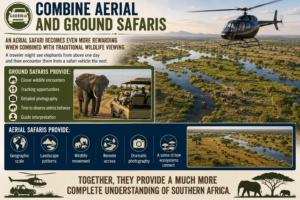
A traveler might see elephants from above one day and then encounter them from a safari vehicle the next.
Ground safaris provide:
- Closer wildlife encounters
- Tracking opportunities
- Detailed photography
- Time to observe animal behavior
- Guide interpretation
Aerial safaris provide:
- Geographic scale
- Landscape patterns
- Wildlife movement
- Remote access
- Dramatic photography
- A sense of how ecosystems connect
Together, they provide a much more complete understanding of Southern Africa.
🚤 Combine Aerial and River Safaris
This combination works particularly well in Botswana, Zimbabwe, and the greater Zambezi region.
From the air, travelers see the shape of the river or wetland system.
From a boat, they experience that same environment at water level.
A Southern Africa adventure could combine:
Scenic flight → game drive → river safari → safari camp.
That provides four very different ways of experiencing one region without making the trip feel repetitive.
🏕️ Safari Camps and Fly-In Adventures
Some of Southern Africa’s most remote safari camps are reached by small aircraft.
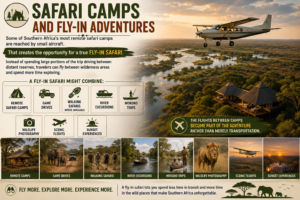
That creates the opportunity for a true fly-in safari.
Instead of spending large portions of the trip driving between distant reserves, travelers can fly between wilderness areas and spend more time exploring.
A fly-in safari might combine:
- Remote safari camps
- Game drives
- Walking safaris where available
- River excursions
- Mokoro trips
- Wildlife photography
- Scenic flights
- Sunset experiences
The flights between camps become part of the adventure rather than merely transportation.
🗺️ Sample 10-Day Southern Africa Aerial Safari Adventure
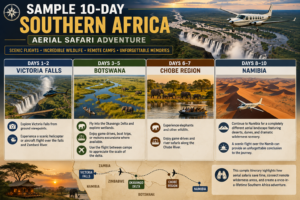
Days 1–2 – Victoria Falls
Explore Victoria Falls from ground viewpoints and experience a scenic helicopter or aircraft flight over the falls and Zambezi River.
Days 3–5 – Botswana
Fly into the Okavango Delta and explore wetlands through game drives, boat trips, or mokoro excursions where available.
Use the flight between camps to appreciate the scale of the delta.
Days 6–7 – Chobe Region
Experience elephants and other wildlife through game drives and river safaris.
Days 8–10 – Namibia
Continue to Namibia for a completely different aerial landscape featuring deserts, dunes, and dramatic wilderness scenery.
A scenic flight over the Namib can provide an unforgettable conclusion to the journey.
🎒 Useful Gear for Southern Africa Aerial Safaris
A few carefully selected items can make aerial adventures more comfortable.
Consider bringing:
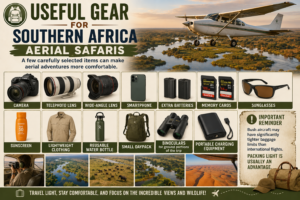
- Camera
- Telephoto lens
- Wide-angle lens
- Smartphone
- Extra batteries
- Memory cards
- Sunglasses
- Sunscreen
- Lightweight clothing
- Reusable water bottle
- Small daypack
- Binoculars for ground portions of the trip
- Portable charging equipment
Remember that bush aircraft may have significantly tighter baggage limits than international flights.
Packing light is usually an advantage.
🏨 Where to Stay for an Aerial Safari
Aerial adventures can be combined with many types of accommodations.
Options include:
Botswana
Remote Okavango safari camps, Chobe lodges, and wilderness accommodations.
Zimbabwe
Victoria Falls hotels and lodges, Zambezi-area safari camps, and accommodations near major wildlife destinations.
Namibia
Desert lodges, Sossusvlei accommodations, coastal stays, and remote wilderness camps.
South Africa
Greater Kruger safari lodges, private reserve accommodations, and wilderness camps.
Choosing accommodations close to airstrips or flight departure locations can simplify logistics.
🌍 Why Southern Africa Is Perfect for Aerial Adventures
Southern Africa offers an extraordinary concentration of landscapes that look dramatically different from the sky.
Within one larger trip, travelers can potentially fly over:
Waterfalls → rivers → wetlands → savannas → wildlife herds → deserts → dunes → mountains → remote safari camps.
Few safari experiences demonstrate the scale of Africa’s landscapes quite like seeing them from above.
A game drive lets you enter the wilderness.
A river safari lets you move through it.
An aerial safari lets you see how everything connects.
🌅 Final Thoughts – Southern Africa from a New Perspective
Southern Africa is spectacular from ground level, but the air reveals something completely different.
The channels of the Okavango Delta become an enormous natural pattern.
Victoria Falls becomes part of the much larger Zambezi River system.
Namibia’s dunes become waves stretching toward the horizon.
Wildlife becomes part of a vast landscape rather than an isolated encounter.
For travelers already planning game drives, river safaris, wildlife photography, and safari camps, adding a scenic flight or helicopter experience can bring another dimension to the journey.
Whether you’re watching elephants cross a floodplain, following the curves of an African river, flying above Victoria Falls, or looking across the Namib Desert, Southern Africa from above can be one of the most memorable perspectives of the entire safari.
🌍 Explore More Southern Africa Safari Adventures
Continue your Southern Africa adventure with:
🚤 Southern Africa River Safaris – Wildlife, Boat Adventures & Scenic Waterways
Explore rivers, wetlands, wildlife, waterfalls, and boat safari experiences throughout Southern Africa.
🚙 Southern Africa Ground Safaris – Game Drives, Wildlife & Wilderness Adventures
Experience Southern Africa from the ground through traditional game drives, wildlife encounters, national parks, and remote wilderness.
🏕️ Africa Camper Safaris – Road Trips, Wildlife & Camping Adventures
Combine road travel, safari destinations, camping, wildlife viewing, and outdoor adventure while exploring Africa.
🌍 Explore the Southern Africa Safari Hub
Discover more adventures throughout South Africa, Botswana, Namibia, Zimbabwe, and the surrounding region.
Leave a Reply