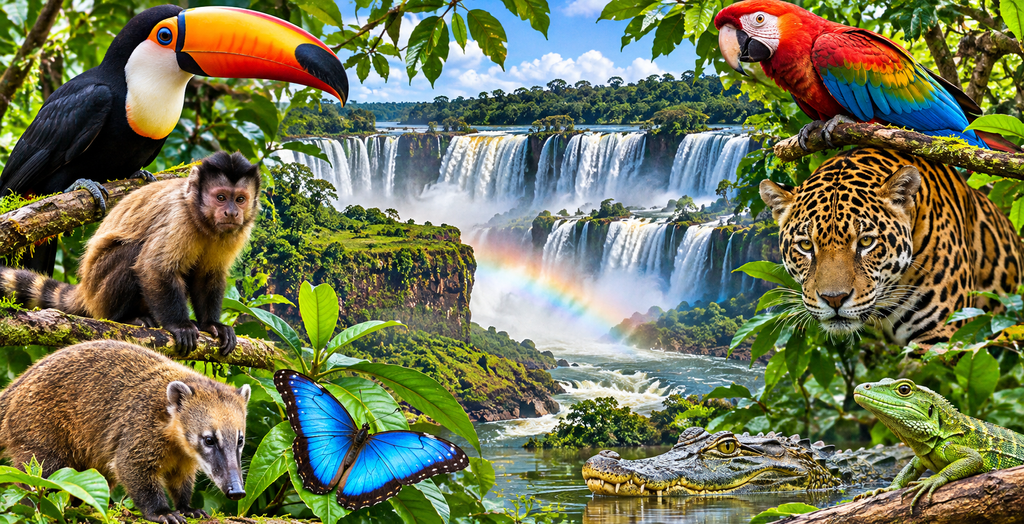
Imagine watching colorful toucans perched high above magnificent waterfalls, observing monkeys moving through the rainforest canopy, discovering beautiful butterflies along jungle pathways, and photographing fascinating wildlife surrounded by lush tropical vegetation.
Thank you for reading this post, don't forget to subscribe!Iguazú Falls is much more than one of the world’s greatest natural wonders. The surrounding Atlantic Rainforest is an extraordinary wildlife sanctuary stretching across the protected landscapes of Argentina and Brazil.
From colorful tropical birds and curious coatis to elusive jaguars, fascinating reptiles, and delicate butterflies, Iguazú offers unforgettable experiences for nature lovers, birdwatchers, wildlife photographers, and outdoor adventurers.
🌿 Discover the Extraordinary Atlantic Rainforest
The Upper Paraná Atlantic Rainforest surrounding Iguazú Falls is one of South America’s most biologically diverse environments.
Towering trees, dense vegetation, freshwater rivers, rocky cliffs, hidden streams, and mist-covered waterfall surroundings create numerous habitats for native wildlife.
Argentina’s National Parks Administration reports that approximately 450 bird species have been recorded within Iguazú National Park.
The surrounding protected forests also provide habitats for numerous mammals, reptiles, amphibians, butterflies, and other insects.
Visitors can experience this remarkable biodiversity through guided wildlife excursions, national park walking trails, rainforest accommodations, and responsible outdoor adventures.
🦜 Toucans & Colorful Tropical Birds of Iguazú
Iguazú is an exceptional destination for birdwatching, offering opportunities to discover colorful rainforest birds in their natural surroundings.
Toco Toucan
Recognizable by its enormous orange bill, contrasting black and white feathers, and distinctive appearance, the toco toucan is one of the region’s most iconic birds.
Watch for toucans resting in tall trees or searching for fruit throughout the forest canopy.
Red-Breasted Toucan
This beautiful toucan features a colorful bill and distinctive plumage, making it another fascinating subject for wildlife photographers.
Parrots & Parakeets
Various species of parrots and parakeets inhabit the surrounding forests. Listen for their distinctive calls as they travel between trees or gather in feeding areas.
Hummingbirds
These tiny, energetic birds can be observed around flowering plants, gardens, and forest environments.
Their rapid movements and brilliant feathers make them particularly rewarding subjects for patient photographers.
Plush-Crested Jay
With its striking blue, black, and pale-yellow plumage, the plush-crested jay is among the region’s recognizable forest birds.
Woodpeckers
Listen for the distinctive tapping sounds of woodpeckers searching tree trunks and branches for insects.
🐦 Great Dusky Swifts — The Remarkable Birds of Iguazú Falls
One of the most fascinating wildlife experiences at Iguazú is watching great dusky swifts flying through the mist surrounding the waterfalls.
These remarkable birds are closely associated with the waterfall environment and use sheltered areas behind cascades for resting and nesting.
Their aerial movements against the dramatic backdrop of falling water create extraordinary photographic opportunities.
The great dusky swift is also the emblematic bird of Argentina’s Iguazú National Park.
🦅 Eagles, Forest Birds & Riverside Wildlife
Beyond the colorful toucans and parrots, Iguazú supports a fascinating variety of other birds.
Species found throughout the wider region include:
- Black vultures
- Kingfishers
- Anhingas
- Herons
- Solitary tinamous
- Forest hawks
- Trogons
- Tanagers
- Aracaris
- Harpy eagles
Some birds are relatively easy to observe, while others inhabit remote forest environments and are rarely encountered by visitors.
The magnificent harpy eagle is especially elusive and should not be considered a likely sighting during a standard waterfall excursion.
🐒 Monkeys of the Iguazú Rainforest
The forest canopy surrounding Iguazú Falls provides shelter, food, and natural pathways for native monkeys.
Black Capuchin Monkeys
Capuchin monkeys are intelligent, agile primates that spend much of their time exploring trees, searching for food, and interacting with other members of their groups.
Visitors may encounter them near forest trails or observe them moving through the canopy.
Brown Howler Monkeys
Howler monkeys are known for their powerful calls, which can travel considerable distances through dense forest.
Although hearing their distinctive calls can be a memorable rainforest experience, sightings are less predictable than encounters with capuchin monkeys.
Always observe monkeys from a respectful distance and never offer them food.
🦝 South American Coatis — Iguazú’s Curious Forest Residents
South American coatis are among the most recognizable mammals encountered around Iguazú Falls.
With their elongated noses, striped tails, and inquisitive behavior, these fascinating animals often search the forest floor for fruit, insects, and other food.
Photographers may encounter coatis exploring:
- Forest pathways
- Fallen logs
- Areas surrounding elevated walkways
- Forest edges
- Vegetation near visitor facilities
Although coatis may appear comfortable around people, they remain wild animals capable of biting and scratching.
Never feed, touch, chase, or attempt to take close-up selfies with coatis. Keep food safely stored and follow park regulations.
🐆 Jaguars, Ocelots & Elusive Rainforest Mammals
The protected Atlantic Rainforest provides essential habitats for some of South America’s most remarkable mammals.
Jaguar
The jaguar is the largest wild cat in the Americas and an important predator within the rainforest ecosystem.
Its beautiful spotted coat and powerful appearance make it an iconic symbol of South American wildlife conservation.
Jaguars are exceptionally difficult to observe during ordinary tourist visits.
Ocelot
This beautiful spotted wild cat generally inhabits sheltered forest environments and is most active during darker hours.
Puma
Pumas also inhabit the wider protected region but usually avoid heavily visited tourist areas.
Margay
The margay is a remarkable forest cat with excellent climbing abilities, allowing it to move through branches and dense vegetation.
Many of these elusive predators are documented through conservation monitoring and scientific camera traps rather than regular tourist sightings.
🐾 Tapirs, Agoutis & Other Native Mammals
The Iguazú rainforest supports numerous other mammals that contribute to the health of the forest ecosystem.
These include:
- South American tapirs — Large forest mammals that help disperse seeds.
- Agoutis — Ground-dwelling rodents often searching for fallen fruit and seeds.
- Peccaries — Social forest mammals related to pigs.
- Armadillos — Distinctive mammals protected by natural armored plates.
- Anteaters — Specialized animals that feed primarily on ants and termites.
- Brocket deer — Shy forest-dwelling deer.
- Forest squirrels — Agile mammals moving between branches and tree trunks.
- Neotropical river otters — Elusive mammals associated with freshwater environments.
Exploring quietly with an experienced guide can improve opportunities to discover some of the region’s less conspicuous wildlife.
🐊 Reptiles of Iguazú Falls & the Atlantic Rainforest
The warm, humid forest and surrounding waterways provide suitable habitats for numerous reptiles.
Broad-Snouted Caimans
These freshwater reptiles inhabit suitable rivers, wetlands, and sheltered aquatic environments.
They may occasionally be observed resting near vegetation or partially submerged in calm water.
Black-and-White Tegu Lizards
These impressive lizards can sometimes be observed moving through forest environments or resting in sunny areas.
Freshwater Turtles
Look for freshwater turtles in suitable calm-water habitats, where they may rest on exposed logs or along riverbanks.
Rainforest Snakes
The wider Iguazú region supports numerous snake species, including:
- Jararaca pit vipers
- Coral snakes
- Various nonvenomous forest snakes
Most snakes avoid human activity. Never attempt to approach, catch, or handle a snake during rainforest excursions.
Remain on designated pathways and follow local wildlife safety recommendations.
🐸 Tree Frogs & Rainforest Amphibians
The humid Atlantic Rainforest provides excellent habitats for amphibians.
Tree frogs, toads, and other native amphibians inhabit vegetation, freshwater streams, damp forest floors, and sheltered environments.
Many amphibians are particularly active after rainfall or during nighttime hours.
Their distinctive calls contribute to the extraordinary sounds of the rainforest.
Guided nighttime nature excursions may provide opportunities to observe these fascinating creatures without disturbing their sensitive habitats.
🦋 Butterflies & Colorful Rainforest Insects
Butterflies are among the most delightful wildlife encounters at Iguazú Falls.
Visitors may discover colorful butterflies gathering along damp pathways, resting on tropical flowers, or moving through sunlit openings in the forest.
Beautiful Rainforest Butterflies
- Blue morpho butterflies
- Swallowtail butterflies
- Julia butterflies
- Various colorful forest butterfly species
Other fascinating insects include dragonflies, beetles, ants, and numerous species of moths.
Macro photography offers a wonderful way to capture the remarkable patterns, colors, and details of these smaller rainforest residents.
Never collect butterflies or remove insects from protected natural environments.
🐟 Freshwater Wildlife & River Ecosystems
The Iguazú and Paraná river systems contribute to the remarkable biodiversity of the surrounding region.
Freshwater habitats support fish, aquatic reptiles, amphibians, insects, and numerous water-associated birds.
Visitors can appreciate these environments through authorized scenic river excursions, observation platforms, and guided nature tours.
Popular photography subjects include:
- Birds resting along riverbanks
- Fish in accessible clear-water areas
- Freshwater turtles
- River reflections and tropical vegetation
- Dragonflies and other aquatic insects
- Waterfall mist and surrounding ecosystems
Always respect restricted waterways and avoid unauthorized swimming.
🥾 Best Places for Wildlife Watching Around Iguazú Falls
Both the Argentine and Brazilian sides offer excellent opportunities to discover rainforest wildlife.
🇦🇷 Argentine Iguazú National Park
Upper Circuit
Elevated walkways provide opportunities to observe birds, butterflies, forest vegetation, and spectacular waterfall scenery.
Lower Circuit
Forest pathways and waterfall viewpoints offer different perspectives of the surrounding rainforest.
Macuco Trail
This approximately six-kilometer round-trip forest trail provides a more immersive rainforest walking experience when open.
Devil’s Throat
Watch for great dusky swifts flying around the immense cascades and rising waterfall mist.
🇧🇷 Brazilian Iguaçu National Park
The Brazilian side combines spectacular panoramic waterfall scenery with forest pathways and opportunities for birdwatching.
Additional authorized nature excursions can provide further opportunities to discover native vegetation and wildlife.
🌿 Private Rainforest Reserves & Eco-Lodges
Selected rainforest accommodations and private reserves offer guided nature walks, wildlife excursions, and birdwatching experiences.
Confirm trail conditions, access restrictions, and excursion availability before visiting.
🦜 Parque das Aves — Discover Atlantic Rainforest Bird Conservation
Located near the Brazilian entrance to Iguaçu National Park, Parque das Aves provides an additional opportunity to learn about Atlantic Rainforest birds and conservation.
Visitors can discover tropical bird species, educational exhibits, and forest-inspired environments.
This managed bird conservation facility offers a different experience from observing free-ranging wildlife within the national parks.
It can be particularly appealing for families, birdwatchers, and travelers interested in conservation education.
🌙 Nighttime Wildlife Watching & Jungle Expeditions
After sunset, the rainforest transforms into a fascinating environment filled with animal calls, rustling vegetation, and nocturnal activity.
Authorized guided nighttime excursions at participating reserves and accommodations may offer opportunities to observe:
- Tree frogs
- Nocturnal insects
- Owls
- Bats
- Forest spiders
- Night-active mammals
- Other nocturnal rainforest creatures
Nighttime wildlife adventures provide an entirely different perspective of the Atlantic Rainforest.
Always arrange these activities through reputable guides and avoid entering restricted national park areas after dark.
📸 Wildlife Photography & Birdwatching Adventures
Iguazú offers extraordinary opportunities for both professional wildlife photographers and casual nature enthusiasts.
The combination of tropical wildlife, powerful waterfalls, forest scenery, and natural lighting creates remarkable photographic subjects.
Popular Wildlife Photography Opportunities
- Toucans perched on tropical branches
- Monkeys moving through the forest canopy
- Coatis exploring forest pathways
- Butterflies resting on colorful flowers
- Great dusky swifts flying near waterfalls
- Hummingbirds feeding among flowering plants
- Reptiles resting in natural habitats
- Waterbirds along riverbanks
Helpful Photography Equipment
- Digital cameras
- Telephoto lenses
- Macro lenses
- Wildlife binoculars
- Lightweight tripods where permitted
- Waterproof camera covers
- Spare batteries
- Additional memory cards
- Protective camera backpacks
Avoid flash photography that disturbs wildlife, and never use food or recorded animal calls to attract animals.
🏕️ Rainforest Lodges & Wildlife Watching Accommodations
Staying at a rainforest lodge or nature-inspired accommodation can extend your wildlife experience beyond the national park.
Accommodation options throughout the region include:
- Luxury rainforest resorts
- Secluded jungle villas
- Eco-lodges
- Boutique forest hotels
- Countryside cabins
- Romantic glamping retreats
- Family-friendly nature accommodations
Depending on the property, visitors may enjoy outdoor terraces, landscaped gardens, guided birdwatching tours, private nature trails, and beautiful forest views.
Imagine enjoying breakfast while listening to tropical birds or relaxing on a forest-view terrace after an exciting day of wildlife photography.
Confirm available wildlife excursions and accommodation amenities before booking.
🍽️ Rainforest Dining & Relaxation
After a day exploring waterfalls and discovering tropical wildlife, unwind with the regional culinary traditions of Argentina and Brazil.
Popular dining experiences may include:
- Traditional Argentine barbecue
- Brazilian grilled specialties
- Fresh regional fish
- Tropical fruits
- Traditional empanadas
- Regional pastries
- Argentine wines
- Traditional mate beverages
Selected rainforest hotels and lodges offer outdoor dining areas, garden lounges, swimming pools, and relaxation spaces surrounded by beautiful tropical vegetation.
📅 Best Time to Visit Iguazú for Wildlife Watching
Iguazú is a year-round wildlife destination, although animal activity and viewing conditions vary throughout the seasons.
☀️ December–February — Summer
Warm temperatures and frequent rain create humid rainforest conditions with abundant insect and amphibian activity.
🍂 March–May — Autumn
Generally milder conditions can provide comfortable opportunities for wildlife photography, hiking, and guided forest excursions.
🌤️ June–August — Winter
Cooler temperatures create appealing conditions for extended rainforest walks and birdwatching.
Some reptiles and insects may be less active during cooler weather.
🌺 September–November — Spring
Warming temperatures and flowering vegetation create attractive conditions for discovering birds, butterflies, and other rainforest wildlife.
Best Times of Day
Early mornings and late afternoons can be particularly rewarding for birdwatching and mammal observation.
Warmer, sunny periods may offer opportunities to photograph butterflies and reptiles.
Wildlife sightings are never guaranteed, regardless of the season.
🗓️ Suggested Four-Day Iguazú Wildlife Adventure Itinerary
Day 1 — Arrival & Rainforest Birdwatching
- Check into your rainforest hotel or eco-lodge.
- Explore designated property trails and gardens.
- Observe tropical birds and butterflies.
- Enjoy a relaxing regional dinner.
Day 2 — Argentine Waterfalls & Wildlife Exploration
- Explore the available Upper and Lower Circuits.
- Watch for monkeys, coatis, and tropical birds.
- Visit Devil’s Throat.
- Photograph great dusky swifts and waterfall scenery.
- Explore the Macuco Trail if open and time permits.
Day 3 — Brazilian Waterfalls & Bird Conservation
- Cross into Brazil, allowing time for border formalities.
- Explore the Brazilian waterfall viewpoints.
- Photograph tropical scenery and native wildlife.
- Visit Parque das Aves.
- Enjoy regional Brazilian dining.
Day 4 — Guided Rainforest Wildlife Expedition
- Join an early morning guided birdwatching excursion.
- Explore a private rainforest reserve or designated nature trails.
- Photograph butterflies, plants, and forest wildlife.
- Relax at your accommodation.
- Consider an authorized nighttime wildlife excursion.
Travelers interested in specialized birdwatching and wildlife photography may prefer extending their vacation to five or seven days.
🎒 Essential Wildlife Watching & Rainforest Adventure Gear
Packing suitable equipment can make rainforest adventures more comfortable and rewarding.
Recommended essentials include:
- Wildlife binoculars
- Digital cameras and telephoto lenses
- Macro photography equipment
- Lightweight hiking backpacks
- Waterproof hiking footwear
- Breathable tropical clothing
- Lightweight rain jackets
- Insect repellent
- Sunscreen and protective hats
- Waterproof equipment bags
- Portable power banks
- Rechargeable headlamps
- Reusable water bottles
- Compact first-aid kits
- Wildlife and bird identification guides
Protect electronic equipment from waterfall spray, tropical rainfall, and high humidity.
🌱 Wildlife Conservation & Protecting the Atlantic Rainforest
The Atlantic Rainforest has experienced extensive habitat loss and fragmentation, making protected areas such as Iguazú and Iguaçu National Parks particularly important.
These protected forests help support threatened wildlife populations, preserve biodiversity, and maintain important ecological connections.
Visitors can contribute to responsible conservation by:
- Never feeding wild animals
- Remaining on designated pathways
- Avoiding unnecessary noise
- Supporting responsible local wildlife guides
- Reducing plastic waste
- Respecting protected habitats
- Avoiding souvenirs made from protected wildlife
- Supporting legitimate conservation initiatives
Responsible wildlife tourism allows visitors to appreciate nature while helping preserve these extraordinary environments.
⚠️ Wildlife Safety & Helpful Rainforest Travel Tips
- Maintain a respectful distance from all wildlife.
- Never touch monkeys, coatis, reptiles, or amphibians.
- Keep food securely stored.
- Avoid walking alone in unauthorized forest areas.
- Wear suitable footwear on wet pathways.
- Use insect repellent and protective clothing.
- Carry sufficient drinking water.
- Follow local guides and national park regulations.
- Check trail and weather conditions before departing.
- Consult a travel health professional about recommended vaccinations.
- Carry appropriate travel insurance.
If an animal approaches, remain calm, give it space, and follow park staff instructions.
🚗 Getting to Iguazú Falls & Wildlife Watching Destinations
Visitors can access the Iguazú region from both Argentina and Brazil.
🇦🇷 Puerto Iguazú, Argentina
Cataratas del Iguazú International Airport (IGR) provides access to Argentine waterfall trails, rainforest accommodations, and regional wildlife excursions.
🇧🇷 Foz do Iguaçu, Brazil
Foz do Iguaçu International Airport (IGU) provides access to Brazilian national park attractions, bird conservation facilities, hotels, and rainforest tours.
Transportation options include:
- Airport transfers
- Rental vehicles
- Public transportation
- Hotel-arranged transportation
- Guided wildlife tours
- Private rainforest excursions
Check international border requirements before planning activities in both countries.
🛎️ Book Your Iguazú Wildlife & Rainforest Vacation
Discover extraordinary wildlife, spectacular waterfalls, tropical rainforest trails, beautiful eco-lodges, and unforgettable nature-inspired vacation experiences.
Whether you’re planning a dedicated birdwatching expedition, a wildlife photography adventure, a romantic rainforest retreat, or a family nature vacation, Iguazú offers accommodation options for many travel preferences and budgets.
Affiliate disclosure: We may earn a commission from eligible bookings made through our affiliate links at no additional cost to you.
🏨 Explore Iguazú Falls Hotels, Eco-Lodges & Rainforest Resorts
🌿 Discover More Rainforest Accommodation Options
Best Places to Stay Near Iguazú Falls — Eco-Lodges, Glamping & Luxury Resorts
🗺️ Explore Iguazú Falls & Regional Wildlife Destinations
The Iguazú region offers numerous opportunities to discover Atlantic Rainforest wildlife across Argentina and Brazil.
Key wildlife and nature destinations include:
- Argentine Iguazú National Park
- Brazilian Iguaçu National Park
- Macuco Trail
- Devil’s Throat observation area
- Upper and Lower waterfall circuits
- Parque das Aves
- Puerto Iguazú
- Foz do Iguaçu
- Iguazú River
- Surrounding private rainforest reserves
Combining both sides of the waterfalls with guided rainforest excursions provides a greater variety of wildlife experiences.
📚 Additional Wildlife & Conservation Resources
Learn more about the native wildlife, biodiversity, and protected rainforest environments through these authoritative resources:
- Argentina National Parks — Iguazú Biodiversity
- Brazil’s ICMBio — Iguaçu National Park Biodiversity
- UNESCO World Heritage Centre — Iguazú National Park
🌎 Final Thoughts — Discover the Wild Side of Iguazú Falls
Beyond its magnificent waterfalls, Iguazú reveals an extraordinary world of tropical birds, curious monkeys, native mammals, fascinating reptiles, colorful butterflies, and remarkable rainforest landscapes.
Whether you’re photographing toucans, watching coatis explore the forest floor, discovering beautiful butterflies, or listening to the mysterious sounds of the jungle after sunset, every rainforest adventure offers something different.
Combine spectacular waterfall scenery with guided wildlife encounters, birdwatching expeditions, comfortable rainforest accommodations, and responsible outdoor exploration.
Discover the wild beauty of Iguazú Falls and experience one of South America’s most fascinating rainforest destinations.
Leave a Reply