
Angkor Wat, Cambodia: A Complete Traveler’s Guide to Ancient Temples, History & Adventure ✨
Discover Cambodia’s magnificent Khmer temples, breathtaking sunrise views, tropical landscapes, cultural treasures, and unforgettable adventures around Siem Reap.
Thank you for reading this post, don't forget to subscribe!Rising above the tropical landscape of northwestern Cambodia, Angkor Wat is one of the world’s most remarkable ancient monuments. Its magnificent stone towers, intricate carvings, enormous galleries, and peaceful reflecting pools tell the story of a powerful civilization that flourished centuries ago.
Built in the early 12th century during the reign of King Suryavarman II, Angkor Wat was originally dedicated to the Hindu god Vishnu. Over time, it became an important Buddhist religious site, a role it continues to hold today.
Today, travelers come from around the world to experience the beauty of Angkor Wat, explore the surrounding temples of the Khmer Empire, photograph spectacular sunrises, and discover Cambodia’s rich cultural heritage.
Whether you love ancient history, photography, outdoor adventures, or extraordinary travel destinations, Angkor Wat offers an unforgettable journey into Cambodia’s past.
🏛️ The Fascinating History of Angkor Wat and the Khmer Empire
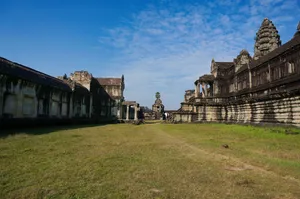
Angkor Wat was constructed during the height of the Khmer Empire, one of Southeast Asia’s most influential civilizations.
King Suryavarman II commissioned this extraordinary temple in the early 1100s, creating a monumental religious complex that demonstrated the empire’s architectural sophistication, artistic achievements, and spiritual traditions.
The temple’s five central towers symbolize Mount Meru, the sacred mountain considered the center of the universe in Hindu cosmology.
Its massive moat, symmetrical galleries, and elaborate stone carvings reflect the Khmer builders’ extraordinary engineering abilities.
What Makes Angkor Wat So Special?
- Ancient Khmer architecture: Magnificent sandstone towers, galleries, courtyards, and ceremonial passageways.
- Religious significance: A remarkable history connecting Hindu and Buddhist traditions.
- Detailed bas-reliefs: Stone carvings depicting mythology, royal processions, and historical events.
- UNESCO World Heritage recognition: Angkor became a UNESCO World Heritage Site in 1992.
- Living cultural heritage: Angkor Wat remains an important place of Buddhist worship and Cambodian national identity.
Exploring the temple offers more than an opportunity to admire ancient architecture. It provides a fascinating glimpse into the beliefs, achievements, and daily life of a civilization that shaped Southeast Asian history.
🌅 Sunrise at Angkor Wat — An Unforgettable Cambodian Experience
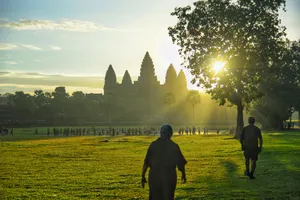
Watching the sunrise over Angkor Wat is one of the most celebrated experiences in Cambodia.
Before dawn, visitors gather near the temple’s reflecting pools, waiting for the first light to illuminate its famous towers.
As the sky changes from deep blue to soft orange and golden pink, the temple’s silhouette creates a breathtaking scene.
On calm mornings, the towers may reflect beautifully across the water, offering wonderful photography opportunities.
Tips for Enjoying the Sunrise
- Arrive early to find a suitable viewing location.
- Bring a flashlight for walking before sunrise.
- Carry drinking water and a light breakfast.
- Respect other visitors and avoid blocking narrow walkways.
- Allow time to explore the galleries after sunrise.
- Check current opening hours and access rules before visiting.
Photography tip: The reflecting pools near the western entrance are popular sunrise viewpoints, but beautiful photographs are also possible from quieter areas around the temple grounds.
🏯 Exploring the Magnificent Angkor Wat Temple Complex
Angkor Wat covers approximately 162 hectares, or 400 acres, within its outer enclosure.
Visitors can spend several hours discovering its monumental architecture, peaceful courtyards, impressive galleries, and extraordinary stone carvings.
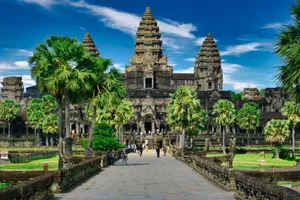
The Central Sanctuary and Famous Towers
The five towers of Angkor Wat form one of Cambodia’s most recognizable landmarks.
The central sanctuary rises above surrounding galleries and courtyards, symbolizing the sacred Mount Meru.
Where permitted, visitors can climb designated stairways to elevated temple areas for views across the complex.
Access to the upper sanctuary is controlled and may be restricted during religious observances, maintenance, or periods of high visitor demand.
Ancient Bas-Reliefs and Stone Carvings
The temple’s galleries contain remarkable carvings illustrating Hindu mythology, royal ceremonies, battles, and religious traditions.
Among the most famous are scenes from the Ramayana and Mahabharata, along with the Churning of the Ocean of Milk.
These carvings provide a fascinating introduction to Khmer artistic traditions and the religious beliefs that influenced the empire.
The Moat and Outer Galleries
Angkor Wat is surrounded by an enormous moat, creating a striking setting for the temple’s towers and stone causeways.
The surrounding grounds provide scenic opportunities for walking, photography, and appreciating the monument’s impressive scale.
🌳 Ta Prohm Temple — Ancient Ruins Beneath Giant Tree Roots
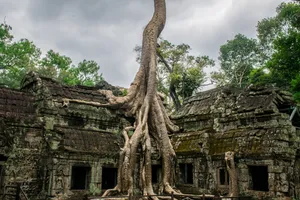
One of the most fascinating temples near Angkor Wat is Ta Prohm, famous for its dramatic relationship with the surrounding forest.
Massive tree roots twist around ancient stone walls, doorways, and courtyards, creating a remarkable landscape where nature and architecture meet.
Originally established during the reign of King Jayavarman VII, Ta Prohm was an important Buddhist monastery.
Today, visitors can explore designated walkways and admire the enormous roots that have become one of the temple’s defining features.
Highlights of Ta Prohm
- Ancient stone corridors surrounded by tropical vegetation.
- Towering trees growing among centuries-old ruins.
- Beautiful examples of Khmer stone architecture.
- Atmospheric photography opportunities.
- A fascinating combination of natural beauty and cultural heritage.
Travel tip: Visit early in the morning when possible, and stay on designated pathways to protect the fragile archaeological structures.
👑 Bayon Temple — The Mysterious Stone Faces of Angkor Thom
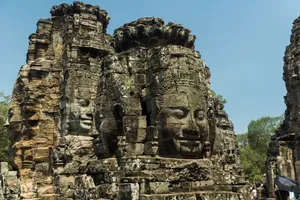
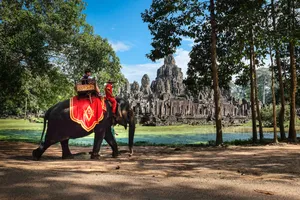
Located within the ancient city of Angkor Thom, Bayon Temple is another extraordinary landmark.
Bayon is particularly famous for its monumental stone faces carved into temple towers.
The serene expressions of these faces have fascinated historians, archaeologists, and travelers for generations.
Built during the reign of King Jayavarman VII, Bayon represents another important chapter in Khmer history.
Visitors can admire detailed carvings depicting historical events and scenes of everyday life in the ancient kingdom.
The surrounding Angkor Thom complex also includes impressive gateways, terraces, and other archaeological remains.
🐒 Wildlife and Tropical Nature Around Angkor
Although Angkor is best known for its temples, the surrounding landscape contains forests, wetlands, birds, and other wildlife.
Travelers exploring the archaeological park may discover interesting natural surroundings between temple visits.
Monkeys
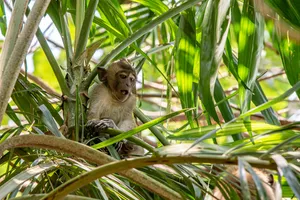
Macaques can sometimes be seen around parts of the Angkor temple area.
Although they may appear accustomed to people, they are wild animals and should never be fed or approached.
Keep food secured and avoid leaving bags unattended near monkeys.
Tropical Birds
The forests and gardens surrounding Angkor provide habitat for numerous bird species.
Visitors may observe birds around wooded pathways, ponds, and quieter temple areas.
Birdwatching opportunities can also be found in natural areas around Siem Reap.
Butterflies and Tropical Vegetation
Cambodia’s warm climate supports a variety of tropical plants, flowering vegetation, and butterflies.
During greener months, the landscape surrounding the temples becomes especially lush.
Responsible wildlife tip: Observe animals from a distance, avoid feeding wildlife, and help protect the natural environment by staying on established paths.
🚴 Outdoor Adventures and Scenic Experiences Near Siem Reap
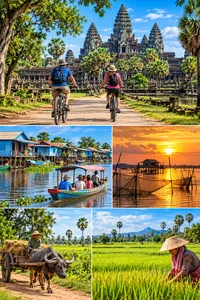
Angkor Wat is only one part of a much larger travel experience.
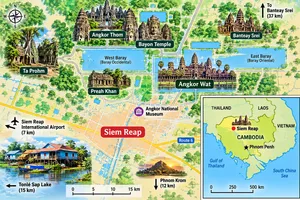
The nearby city of Siem Reap serves as the main gateway to the Angkor Archaeological Park and offers access to cultural attractions, countryside adventures, and scenic excursions.
Cycling Around Angkor
Cycling is a rewarding way to experience portions of the archaeological park.
Travelers can follow designated roads between temples, enjoy forest scenery, and explore at a relaxed pace.
Guided bicycle excursions may provide additional historical and cultural insights.
Tonlé Sap Lake
Tonlé Sap is Southeast Asia’s largest freshwater lake by surface area during much of the year, expanding dramatically during the wet season.
The lake and its surrounding wetlands support important fisheries, birdlife, and communities whose livelihoods are closely connected to the water.
Guided excursions may introduce visitors to the lake’s distinctive landscapes and local culture.
Choose responsible tour operators that respect communities and the natural environment.
Cambodian Countryside Experiences
Beyond the busy temple areas, the countryside surrounding Siem Reap features rice fields, villages, traditional agriculture, and peaceful rural scenery.
Guided countryside tours offer opportunities to learn more about local traditions and everyday life.
☀️ Best Time to Visit Angkor Wat, Cambodia
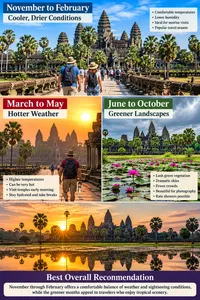
Cambodia has a tropical climate with distinct drier and wetter seasons.
Both offer different experiences for visitors.
November to February — Cooler, Drier Conditions
This is generally one of the most comfortable periods for exploring Angkor Wat.
Visitors can expect relatively lower humidity, more manageable daytime temperatures, and popular sunrise conditions.
It is also a busy travel season.
March to May — Hotter Weather
Temperatures can become particularly high during these months.
Early morning temple visits, frequent hydration, and rest breaks are especially important.
June to October — Greener Landscapes
The rainy season brings lush vegetation, dramatic skies, and beautiful green surroundings.
Rain showers may interrupt outdoor plans, but the landscape can be especially attractive for photography.
Some paths may become muddy or slippery.
Best overall recommendation: November through February offers a comfortable balance of weather and sightseeing conditions, while the greener months appeal to travelers who enjoy tropical scenery.
🎟️ Angkor Wat Tickets, Transportation & Travel Planning
Most international visitors exploring Angkor Wat and other major temples in the archaeological park need an Angkor Pass.
Common ticket options include one-day, three-day, and seven-day passes.
Ticket prices, validity rules, and access arrangements can change, so check the official Angkor Enterprise website before traveling.
Getting Around
Tuk-tuks: A popular and convenient option for traveling between temples.
Private drivers: Useful for visitors planning a full day of sightseeing or traveling with family.
Bicycles: Ideal for active travelers who enjoy exploring at a slower pace.
Guided tours: Helpful for understanding Khmer history, religious symbolism, and architectural details.
Important Visitor Etiquette
Angkor Wat remains a sacred religious destination.
Visitors should dress respectfully, covering shoulders and knees, and follow posted instructions around religious areas.
Avoid touching fragile carvings, climbing restricted structures, or entering closed archaeological areas.
🎒 What to Bring for an Angkor Wat Adventure
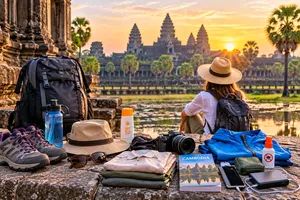
Preparing for Cambodia’s warm climate and extensive temple grounds can make your visit much more enjoyable.
- Comfortable walking shoes with reliable traction.
- Lightweight, breathable clothing that meets temple dress requirements.
- A sun hat, sunglasses, and sunscreen.
- A reusable water bottle and sufficient drinking water.
- A small backpack for daily essentials.
- Insect repellent.
- A smartphone or camera for photography.
- A portable charger.
- A lightweight rain jacket during wetter months.
- A guidebook or downloaded map of the archaeological park.
Travel tip: Start early, take regular breaks, and allow extra time for exploring the temple galleries and surrounding grounds.
🏨 Where to Stay Near Angkor Wat — Siem Reap Hotels & Unique Retreats
Siem Reap is the most convenient base for exploring Angkor Wat and the surrounding archaeological park.
The city offers accommodation ranging from budget-friendly guesthouses to boutique hotels, luxury resorts, and peaceful garden retreats.

Boutique Hotels in Siem Reap
Boutique hotels can provide a comfortable base for travelers interested in cultural experiences, restaurants, and organized temple excursions.
Luxury Resorts and Spa Retreats
Travelers seeking additional comfort can find resorts featuring tropical gardens, swimming pools, spa services, and relaxing outdoor spaces.
Nature-Inspired Stays
For visitors who enjoy peaceful surroundings, accommodation outside the busiest city areas may offer gardens, countryside scenery, and a quieter atmosphere.
Booking tip: Compare accommodation locations, recent guest reviews, transportation options, and cancellation policies before making a reservation.
👉 Explore Hotels, Resorts & Unique Stays Near Angkor Wat, Cambodia
🏨 Discover comfortable boutique hotels, luxury resorts, and peaceful tropical retreats in Siem Reap. Compare accommodations and plan your unforgettable Angkor Wat adventure!
Travel booking disclosure: This website may earn a commission from qualifying bookings made through affiliate links, at no additional cost to you.
🌎 Explore More Ancient Ruins & Archaeological Travel Destinations
Your adventure through ancient history doesn’t have to end at Angkor Wat!
From Cambodia’s magnificent Khmer temples to Egypt’s towering pyramids, India’s historic monuments, and China’s imperial landmarks, the world is filled with remarkable archaeological destinations waiting to be explored.
🌎 Explore More Ancient Ruins & Archaeological Travel Destinations
Continue your journey through history! Discover Egypt’s magnificent pyramids, India’s ancient monuments, China’s imperial landmarks, and fascinating archaeological wonders around the world.
👉 Explore the Ancient Ruins & Archaeological Travel Destinations Hub
Explore more destinations and plan your next journey into the past.
✨ Final Thoughts — Experience the Magic of Angkor Wat
Angkor Wat is much more than a famous temple. It is an extraordinary monument to human creativity, religious devotion, architectural achievement, and the enduring cultural heritage of Cambodia.
From breathtaking sunrises and magnificent stone carvings to mysterious forest temples and peaceful countryside experiences, the Angkor region offers something special for every traveler.
Whether you’re planning your first visit to Cambodia or exploring more of Southeast Asia’s archaeological treasures, Angkor Wat deserves a place on your travel itinerary.
Discover the history. Explore the temples. Experience the adventure. Let Cambodia’s ancient wonders inspire your next unforgettable journey.
Thank you for visiting MyCampingVacationSites! I hope this guide helps you plan an unforgettable outdoor adventure. If you enjoyed this article, feel free to leave a comment below and explore more travel guides, hiking destinations, camping adventures, and outdoor experiences throughout the site. Have a wonderful vacation wherever your next journey takes you!
— Jeffrey
Leave a Reply