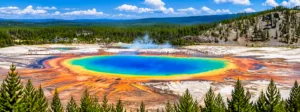
Unlike Yellowstone’s steaming geysers or rainbow-colored hot springs, Mammoth Hot Springs is a living, ever-changing sculpture. Located near the park’s north entrance, this geothermal area is famous for its dazzling white and orange terraces, created by mineral-laden hot water flowing over the land for thousands of years.
Thank you for reading this post, don't forget to subscribe!What Makes Mammoth Hot Springs Unique?
The hot water that feeds Mammoth Hot Springs originates from the Norris Geyser Basin area. It travels underground through limestone, dissolving calcium carbonate (travertine) along the way. When the hot water reaches the surface, it deposits the travertine in cascading layers, forming terraces that resemble frozen waterfalls or melting candles.
Unlike geysers, which erupt, Mammoth flows continuously, shifting and reshaping the landscape almost daily. Some terraces grow while others dry up, making the area feel alive and in constant transformation.
Affiliate Disclosure: This post contains affiliate links. If you make a booking through these links, I may earn a commission at no additional cost to you.
? Book Your Yellowstone Stay
Planning a visit to Mammoth Hot Springs and Yellowstone National Park? Staying near the park can give you more time to explore the Mammoth terraces, wildlife areas, scenic drives, hiking trails, and Yellowstone’s other geothermal attractions.
Compare hotels, lodges, cabins, and other accommodations for your Yellowstone adventure.
? ? Book Your Yellowstone Stay Now
Terraces to See
Mammoth Hot Springs is divided into Upper and Lower Terraces, both accessible by boardwalks and roads:
- Palette Spring: A fan-shaped terrace with vivid orange, brown, and white streaks.
- Minerva Terrace: Once one of the most photographed spots, this massive stair-step formation still impresses, though it has become less active.
- Canary Spring: Known for its bright colors and dramatic formations.
- Liberty Cap: A tall, dormant hot spring cone standing like a stone monument.
Visiting Mammoth Hot Springs
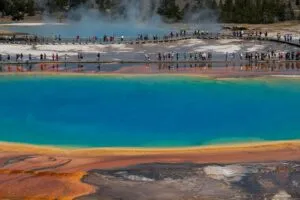
- Boardwalks: Nearly 2 miles of walkways let you explore the terraces up close.
- Drive Loop: A one-way Upper Terrace Drive provides overlooks without the hike.
- Best Light: Early morning and late afternoon bring out the rich colors in the formations.
- Seasonal Beauty: In winter, steam rising from the terraces creates surreal frozen patterns.
Things to Do Nearby
- Albright Visitor Center: Learn about Yellowstone’s history, wildlife, and geothermal features.
- Historic Fort Yellowstone: Once a U.S. Army post, now preserved as part of the park’s heritage.
- Wildlife Watching: Elk are often seen grazing around Mammoth, especially in the fall rut.
- Boiling River (closed as of 2021): A once-popular natural hot spring soak spot where hot and cold waters mixed.
Tips for Visiting Mammoth Hot Springs
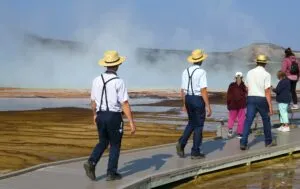
- Wear Sturdy Shoes: The boardwalks can be long and uneven in places.
- Respect the Terrain: The travertine is fragile—always stay on marked paths.
- Prepare for Heat & Steam: Summer sun and hot water make the area feel warmer than expected.
- Photography: A polarizing filter helps capture the terraces’ colors against the bright sky.
Quick Facts
- Location: Northern Yellowstone, near the North Entrance and Gardiner, Montana
- Formation: Travertine terraces created by calcium carbonate deposits
- Activity: Constantly shifting, with some springs becoming dormant and others reactivating
- Highlights: Palette Spring, Minerva Terrace, Canary Spring, Liberty Cap
Why Mammoth Hot Springs Belongs on Your Itinerary
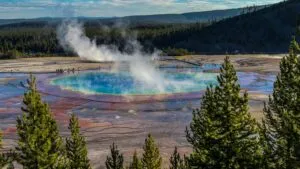
Mammoth Hot Springs shows a different side of Yellowstone’s geothermal activity. Instead of dramatic eruptions or deep rainbow pools, it offers a quieter, sculptural beauty that feels almost otherworldly. Whether blanketed in snow, glowing orange in the evening sun, or alive with steaming water on a cool morning, Mammoth Hot Springs is a sight you won’t forget.
It’s not just a stop—it’s Yellowstone’s living artwork.
 Disclosure
As an Amazon Associate, I earn from qualifying purchases. This website also contains other affiliate links, and we may earn a small commission if you make a purchase through them — at no extra cost to you. We only recommend products and services we trust and believe will enhance your outdoor adventures. Thank you for supporting our work!

 Drone Use: Know Before You Fly

Leave a Reply