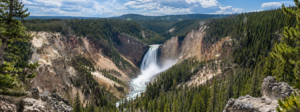
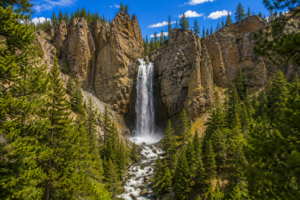
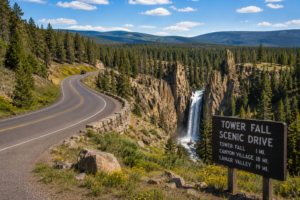
Hidden among towering volcanic rock spires in Yellowstone’s northern region, Tower Fall is one of the park’s most picturesque waterfalls. Plunging 132 feet into the Yellowstone River, the fall is framed by striking basalt pinnacles that give the area its name. Easy to access and unforgettable in its beauty, Tower Fall has been a favorite subject for painters, photographers, and visitors since Yellowstone was first explored.
What Makes Tower Fall Unique?
Tower Fall stands out not only for its dramatic drop but also for its setting. The waterfall is surrounded by eroded volcanic spires—natural rock towers carved by thousands of years of wind, water, and ice. The combination of rushing water and jagged stone formations creates one of Yellowstone’s most iconic views.
Early explorers like Thomas Moran and William Henry Jackson captured Tower Fall in art and photography, helping inspire Congress to create Yellowstone as the world’s first national park in 1872.
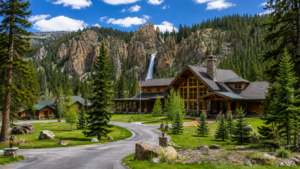
? Where to Stay Near Tower Fall
Staying near Tower Fall makes it easier to explore Yellowstone’s spectacular northern region, including Lamar Valley, Tower–Roosevelt, Calcite Springs, the Yellowstone River, and nearby wildlife-viewing areas.
One of the closest in-park lodging choices is Roosevelt Lodge Cabins, located in the Tower–Roosevelt area. These rustic seasonal cabins provide a classic Yellowstone experience and an excellent base for exploring Tower Fall and heading into Lamar Valley for early-morning or evening wildlife viewing.
Another convenient option is Canyon Village, where visitors can stay at Canyon Lodge & Cabins while remaining close to the Grand Canyon of the Yellowstone, Upper and Lower Falls, hiking trails, scenic overlooks, and the drive north toward Tower Fall.
Travelers can also consider accommodations around Mammoth Hot Springs and Gardiner, especially when combining Tower Fall with Yellowstone’s northern entrance, Mammoth Hot Springs, and the northern wildlife corridor.
Yellowstone lodging can fill quickly during the busiest travel months, so planning and booking your accommodations early can give you more choices for your visit.
? ? Book Your Yellowstone Stay – Explore Hotels, Lodges & Cabins Near Tower Fall
? Watch Tower Fall – Yellowstone’s Classic Waterfall
Experience the beauty of Tower Fall in Yellowstone National Park through this scenic video. See the dramatic waterfall, rugged canyon walls, surrounding forests, and incredible landscapes that make Tower Fall one of Yellowstone’s classic natural attractions.
? Watch the Video:
? Tower Fall – Yellowstone’s Classic Waterfall
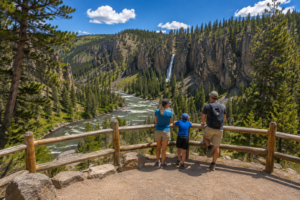
? Explore Tower Fall – Yellowstone’s Classic Waterfall
Experience the spectacular beauty of Tower Fall in Yellowstone National Park, where Tower Creek plunges 132 feet through a dramatic landscape of volcanic rock pinnacles, evergreen forests, and rugged canyon scenery.
This video takes you on a visual journey through Tower Fall and the surrounding Tower–Roosevelt region, showcasing the waterfall, scenic overlooks, Yellowstone River landscapes, wildlife, forests, and some of the incredible natural scenery that makes this part of Yellowstone unforgettable.
▶️ Watch the video below and discover the beauty of Tower Fall, Yellowstone National Park.
Visiting Tower Fall
- Tower Fall Overlook: A short, paved walk (less than 0.1 miles) from the parking lot leads to a viewpoint directly across from the waterfall.
- Hike to the Base: A steep trail once led to the bottom of the falls, but it has been closed for safety and erosion concerns. You can still hike part of it for views of the Yellowstone River.
- Photography: Morning light illuminates the spires, while late afternoon highlights the waterfall’s flow.
Things to Do Nearby
- Tower Junction: A central crossroads leading to Lamar Valley, Canyon, and Mammoth Hot Springs.
- Lamar Valley: Just east, offering some of Yellowstone’s best wildlife viewing.
- Roosevelt Lodge: A historic lodge nearby with cabins, horseback rides, and chuckwagon dinners.
- Calcite Springs Overlook: Scenic views of the Yellowstone River canyon just a short drive away.
Tips for Visiting Tower Fall
- Arrive Early: Parking is limited, especially in summer.
- Use Caution: Stay on designated trails—erosion has made some areas unstable.
- Bring Binoculars: Birds of prey often nest in the cliffs around the falls.
- Combine Stops: Tower Fall pairs well with a drive through Lamar Valley or a visit to Roosevelt Lodge.
Quick Facts
- Height: 132 feet
- Location: Near Tower Junction, on the road between Canyon Village and Roosevelt Lodge
- Formation: Basalt rock spires created by volcanic activity and erosion
- Accessibility: Short paved walk to viewpoint; base trail closed beyond river access
Why Tower Fall Belongs on Your Itinerary
Tower Fall is a Yellowstone classic—beautiful, historic, and easy to visit. Its blend of natural drama and accessibility makes it a perfect stop, whether you’re on a quick park tour or a longer adventure. For many early visitors, this was one of the first glimpses of Yellowstone’s raw power and beauty, and it continues to inspire awe today.
Tower Fall is a reminder of why Yellowstone was preserved in the first place.
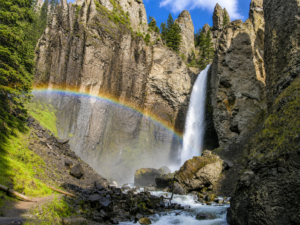
? Best Time to Visit Tower Fall
Tower Fall offers beautiful scenery throughout Yellowstone’s main travel season, but each time of year creates a different experience.
? Spring: Melting snow and seasonal runoff can create an impressive waterfall flow. The surrounding forests begin turning green, wildlife becomes increasingly active, and crowds are generally lighter than during peak summer.
☀️ Summer: Summer brings warmer weather, long daylight hours, and convenient access for exploring Tower Fall and nearby Yellowstone attractions. This is also the busiest season, so arriving early in the morning can help you avoid heavier crowds and limited parking.
? Fall: Autumn is an excellent time for photography, cooler hiking weather, changing vegetation, and wildlife viewing throughout northern Yellowstone. Early mornings and evenings can be especially beautiful around Tower Fall and the surrounding Yellowstone River landscape.
❄️ Winter: Snow transforms the Tower–Roosevelt region into a spectacular winter wilderness, but road access becomes much more limited. Visitors planning a winter trip should check current Yellowstone road conditions, closures, and seasonal transportation options before traveling.
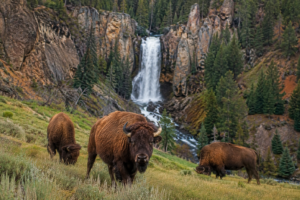
? Wildlife Around Tower Fall
The Tower Fall and Tower–Roosevelt region offers more than spectacular waterfall scenery—it is also surrounded by some of Yellowstone National Park’s prime wildlife habitat. Visitors traveling through this part of the park may encounter wildlife along forest edges, open meadows, rocky slopes, and the Yellowstone River corridor.
? Bison: Bison are frequently seen throughout northern Yellowstone, particularly as you continue toward Tower Junction and Lamar Valley.
? Elk & Mule Deer: Watch open meadows, forest edges, and hillsides for elk and mule deer, especially during the quieter morning and evening hours.
? Black & Grizzly Bears: The greater Tower–Roosevelt region is bear country. Bears may occasionally be spotted foraging on hillsides and in meadows, particularly during spring and early summer.
? Wolves: Lamar Valley, east of Tower Junction, is one of Yellowstone’s most famous areas for wolf watching. Early morning and evening generally provide the best opportunities for distant sightings.
? Birds of Prey: Keep an eye on the sky and surrounding cliffs for eagles, hawks, and other birds of prey soaring above the Yellowstone River canyon.
? Wildlife Tip: Bring binoculars or a telephoto lens so you can enjoy and photograph Yellowstone’s wildlife from a safe distance. Never approach or feed wild animals, and always follow Yellowstone National Park wildlife-safety guidelines.
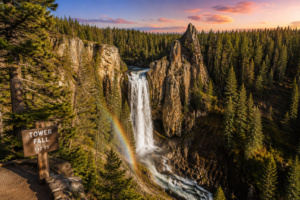
? Tower Fall Photography
Tower Fall is one of Yellowstone National Park’s classic photography locations, combining a dramatic 132-foot waterfall with rugged volcanic pinnacles, evergreen forests, and beautiful canyon scenery.
? Early Morning: Morning can provide softer light and fewer visitors at the overlook, making it easier to photograph the waterfall and surrounding rock formations.
? Late Afternoon: Changing light across the canyon can bring out the textures and colors of the volcanic cliffs, forest, and cascading water.
? Photograph the Waterfall: Experiment with both faster shutter speeds to freeze the falling water and slower shutter speeds to create a smooth, flowing-water effect.
?️ Include the Rock Pinnacles: Wider compositions that include Tower Fall’s distinctive volcanic spires help capture what makes this waterfall different from many others in Yellowstone.
? Capture the Seasons: Spring runoff, lush summer forests, autumn colors, and early-season snow can completely change the appearance of the Tower Fall landscape.
? Watch for Wildlife: Keep your camera ready while traveling through the surrounding Tower–Roosevelt region. Bison, elk, bears, birds, and other Yellowstone wildlife can provide unexpected photography opportunities.
? Photography Tip: Bring a zoom or telephoto lens for distant wildlife and landscape details, while a wider lens can help capture Tower Fall together with the surrounding canyon and rock formations.
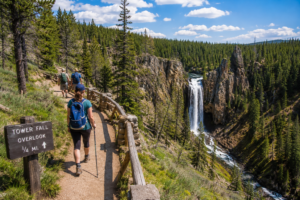
? Hiking & Exploring Around Tower Fall
Tower Fall is easy to include in a Yellowstone sightseeing day, but the surrounding Tower–Roosevelt region also offers opportunities to explore forests, river scenery, overlooks, and nearby hiking areas.
? Tower Fall Overlook: A short paved walk from the parking area leads to the main overlook, where visitors can enjoy one of the classic views of the 132-foot waterfall and its surrounding volcanic pinnacles.
? Yellowstone River Scenery: Explore nearby viewpoints overlooking the Yellowstone River and its rugged canyon landscape. The combination of forests, cliffs, and rushing water makes this area especially scenic.
?️ Calcite Springs Overlook: Located nearby, Calcite Springs provides dramatic views into the Yellowstone River canyon and is an excellent additional stop when visiting Tower Fall.
? Tower–Roosevelt Area: Continue toward Tower Junction and Roosevelt Lodge to experience more of northern Yellowstone’s forests, meadows, wildlife habitat, and historic landscapes.
? Continue to Lamar Valley: Tower Fall also makes an excellent stop on the way to Lamar Valley, one of Yellowstone’s premier destinations for wildlife watching and scenic drives.
⚠️ Hiking Tip: Trail conditions and access can change because of weather, erosion, wildlife activity, and seasonal closures. Stay on designated trails and check current Yellowstone National Park conditions before beginning a hike.
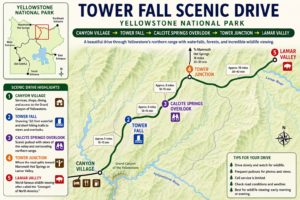
? Tower Fall Scenic Drive
Turn your visit to Tower Fall into a memorable Yellowstone day trip by continuing through some of the park’s most spectacular northern landscapes.
Canyon Village → Tower Fall → Calcite Springs → Tower Junction → Lamar Valley
Along the way, enjoy dramatic waterfalls, Yellowstone River canyon views, mountain scenery, wildlife-viewing opportunities, and the wide-open landscapes of Lamar Valley. Bring your camera and binoculars and allow extra time for wildlife sightings and scenic stops.
? Best Fishing Gear & Accessories: 50 Must-Have Essentials for Freshwater, Saltwater & Outdoor Adventures
Get ready for your next fishing adventure with 50 essential fishing gear and accessory picks for freshwater, saltwater, lakes, rivers, and outdoor travel. Explore rods, reels, tackle, fishing tools, storage, apparel, safety gear, and other useful equipment for anglers of all experience levels.
? Explore the Best Fishing Gear & Accessories – 50 Must-Have Essentials
?️ Continue Exploring Yellowstone National Park
Tower Fall is only one of the incredible natural wonders waiting to be discovered in Yellowstone. Explore more spectacular waterfalls, geysers, lakes, rivers, wildlife-viewing areas, hiking adventures, camping destinations, scenic drives, and unforgettable places throughout America’s first national park.
? Explore the Ultimate Yellowstone National Park Adventure Hub
Thank you for visiting MyCampingVacationSites! I hope this guide helps you plan an unforgettable outdoor adventure. If you enjoyed this article, feel free to leave a comment below and explore more travel guides, hiking destinations, camping adventures, and outdoor experiences throughout the site. Have a wonderful vacation wherever your next journey takes you!
— Jeffrey
Leave a Reply