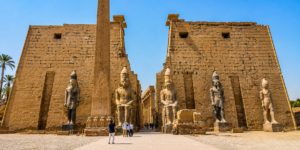
Standing along the banks of the Nile River in southern Egypt, Luxor is one of the world’s greatest destinations for exploring ancient history. Once part of Thebes, the powerful capital of ancient Egypt, modern Luxor is surrounded by enormous temples, royal tombs, towering statues, desert mountains, and archaeological sites that tell the story of pharaohs who ruled thousands of years ago.
Thank you for reading this post, don't forget to subscribe!Often described as the world’s largest open-air museum, Luxor is divided naturally by the Nile. On the East Bank, monumental temples such as Karnak and Luxor Temple celebrate the gods, kings, and religious traditions of ancient Egypt. Across the river on the West Bank, the landscape changes dramatically as green farmland gives way to desert cliffs containing the Valley of the Kings, Valley of the Queens, Temple of Hatshepsut, and numerous other ancient sites.
For travelers interested in Egypt’s history, few places offer as much to explore in one destination.
Watch the Luxor, Egypt Adventure Video
Experience the Valley of the Kings, ancient royal tombs, Karnak Temple, Luxor Temple, Temple of Hatshepsut, towering statues, Nile River scenery, desert mountains, and spectacular monuments of ancient Thebes.
▶ Watch the Luxor – Tombs, Temples & the Valley of the Kings Video
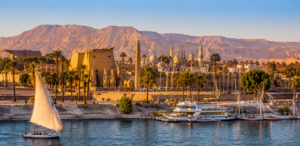
Luxor – Ancient Thebes Along the Nile
Thousands of years ago, Luxor was part of ancient Thebes, one of Egypt’s most important religious and political centers.
The city became especially prominent during Egypt’s New Kingdom, when rulers constructed enormous temples on the eastern side of the Nile while creating elaborate royal tombs in the desert valleys to the west.
The Nile formed a natural centerpiece of the ancient landscape.
The East Bank was associated with life, temples, ceremonies, and the rising sun. The West Bank, where the sun disappeared behind the desert mountains, became associated with death and the afterlife.
That ancient geography remains remarkably visible today.
Visitors can explore temples in modern Luxor in the morning, cross the Nile, and within a relatively short distance find themselves surrounded by desert mountains containing some of Egypt’s most famous royal tombs.
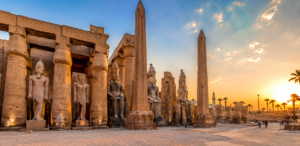
The East Bank – Temples of Ancient Luxor
Karnak Temple Complex
The enormous Karnak Temple Complex is one of Luxor’s defining landmarks and one of the largest religious complexes constructed in the ancient world.
Rather than being built by a single ruler, Karnak developed over many centuries as generations of pharaohs expanded the site.
Its most famous feature is the extraordinary Great Hypostyle Hall, where massive stone columns rise overhead in rows. Hieroglyphs and carved scenes cover many of the columns and surrounding walls.
Elsewhere throughout Karnak are courtyards, obelisks, statues, gateways, sacred areas, and remains from different periods of Egyptian history.
Walking through the complex gives visitors an opportunity to see just how monumental ancient Egyptian architecture could become.
Because Karnak deserves much more than a brief visit, travelers interested in exploring the site in detail can also read my complete guide to Karnak Temple in Luxor.

Luxor Temple
Located closer to the center of modern Luxor, Luxor Temple provides a very different experience.
The temple was closely connected with Karnak and played an important role in ancient religious ceremonies, particularly the Opet Festival.
Visitors enter an impressive complex filled with statues, columns, courtyards, carvings, and monumental architecture associated with rulers including Amenhotep III and Ramesses II.
Luxor Temple is especially atmospheric later in the day. As evening arrives and the site is illuminated, ancient columns and statues stand dramatically against the night sky.
Its central location also makes Luxor Temple easy to combine with other activities along the Nile.
For a closer look at its history and monuments, visit my complete Luxor Temple – Heart of Ancient Thebes guide.

Avenue of Sphinxes
One of the most fascinating connections between Luxor’s great temples is the Avenue of Sphinxes.
This ancient ceremonial route once linked Luxor Temple and Karnak Temple, extending for roughly three kilometers through the ancient city.
Rows of sphinx statues lined the route used during religious processions.
Today, restored sections of the avenue help visitors visualize how these monumental temple complexes once formed part of a much larger sacred landscape.
Crossing the Nile – Exploring Luxor’s West Bank
Crossing from Luxor’s East Bank to the West Bank feels like entering another world.
Green fields and communities along the Nile gradually meet the dry desert landscape. Beyond them rise rugged limestone mountains containing tombs, temples, and archaeological sites associated with Egypt’s pharaohs, queens, nobles, and workers.
This is where visitors find the legendary Valley of the Kings.

Valley of the Kings
Hidden among the desert mountains west of the Nile, the Valley of the Kings became the burial place of many rulers of Egypt’s New Kingdom.
Instead of constructing enormous pyramids that were visible for miles, pharaohs created tombs cut deep into the surrounding rock.
Long corridors, chambers, stairways, paintings, hieroglyphs, and religious texts were designed to prepare the deceased ruler for the journey into the afterlife.
More than 60 tombs and chambers have been identified within the valley.
Some are relatively simple, while others extend deep beneath the mountains.
Walking into these tombs is one of the most memorable experiences available in Luxor.
Why Were Pharaohs Buried in the Valley of the Kings?
Security was one reason for moving royal burials into a remote desert valley.
Earlier monumental tombs and pyramids were obvious targets for robbery. Hidden entrances in the Valley of the Kings were intended to make royal burials more difficult to find.
The surrounding landscape also carried religious significance.
The desert mountains rise dramatically above the valley, separating the fertile Nile region from the vast desert beyond.
Although many tombs were eventually robbed in antiquity, their decorated walls preserved an extraordinary record of ancient Egyptian religion, art, and beliefs surrounding death.
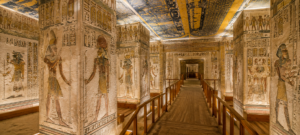
Inside the Royal Tombs
The exterior desert landscape gives little indication of the colors that can appear inside the tombs.
Walls and ceilings contain scenes depicting gods, pharaohs, sacred symbols, astronomical imagery, and passages connected with the ruler’s journey through the afterlife.
Some tombs descend through long corridors before reaching burial chambers deeper inside the mountain.
Because individual tombs can periodically close for conservation or restoration, the exact selection available to visitors may change.
That means two trips to the Valley of the Kings can provide different experiences.

Tomb of Tutankhamun
No name is more closely associated with the Valley of the Kings than Tutankhamun.
The young pharaoh’s tomb became world famous after archaeologist Howard Carter discovered it in 1922.
Unlike many royal tombs that had been heavily looted, Tutankhamun’s burial contained an extraordinary collection of objects, including his famous golden funerary mask.
The tomb itself is relatively small compared with some other royal tombs in the valley, but its historical importance makes it one of the site’s most famous locations.

Tomb of Ramesses VI
The Tomb of Ramesses VI is known for its extensive decorations and dramatic interior.
Long corridors lead toward the burial chamber while walls and ceilings contain elaborate religious and astronomical imagery.
It is an excellent example of how ancient Egyptians used art, architecture, and sacred texts together to create a symbolic journey toward the afterlife.
Tombs of the Great Pharaohs
Several rulers named Ramesses, along with other New Kingdom pharaohs, were buried within the Valley of the Kings.
Depending on which tombs are open during a visit, travelers may have opportunities to explore burial places associated with rulers such as Ramesses III, Ramesses IV, Ramesses IX, and others.
Some tombs are known for colorful artwork. Others impress visitors with their scale, corridors, chambers, or ceiling decorations.
Rather than rushing through as many tombs as possible, take time to examine the details.
Thousands of years after they were painted, many scenes remain remarkably vivid.
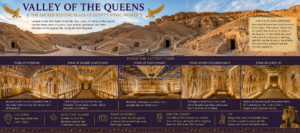
Valley of the Queens
Not far from the Valley of the Kings lies another important royal burial area—the Valley of the Queens.
Queens, princes, princesses, and other members of royal families were buried here.
The valley contains numerous tombs, but one stands above the others in fame.
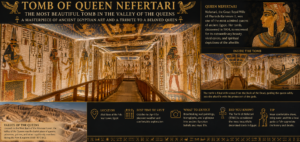
Tomb of Queen Nefertari
The Tomb of Queen Nefertari, wife of Ramesses II, is considered one of the great artistic treasures of ancient Egypt.
Its walls contain exceptionally detailed and colorful paintings portraying Nefertari’s journey through the afterlife.
Because of the tomb’s fragile condition and importance, access and ticketing arrangements can differ from those of other tombs.
Travelers particularly interested in ancient Egyptian artwork should check current access conditions when planning their visit.
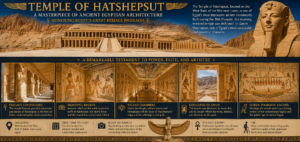
Temple of Hatshepsut
Rising against enormous limestone cliffs at Deir el-Bahari, the Mortuary Temple of Hatshepsut is one of the most recognizable structures on Luxor’s West Bank.
The temple’s terraces and long colonnades appear almost to emerge directly from the surrounding mountains.
Hatshepsut was one of ancient Egypt’s most remarkable rulers and one of its best-known female pharaohs.
Visitors approach the temple across an open desert landscape before climbing toward its terraces and decorated areas.
The combination of architecture and natural scenery makes this one of Luxor’s most impressive archaeological sites.
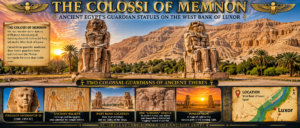
Colossi of Memnon
Two enormous seated statues known as the Colossi of Memnon stand prominently on Luxor’s West Bank.
The statues once guarded the entrance to the vast mortuary temple of Amenhotep III.
Although much of the original temple disappeared over the centuries, the gigantic statues remain.
Because they stand near routes connecting several major West Bank attractions, they are an easy addition to a day exploring the area.
Medinet Habu
Travelers with additional time should consider visiting Medinet Habu, the mortuary temple associated primarily with Ramesses III.
Its massive walls, gateways, courtyards, columns, and carved reliefs make it one of Luxor’s most impressive sites.
Scenes carved into the walls depict religious ceremonies and military events, providing another perspective on the power and symbolism surrounding Egypt’s New Kingdom rulers.
Medinet Habu can also be less crowded than some of Luxor’s most famous attractions, making it especially worthwhile for visitors who want more time to examine ancient carvings.

Deir el-Medina – Village of the Tomb Builders
Pharaohs did not build their tombs alone.
The skilled artisans responsible for constructing and decorating many royal tombs lived in a settlement now known as Deir el-Medina.
The community included craftsmen, painters, stoneworkers, and their families.
Exploring the remains provides a different perspective on ancient Egypt. Instead of focusing entirely on kings and queens, visitors can learn about the people whose skills created the magnificent tombs that survive today.
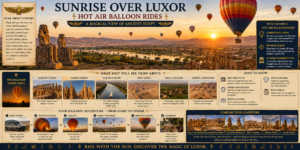
Sunrise Over Luxor – Hot Air Balloon Rides
One of the most spectacular ways to experience Luxor is from above.
Before sunrise, hot-air balloons rise over the West Bank, offering sweeping views across temples, villages, farmland, desert, mountains, and the Nile Valley.
The contrast is extraordinary.
Bright green agricultural land follows the Nile while the desert begins abruptly beyond it. Ancient temples appear below as the morning light reaches the landscape.
I’ve created a separate guide covering Hot Air Balloon Rides – Sunrise Over Luxor & the Nile Valley for travelers interested in adding this experience to their Egypt itinerary.

Sail the Nile on a Felucca
After spending hours exploring temples and tombs, a felucca ride on the Nile offers a much slower side of Luxor.
Traditional sailboats move quietly along the river while travelers watch palm trees, boats, waterfront buildings, farmland, and distant desert landscapes.
Late afternoon and sunset are particularly beautiful times to be on the water.
The Nile isn’t simply a scenic attraction—it is the geographical feature around which Luxor’s entire ancient landscape developed.
Explore Luxor’s Markets & Local Culture
Ancient monuments may bring travelers to Luxor, but modern Egyptian life is another part of the experience.
Markets and shopping areas contain spices, textiles, clothing, crafts, souvenirs, jewelry, and other goods.
Walking through local streets also creates a striking contrast with the archaeological sites nearby.
One moment you can be standing beside a monument built thousands of years ago, and a short time later you can be surrounded by modern shops, restaurants, traffic, and everyday life along the Nile.
What to Eat in Luxor
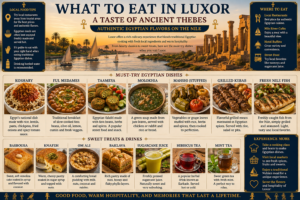
Exploring Luxor can make for long days, and trying Egyptian food should be part of the experience.
Look for dishes such as koshari, a filling combination typically made with rice, pasta, lentils, chickpeas, tomato sauce, and crispy onions.
Other foods worth trying include falafel, often made in Egypt with fava beans, and freshly baked baladi bread.
Grilled meats, vegetables, rice dishes, soups, fresh juices, tea, and Egyptian desserts provide plenty of additional choices.
A riverside meal can be especially enjoyable after spending the day exploring Luxor’s temples and tombs.
Best Time to Visit Luxor
Luxor’s desert climate means temperatures can become extremely hot, particularly during summer.
For many travelers, the cooler months are more comfortable for spending long periods outside at archaeological sites.
Whatever season you choose, starting early can be valuable.
Early mornings can provide cooler temperatures while giving you more time to explore the West Bank before the strongest afternoon heat.
Always check current weather conditions before setting out.
How Many Days Should You Spend in Luxor?
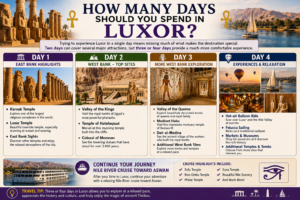
Trying to experience Luxor in a single day means missing much of what makes the destination special.
Two days can cover several major attractions, but three or four days provide a much more comfortable experience.
One possible approach is:
Day 1: Karnak Temple, Luxor Temple and the East Bank.
Day 2: Valley of the Kings, Temple of Hatshepsut and Colossi of Memnon.
Day 3: Valley of the Queens, Medinet Habu, Deir el-Medina and additional West Bank sites.
Day 4: Hot-air balloon ride, felucca sailing, markets, museums or additional temples and tombs.
Travelers continuing through Egypt can then connect their Luxor visit with a Nile River cruise toward Aswan.
What to Bring When Exploring Luxor
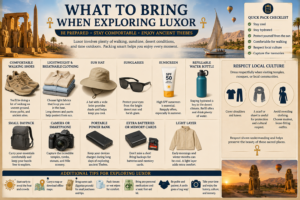
Luxor involves plenty of walking, sunshine, desert conditions, and time outdoors.
Useful items include:
- Comfortable walking shoes
- Lightweight and breathable clothing
- Sun hat
- Sunglasses
- Sunscreen
- Refillable water bottle
- Small daypack
- Camera or smartphone
- Portable power bank
- Extra camera batteries or memory cards
- Light layer for cooler early mornings during some seasons
Respectful clothing is also a good idea when visiting religious or culturally significant locations.
Photography in Luxor
Luxor is an extraordinary destination for photography.
Ancient columns, hieroglyphs, statues, desert mountains, colorful tomb interiors, Nile scenery, palm trees, feluccas, and sunsets provide completely different subjects within a relatively small area.
Photography rules can vary between archaeological sites and individual tombs, so always check the current regulations before taking photographs or using specialized equipment.
Where to Stay in Luxor

Staying in Luxor for several nights gives you much more flexibility than attempting to rush through the area.
The East Bank is convenient for restaurants, transportation, Karnak Temple, Luxor Temple and other city services.
The West Bank provides a quieter atmosphere and convenient access to many of the tombs and archaeological sites.
Which side works best depends on the type of trip you want.
Travelers planning several days of sightseeing may appreciate staying close enough to return to their accommodation during the hottest part of the afternoon before heading back out in the evening.
Book Your Stay in Luxor
Make Luxor your base for exploring the Valley of the Kings, Karnak Temple, Luxor Temple, Temple of Hatshepsut, Colossi of Memnon, Nile River, and the many ancient sites surrounding the city.
Choose from hotels and resorts along the Nile, convenient East Bank accommodations, and quieter West Bank stays close to Luxor’s famous tombs and temples.
Combining Luxor with a Nile River Cruise
Luxor is one of the best places to begin or finish a larger journey through Upper Egypt.
A Nile River cruise between Luxor and Aswan allows travelers to experience changing river scenery while visiting additional temples and historic locations along the way.
Palm-lined riverbanks, villages, farmland, desert landscapes, traditional boats, and ancient monuments make the Nile itself part of the journey.
For more information, explore my complete guide to Nile River Cruises – Sail Past Temples & Scenic Landscapes.
My Experience Visiting Luxor
Luxor was part of my own journey through Egypt, and seeing these ancient sites in person gave me a much greater appreciation for their enormous scale.
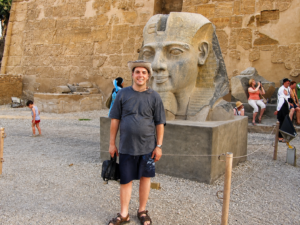
Photographs can show the columns and statues, but standing beside them is different.
Walking through ancient temple complexes and seeing carvings covering enormous stone walls makes it easier to understand just how ambitious these structures were.
I also traveled on a Nile cruise from Luxor to Aswan, which added another perspective to the experience.
Watching the landscape from the river connects many of the places visitors explore on land. Green fields and palm trees follow the Nile while desert stretches beyond them, creating the same dramatic contrast that has shaped life in this region for thousands of years.
Luxor is one of those destinations where ancient history doesn’t feel isolated inside a museum.
It surrounds you.
Map of Luxor – Tombs, Temples & Attractions
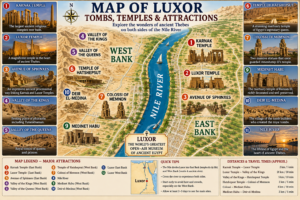
A map is particularly useful when planning a visit to Luxor because its major attractions are spread across both sides of the Nile.
Important locations to identify include:
- Karnak Temple
- Luxor Temple
- Avenue of Sphinxes
- Valley of the Kings
- Valley of the Queens
- Temple of Hatshepsut
- Colossi of Memnon
- Medinet Habu
- Deir el-Medina
- Nile River
- Luxor East Bank
- Luxor West Bank
Seeing these locations together makes it much easier to understand how ancient Thebes developed around the Nile and how to organize sightseeing efficiently.
Why Visit Luxor?
Few destinations bring travelers this close to the world of ancient Egypt.
Luxor combines monumental temples, underground royal tombs, desert landscapes, Nile scenery, local culture, traditional sailing, archaeological discoveries, and thousands of years of history in one destination.
Walk beneath the gigantic columns of Karnak.
Stand before the statues of Luxor Temple.
Cross the Nile into the desert.
Enter the tombs of pharaohs in the Valley of the Kings.
Look across the West Bank from a hot-air balloon as sunrise reaches the Nile Valley.
Then watch the sun disappear while sailing along the river.
These experiences make Luxor far more than another stop on an Egypt itinerary.
Luxor is one of the places where the ancient world still feels remarkably close.
Continue Exploring Egypt
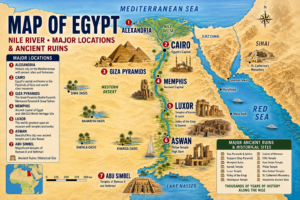
Luxor can become the centerpiece of a much larger Egyptian adventure.
Continue exploring Karnak Temple, Luxor Temple, Nile River cruises, hot-air balloon rides, Cairo, Abu Simbel, Aswan, the Red Sea, Egypt’s deserts, and other destinations throughout my Egypt travel guide.
Each location reveals another side of the country—from ancient temples and royal tombs to coral reefs, deserts, cities, river landscapes, and modern Egyptian culture.
Together, they create an unforgettable journey through one of the world’s most fascinating destinations.
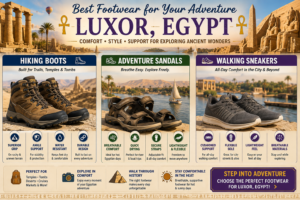
Comfortable Footwear for Exploring Luxor
Exploring the Valley of the Kings, ancient temples, archaeological sites, and Luxor’s West Bank can involve plenty of walking over stone, sand, and uneven ground. Comfortable, supportive footwear can make long sightseeing days much more enjoyable.
👉Explore Hiking Boots & Outdoor Footwear
Find footwear options for walking, hiking, sightseeing, and other outdoor adventures.
Explore More of Egypt
Continue your journey through Egypt with more guides covering ancient temples, Nile River adventures, desert landscapes, historic cities, the Red Sea, archaeological sites, and unforgettable Egyptian experiences.
👉 Explore the Complete Egypt Travel & Adventure Hub
Thank you for visiting MyCampingVacationSites! I hope this guide helps you plan an unforgettable outdoor adventure. If you enjoyed this article, feel free to leave a comment below and explore more travel guides, hiking destinations, camping adventures, and outdoor experiences throughout the site. Have a wonderful vacation wherever your next journey takes you!
— Jeffrey
 Explore More Hubs
 Water Adventure Gear
 50 Must-Have Water Adventure Items (Complete Gear Guide) Ultimate Jet Ski Gear & Accessories Guide
  (Top Picks for Speed & Fun) Best River Rafts & Floating Docks
  (Rafting & Floating Essentials)
 Camping & Tent Gear
Tents: Best Tents for Camping & Outdoor Adventures (Top-Rated Picks) Ultimate Glamping Gear: 50 Must-Have Tents & Adventure Essentials  (Luxury Setup Guide)
 RV & Camper Gear
RV Adventure Gear: Must-Have Essentials for Road Trips & Camping (Full Travel Setup) Ultimate Interior RV & Camper Gear Guide  (Comfort & Living Upgrades)
Leave a Reply