
Rio de Janeiro is famous around the world for Copacabana and Ipanema, but some of the city’s most memorable coastal scenery lies far beyond its busiest stretches of sand.
Thank you for reading this post, don't forget to subscribe!Travel west from Rio’s famous beachfront neighborhoods and the landscape gradually changes. High-rise buildings give way to forest-covered mountains, rocky headlands, protected natural areas and beaches that can feel surprisingly wild for a destination as large as Rio.
Hidden between cliffs and Atlantic rainforest are secluded coves, surfing beaches and long stretches of sand where travelers can experience another side of Rio de Janeiro.
From the small cove of Joatinga Beach to the wild coastline around Grumari, these beaches combine ocean adventures with hiking, photography, swimming, surfing and spectacular coastal scenery.
This guide explores some of the best hidden and less-crowded beaches around Rio de Janeiro and helps you decide which ones to include in your own Brazilian coastal adventure.
Watch Hidden Beaches of Rio de Janeiro – Secluded Tropical Escapes
See another side of Rio de Janeiro beyond its famous city beaches. Explore secluded tropical coves, turquoise Atlantic waters, rainforest-covered mountains, rocky coastlines and hidden stretches of sand around Rio’s spectacular coast.
▶️ Watch the Hidden Beaches of Rio de Janeiro – Secluded Tropical Escapes Video
Why Explore Rio’s Hidden Beaches?
Copacabana and Ipanema deserve their international reputation, but Rio’s coastline extends far beyond them.
Heading west toward Barra da Tijuca, Recreio and Grumari reveals a completely different environment.
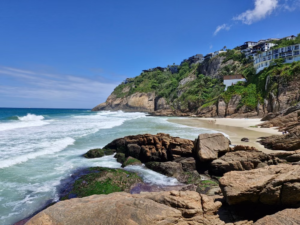
Instead of dense neighborhoods immediately behind the sand, you begin encountering:
- Forest-covered mountains
- Rocky coastal cliffs
- Protected natural landscapes
- Small secluded coves
- Powerful Atlantic surf
- Long uncrowded beaches
- Coastal hiking opportunities
- Spectacular viewpoints
These beaches are especially appealing for travelers who enjoy combining a beach vacation with outdoor adventure and nature.
You can spend the morning hiking through tropical vegetation, cool off in the Atlantic Ocean, watch surfers riding waves beneath forested mountains and finish the afternoon watching the sun disappear over Rio’s western coastline.
1. Joatinga Beach – A Hidden Cove Beneath the Cliffs

Praia da Joatinga is one of Rio de Janeiro’s most famous “hidden” beaches.
Located between São Conrado and Barra da Tijuca, the beach sits beneath dramatic cliffs and upscale residential neighborhoods.
Joatinga is relatively small compared with Rio’s major beaches, which is part of its appeal.
Rock formations surround the sand while steep green hills rise behind the coastline, creating a setting that feels far removed from the enormous beaches of Copacabana and Barra da Tijuca.
Access generally involves walking down toward the beach, adding to its secluded atmosphere.
Why Visit Joatinga?
Joatinga is particularly attractive for:
- Photography
- Surfing
- Relaxing beside the cliffs
- Exploring rocky coastal scenery
- Watching Atlantic waves
- Experiencing one of Rio’s smaller beaches
The beach can become very narrow during high tide, and ocean conditions can change quickly.
Checking the tide and surf conditions before visiting is a smart idea.
Joatinga is a great example of how dramatically Rio’s coastline can change within a relatively short distance.
2. Prainha Beach – Mountains, Rainforest & Surf
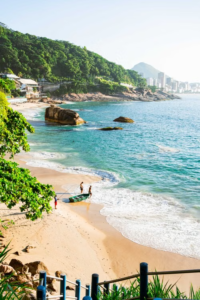
Continue west beyond Barra da Tijuca and Recreio and the urban landscape begins disappearing.
Prainha Beach sits beneath steep, forest-covered mountains and is one of the most beautiful natural beaches in Rio.
The surrounding landscape is protected, helping preserve much of the tropical scenery.
Prainha is especially well known among surfers because Atlantic swells can produce excellent waves.
Even travelers who never step onto a surfboard can appreciate the setting.
Green mountains wrap around the beach while powerful waves roll toward the sand.
Adventures at Prainha
Visitors may enjoy:
- Surfing
- Beach walking
- Swimming when conditions allow
- Nature photography
- Coastal sightseeing
- Relaxing on the sand
- Watching experienced surfers
The combination of rainforest, mountains and ocean makes Prainha one of the strongest choices for travelers looking for Rio beach scenery without the dense city backdrop.
Arriving earlier in the day can also make the experience more enjoyable, particularly on weekends and during popular travel periods.
3. Grumari Beach – Rio’s Wild Atlantic Coast
Beyond Prainha lies one of Rio’s most spectacular stretches of undeveloped coastline.

Grumari Beach is surrounded by mountains and protected vegetation, giving the area a wild appearance that contrasts dramatically with central Rio.
The beach stretches much farther than Joatinga and offers plenty of room for walking and enjoying the landscape.
Strong waves are common, and the open Atlantic setting gives Grumari a rugged character.
Why Grumari Stands Out
Grumari combines several landscapes in one destination:
Mountains + rainforest + beach + Atlantic Ocean
That makes it an excellent destination for outdoor travelers.
Activities can include:
- Long beach walks
- Surf watching
- Photography
- Swimming when conditions are suitable
- Relaxing away from central Rio
- Exploring nearby coastal scenery
Grumari is particularly beautiful when viewed from elevated sections of the coastal road.
Stopping at safe viewpoints along the route can reveal enormous panoramas of the beach, mountains and Atlantic Ocean.
4. Abricó Beach – A Secluded Beach Near Grumari
Near Grumari is Praia do Abricó, a smaller beach surrounded by rocky formations and vegetation.
Abricó is notable because part of the beach is associated with naturism, so travelers should understand the character and local rules of the area before visiting.
The surrounding scenery, however, is another excellent example of Rio’s rugged western coastline.
Rocky cliffs frame the beach while Atlantic waves break along the shore.
For travelers specifically interested in discovering unusual and less-developed coastal locations, Abricó represents another side of Rio’s enormous variety of beaches.
5. Reserva Beach – A Quieter Stretch Between Barra and Recreio
Not every hidden beach needs to be difficult to reach.
Praia da Reserva stretches between Barra da Tijuca and Recreio dos Bandeirantes and provides a noticeably less-developed environment than many central Rio beaches.
The beach borders protected natural areas, limiting some of the dense development found elsewhere along the coastline.

Reserva is long, open and excellent for travelers who simply want space.
You can walk along the shoreline while looking toward mountains in the distance and listening to Atlantic waves rather than being surrounded by dense beachfront buildings.
Reserva Beach Is Great For:
- Long beach walks
- Running
- Cycling nearby
- Photography
- Swimming
- Surf watching
- Relaxing
- Sunrise scenery
Because the beach is extensive, visitors can often find quieter sections even when other parts of Rio’s coastline are busy.
6. Macumba Beach – Surfing & Rocky Coastal Scenery
Despite its unusual name, Praia da Macumba is one of Rio’s attractive western beaches.
Located around Recreio, the beach combines a broad sandy shoreline with rocky formations and mountain scenery.
It is also popular with surfers.
The coastline here begins to feel noticeably different from Copacabana and Ipanema.
Buildings still exist nearby, but mountains and natural features become increasingly dominant.
Macumba can be a useful stop when exploring several western Rio beaches during the same coastal trip.
7. Recreio Beach – Space Beyond Barra

Recreio dos Bandeirantes offers another alternative for travelers who want to move away from Rio’s most famous tourist beaches.
The beach is large and backed by impressive mountain scenery.
Several sections attract surfers, swimmers and local beachgoers.
Nearby rocky viewpoints also create excellent opportunities for coastal photography.
Recreio works particularly well as a gateway to the wilder beaches farther west.
From here, travelers can continue toward:
Prainha → Grumari → Abricó
That route creates one of the best beach adventure days around Rio de Janeiro.
8. Praia do Perigoso – A Beach Reached by Trail
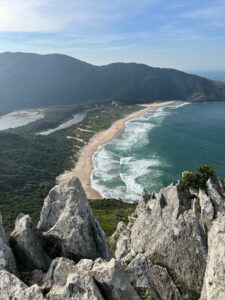
Travelers willing to hike can discover beaches that feel dramatically more remote.
Praia do Perigoso is located in Rio’s western coastal region and is commonly reached by trail.
The hike adds an adventure component that you simply do not get when stepping directly from a city street onto Copacabana.
Forest, hills and rocky coastal scenery surround the area.
Once you reach the beach, the landscape can feel remarkably removed from the massive city located farther east.
Bring for the Trail
Consider carrying:
- Comfortable hiking shoes
- Water
- Sunscreen
- Hat
- Lightweight backpack
- Camera
- Quick-drying clothing
- Beach towel
- Snacks
Trail conditions and weather can change, so checking current local information before hiking is important.
9. Praia do Meio – Continue Deeper into Rio’s Wild Coast
Travelers exploring the trail system around Perigoso can continue toward additional secluded beaches.
Praia do Meio is another small coastal escape surrounded by natural scenery.

The experience is less about traditional beachfront tourism and more about combining hiking with coastal exploration.
There are no famous beachfront avenues here.
Instead, the attraction is the landscape itself.
Ocean.
Forest.
Mountains.
Rock formations.
And relatively isolated stretches of sand.
For outdoor travelers, that combination can be far more memorable than spending the entire vacation on Rio’s most developed beaches.
10. Praia Funda – A Remote Coastal Adventure

Those looking for an even more adventurous experience may continue toward Praia Funda.
This area represents one of the more natural sides of Rio’s coastline.
Reaching beaches like this requires more planning than visiting Copacabana or Ipanema.
That is exactly what makes them interesting.
Hiking through coastal vegetation before emerging onto an Atlantic beach provides an entirely different Rio experience.
These locations are best approached as outdoor adventures rather than ordinary beach stops.
Bring adequate water and supplies, check weather and trail conditions and avoid beginning unfamiliar hikes too late in the day.
Pedra do Telégrafo & Rio’s Wild Beaches
One of the most famous outdoor destinations in western Rio is Pedra do Telégrafo.
The elevated viewpoint became widely known for photographs that appear to show visitors hanging dangerously above a huge drop.
The perspective is deceptive, but the surrounding scenery is genuinely spectacular.
From the region, visitors can look across mountains, beaches, islands and the Atlantic coastline.
Combining a hike in this area with nearby beaches can create an outstanding full-day outdoor adventure.
It also demonstrates something many first-time visitors don’t realize:
Rio de Janeiro is as much a mountain and wilderness destination as it is a beach city.
Surfing Rio’s Hidden Beaches
Surfing is one of the major attractions along Rio’s western coastline.
Prainha, Recreio, Macumba and other beaches can receive strong Atlantic swells.
Experienced surfers may find excellent conditions, while beginners should consider lessons or guided experiences rather than entering unfamiliar surf independently.
Ocean conditions vary significantly.
A beach that appears calm one day can have powerful waves and currents another day.
Always pay attention to local warnings, lifeguards and current conditions.
Even if you don’t surf, watching surfers against the mountains at Prainha can be an adventure in itself.
Water Adventures Beyond Swimming
Rio’s coastline offers much more than lying on the sand.
Depending on the beach and current conditions, coastal adventures may include:
-

Water Adventures Beyond Swimming – Kayaking Along Rio de Janeiro’s Coast Surfing
- Stand-up paddleboarding
- Kayaking
- Bodyboarding
- Swimming
- Snorkeling
- Boat excursions
- Sailing
- Coastal sightseeing
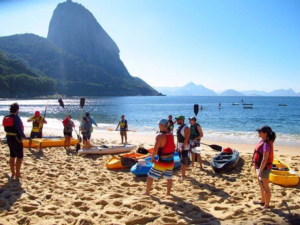
Not every activity is appropriate at every beach.
Protected bays and calmer water are generally better suited to paddling, while exposed western beaches may experience stronger surf.
Choose activities based on current conditions and local guidance rather than assuming every beach has the same ocean environment.
Combine Beaches With Coastal Hiking
One of the best ways to experience Rio’s hidden coastline is to combine hiking and beach exploration.
The mountains descend directly toward the Atlantic in many areas, producing trails with spectacular ocean views.
A typical adventure might include:
Morning: Coastal hike
Midday: Hidden beach
Afternoon: Swimming or relaxing
Late afternoon: Scenic overlook
Sunset: Western Rio coastline
This combination is ideal for travelers who want more than a conventional beach vacation.
Photography Along Rio’s Hidden Coast
Rio’s secluded beaches provide outstanding photography opportunities.

Some of the best subjects include:
- Waves crashing against rocks
- Tropical vegetation
- Forest-covered mountains
- Surfers
- Sunrise
- Sunset
- Coastal roads
- Beach vendors
- Wildlife
- Fishing boats
- Distant islands
- Elevated beach viewpoints
A camera or smartphone with a wide-angle capability can be particularly useful for capturing the enormous scale of Rio’s mountain-and-ocean landscapes.
A waterproof case or dry bag can also help protect electronics around sand, spray and sudden tropical rain.
Sunrise or Sunset
Both can be spectacular, but the experience varies by location and season.
Early morning offers cooler temperatures, softer light and often quieter beaches.
Late afternoon brings warmer colors across the mountains and coastline.
Photographers may want to visit the same area at different times because Rio’s dramatic mountains create constantly changing shadows and light.
Clouds can actually improve the scenery.
A partly cloudy sky illuminated by the setting sun can transform the coastline into one of the most dramatic landscapes in Brazil.
Best Time to Explore Rio’s Hidden Beaches
Rio is a year-round destination, but weather can significantly affect beach and hiking plans.
The warmer months bring classic tropical beach conditions but can also produce heat, humidity and thunderstorms.
Cooler periods can be excellent for hiking because temperatures may be more comfortable.
Instead of planning entirely around the calendar, check the forecast shortly before each excursion.
For remote beaches and trails, avoid heading out when heavy rain or thunderstorms are expected.
Rain can make trails slippery and change conditions quickly.
What to Bring for Rio’s Hidden Beaches
Hidden beaches require slightly more preparation than major urban beaches.

Useful items include:
- Water
- Sunscreen
- Sunglasses
- Hat
- Lightweight beach towel
- Swimsuit
- Quick-drying clothing
- Comfortable walking or hiking shoes
- Sandals or water shoes
- Waterproof phone case
- Dry bag
- Portable charger
- Camera
- Small first-aid kit
- Snacks
- Lightweight rain protection
For longer hikes, carry more water than you think you’ll need.
Rio’s combination of tropical sun, humidity and steep terrain can make relatively short hikes feel much more demanding.
Hiking Shoes, Sandals or Water Shoes?
The best footwear depends on your plans.
Sandals work well for developed beaches and casual shoreline walking.
Water shoes can be useful around rocks, boats and water activities.
Hiking shoes or trail shoes are the better option when reaching beaches by trail.
If your day combines hiking and swimming, bringing lightweight sandals or water shoes inside your backpack can give you the best of both worlds.
Getting to Rio’s Hidden Beaches
Rio’s western beaches are spread across a large section of coastline.

Some are easier to reach by car or rideshare than by public transportation.
Others require hiking after reaching the general area.
When planning a beach-hopping day, consider grouping nearby destinations.
Western Rio Beach Route
A possible route could include:
Barra da Tijuca → Reserva → Recreio → Macumba → Prainha → Grumari
Trying to visit every beach in one day would be rushed.
Instead, select two or three and spend enough time to actually experience them.
For hiking beaches, dedicate a separate day.
Where Are Rio’s Hidden Beaches?
Rio’s best-known beaches—including Copacabana, Ipanema and Leblon—sit closer to the city’s central tourist areas.
Many quieter beaches are located farther west.
As you travel toward Barra da Tijuca, Recreio, Prainha and Grumari, development gradually gives way to mountains and protected natural landscapes.
Farther west, hiking routes provide access to even more secluded beaches.
Looking at a map before your trip makes Rio’s geography much easier to understand and helps explain why these beaches feel so different from Copacabana.
Where to Stay for Rio Beach Adventures

Where you stay can influence how easily you explore the coastline.
Copacabana or Ipanema
Best for travelers who want:
- Famous beaches
- Restaurants
- Nightlife
- Easy access to major attractions
- Classic Rio atmosphere
Barra da Tijuca
A strong choice for travelers interested in:

- Longer beaches
- Western Rio
- More modern accommodations
- Easier access toward Reserva and Recreio
Recreio dos Bandeirantes
Worth considering if your priority is:
- Surfing
- Prainha
- Grumari
- Western beaches
- Outdoor coastal adventures
There is no single perfect location.
Travelers planning their first Rio vacation may prefer staying closer to the famous attractions while dedicating one or two days to exploring the western coastline.

Book Your Stay in Rio de Janeiro
Rio has accommodations ranging from beachfront hotels and apartments to luxury resorts and smaller properties near quieter sections of the coastline.
Before booking, consider what matters most for your trip:
City attractions + famous beaches: Copacabana or Ipanema
Beach space + western adventures: Barra da Tijuca
Surfing + access to wild beaches: Recreio
Choosing the right location can dramatically reduce travel time when exploring Rio’s enormous coastline.
🏨 Book Your Stay in Rio de Janeiro
Food Along Rio’s Coast

A beach adventure is also an opportunity to experience Brazilian coastal food.
Depending on where you stop, look for:
- Fresh seafood
- Grilled fish
- Shrimp
- Açai
- Coconut water
- Tropical fruit
- Brazilian sandwiches
- Beach snacks
- Fresh juices
More remote beaches may have fewer food options than Copacabana or Ipanema.
Carry water and snacks rather than assuming restaurants or vendors will always be available.
Respect Rio’s Natural Coastline
The reason these beaches are special is their natural setting.
Help keep them that way.
Carry out everything you bring.
Avoid leaving plastic, food packaging or other waste on beaches and trails.
Stay on established trails where possible and avoid damaging vegetation.
Wild coastal landscapes are much more enjoyable when visitors treat them as natural environments rather than simply tourist attractions.
⚠️ Beach & Trail Safety

Rio’s hidden beaches can involve stronger ocean conditions and more challenging access than developed city beaches.
Keep several basic precautions in mind:
- Check weather conditions.
- Check surf and tide conditions.
- Pay attention to lifeguard warnings.
- Avoid unfamiliar water during dangerous surf.
- Carry sufficient drinking water.
- Wear appropriate footwear on trails.
- Protect yourself from strong sun.
- Avoid isolated hikes after dark.
- Keep electronics protected from water and sand.
- Use reputable guides when appropriate.
Preparation makes it much easier to enjoy the adventure.
How Many Days Should You Spend Exploring Rio’s Beaches?

You could spend an entire vacation exploring Rio’s coastline.
For most travelers, three or four beach-focused days provide a good introduction.
One possible plan:
Day 1: Copacabana, Arpoador and Ipanema
Day 2: Barra da Tijuca, Reserva and Recreio
Day 3: Prainha and Grumari
Day 4: Coastal hiking and one of Rio’s more secluded western beaches
This gives you a combination of famous landmarks and wild coastal scenery without trying to see everything at once.
Watch the Rio de Janeiro Adventure Video
Want to see Rio’s beaches, mountains and outdoor adventures before planning your trip?
Explore the coastline through video and discover just how different Rio looks once you travel beyond Copacabana and Ipanema.
▶️ Watch the Rio de Janeiro Hidden Beaches & Coastal Adventures Video
A video works especially well for this destination because aerial views, waves, trails, rainforest and mountain scenery reveal the enormous scale of Rio’s coastline.
More Rio de Janeiro Beach Adventures

Hidden beaches are only one part of Rio’s coastline.
Continue exploring:
Best Beaches in Rio de Janeiro – Copacabana, Ipanema & Beyond
Discover Rio’s famous beaches along with several coastal destinations beyond the city’s best-known shoreline.
Rio de Janeiro Beach Adventures – Surfing, Swimming & Water Sports
Explore surfing, swimming, paddling and other ocean adventures around Rio.
Rio’s Beaches, Coastal Trails & Outdoor Adventures
Combine tropical beaches with hiking, viewpoints, mountains and outdoor exploration.
Together, these guides create a much broader picture of what a Rio de Janeiro beach vacation can become.
Explore More Brazil Adventures

Rio can also become the starting point for a much larger Brazilian adventure.
Travelers can continue exploring destinations such as:
- Florianópolis
- São Paulo
- Iguazu Falls
- Brazil’s Atlantic coastline
- Tropical islands
- Rainforest destinations
- Mountains and waterfalls
- Surfing destinations
- Coastal hiking routes
Brazil is enormous, and Rio represents only one piece of its outdoor possibilities.
Final Thoughts – Discover the Other Side of Rio’s Coast
Rio de Janeiro’s famous beaches deserve to be experienced.
But they are only the beginning.
Travel beyond Copacabana and Ipanema and you’ll discover a coastline filled with hidden coves, rainforest-covered mountains, surfing beaches, rocky headlands, coastal trails and surprisingly wild landscapes.

Joatinga provides a small cliff-lined escape.
Prainha combines rainforest and surf.
Grumari reveals Rio’s wild Atlantic coastline.
Perigoso and the western hiking beaches add genuine adventure.
Together they reveal a side of Rio that many travelers never see.
You can photograph the mountains in the morning, hike through tropical vegetation, swim beside dramatic cliffs and finish the day watching the Atlantic from a secluded stretch of sand.
That combination of beaches, mountains, rainforest and adventure is what makes Rio de Janeiro one of the world’s most extraordinary outdoor destinations.
The famous beaches may bring you to Rio—but its hidden coastline may become the part you remember most.
Explore the Rio de Janeiro Mega Hub
Ready to discover even more of Rio? Explore the Rio de Janeiro Mega Hub for beaches, hidden coastal escapes, surfing, water adventures, hiking trails, outdoor activities, places to stay and more.
👉Explore the Rio de Janeiro Mega Hub
Thank you for visiting MyCampingVacationSites! I hope this guide helps you plan an unforgettable outdoor adventure. If you enjoyed this article, feel free to leave a comment below and explore more travel guides, hiking destinations, camping adventures, and outdoor experiences throughout the site. Have a wonderful vacation wherever your next journey takes you!
— Jeffrey
 Explore More Hubs
 Water Adventure Gear
 50 Must-Have Water Adventure Items (Complete Gear Guide) Ultimate Jet Ski Gear & Accessories Guide
  (Top Picks for Speed & Fun) Best River Rafts & Floating Docks
  (Rafting & Floating Essentials)
 Camping & Tent Gear
Tents: Best Tents for Camping & Outdoor Adventures (Top-Rated Picks) Ultimate Glamping Gear: 50 Must-Have Tents & Adventure Essentials  (Luxury Setup Guide)
 RV & Camper Gear
RV Adventure Gear: Must-Have Essentials for Road Trips & Camping (Full Travel Setup) Ultimate Interior RV & Camper Gear Guide  (Comfort & Living Upgrades)
Leave a Reply