
Rio de Janeiro may be famous around the world for its beaches, mountains and colorful coastline, but just beyond the sand is another side of the city entirely.
Thank you for reading this post, don't forget to subscribe!Tijuca National Park protects a vast landscape of Atlantic rainforest filled with tropical vegetation, mountain trails, waterfalls, wildlife, historic sites and panoramic viewpoints. It creates an incredible contrast with Rio’s urban neighborhoods and beaches, allowing travelers to experience a rainforest adventure without traveling far from the city.
The park includes famous Rio landmarks and natural attractions such as Pico da Tijuca, Cascatinha Taunay, Vista Chinesa, Pedra Bonita, Pedra da Gávea, Corcovado and portions of the Transcarioca Trail. Official park information describes roughly 200 kilometers of trails ranging from easier walks to routes intended for experienced hikers.
For travelers who enjoy hiking, waterfalls, wildlife, photography and tropical scenery, Tijuca National Park can easily become one of the highlights of a Rio de Janeiro vacation.
 Watch: Exploring Tijuca National Park
See the rainforest scenery, waterfalls, hiking trails, wildlife and spectacular mountain landscapes that make Tijuca one of Rio de Janeiro’s great outdoor adventures.
 Watch the Tijuca National Park Adventure Video
Why Explore Tijuca National Park?
One of the remarkable things about Tijuca is its location.
You can spend part of a Rio vacation enjoying Copacabana and Ipanema, then trade the oceanfront scenery for dense green forest, mountain peaks and waterfalls.
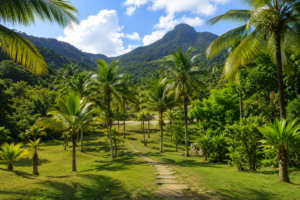
The park’s publicly visited areas encompass several distinct landscapes, including the Floresta da Tijuca, Serra da Carioca and Pedra Bonita/Pedra da Gávea sectors. Together they offer hiking, viewpoints, cycling, climbing, waterfalls, picnic areas and other outdoor activities.
That variety makes Tijuca particularly useful for travelers who want more than a traditional city sightseeing trip.
A day here can include:
- Hiking beneath a tropical forest canopy
- Visiting waterfalls
- Looking for birds and other wildlife
- Climbing to mountain viewpoints
- Exploring historic areas
- Photographing Rio from above
- Connecting with longer hiking routes
- Combining the rainforest with Rio’s famous landmarks
And because there are routes of very different difficulty levels, you don’t necessarily need to be an experienced hiker to enjoy the park.
Cascatinha Taunay – One of Tijuca’s Signature Waterfalls
One of the first natural attractions many visitors will want to see is Cascatinha Taunay.
Surrounded by dense Atlantic Forest vegetation, the waterfall tumbles dramatically over a rocky cliff and provides one of the park’s classic rainforest scenes.
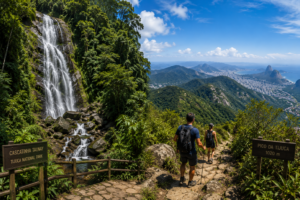
Brazil’s Ministry of Tourism describes Cascatinha Taunay as the largest waterfall in the park.
The combination of rock, flowing water and tropical vegetation makes this an especially attractive location for photography.
Rather than rushing through, spend some time observing the forest surrounding the falls. Tijuca’s appeal isn’t simply reaching individual attractions—it is experiencing the rainforest environment connecting them.
Pico da Tijuca – Hike Toward the Top of the Forest
For travelers looking for a more substantial hiking adventure, Pico da Tijuca is one of the park’s major destinations.
At just over 1,020 meters, it is the highest point within Tijuca National Park.
The journey provides a very different experience from Rio’s beachfront promenades. Instead of sand and ocean, hikers travel through thick vegetation and mountain terrain toward increasingly expansive views.
Reaching the upper portions of the route provides a real sense of just how mountainous Rio de Janeiro actually is.
Bring sufficient water, wear appropriate hiking footwear and allow yourself enough time so the experience doesn’t become a race to the summit.
Wildlife in Tijuca National Park
Tijuca isn’t simply a collection of hiking trails. It protects an important piece of Atlantic Forest habitat within one of Brazil’s largest cities.
Travelers may encounter birds, butterflies, insects and other forest wildlife while walking through the park.
The best wildlife experiences often happen when you slow down.
Listen for movement in the canopy. Watch branches above the trail. Look around streams and flowering plants. Early hours can be particularly enjoyable for experiencing the sounds of the forest.
Wild animals should always be observed from a respectful distance.
Never feed wildlife.
The park specifically asks visitors not to feed wild animals because doing so harms both the animals and the surrounding ecosystem.
Walking Beneath the Atlantic Forest Canopy
One of the simplest pleasures of Tijuca National Park is simply walking through the forest.
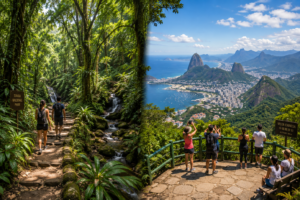
Large trees create shade overhead while vines, ferns and other vegetation fill the landscape below.
Depending on the trail, you may encounter streams, rocky sections, small waterfalls, historic features and openings where distant mountains suddenly become visible.
This is also why you don’t necessarily need to tackle the hardest trail to have a worthwhile experience.
An easier forest walk can be every bit as memorable for someone primarily interested in nature, photography or a relaxing escape from Rio’s busiest neighborhoods.
Vista Chinesa – A Classic Rio Viewpoint
Vista Chinesa provides one of the great transitions between rainforest and city scenery.
From the forested mountains, visitors can look outward across Rio’s dramatic landscape.
The viewpoint is located within the Serra da Carioca portion of the park and is one of the area’s classic panoramic stops, along with places such as Mesa do Imperador and Mirante Dona Marta.
This is an excellent reminder that Rio’s city, mountains, rainforest and coastline aren’t separate attractions—they form one enormous landscape.
On a clear day, the elevated views can be spectacular.
Pedra Bonita – Mountain Views Above Rio
Travelers wanting another mountain adventure should consider Pedra Bonita.
This part of the national park is particularly well known for outdoor adventure and elevated views. The Pedra Bonita/Pedra da Gávea sector offers trails, rock climbing and free-flight activities such as hang gliding and paragliding.
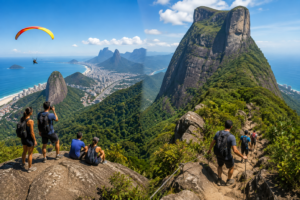
Even without taking to the air, the mountain scenery makes this part of Tijuca worth considering.
It is another excellent location for photographing the contrast between Rio’s mountains, forest, neighborhoods and Atlantic coastline.
⛰️ Pedra da Gávea – A More Challenging Adventure
For experienced and properly prepared hikers, Pedra da Gávea represents a much more serious mountain outing.
Rising more than 800 meters, the mountain dominates the landscape around São Conrado and Barra da Tijuca. The park describes this sector as one of its major areas for challenging trails and adventure sports.
This should not be treated as a casual rainforest stroll.
Weather, trail conditions, physical ability and experience should all be considered before attempting more difficult routes.
For complex activities, Brazil’s Ministry of Tourism recommends using guides or environmental conductors accredited with the park.
There’s nothing wrong with choosing an easier trail. Tijuca has enough variety that travelers can experience the rainforest without taking on its most difficult mountain routes.
Bico do Papagaio
Another distinctive mountain destination is Bico do Papagaio.
Its summit reaches approximately 989 meters, making it one of the prominent peaks within the forest sector.
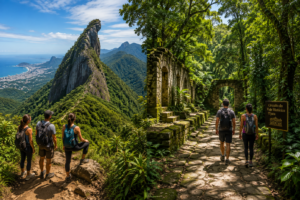
This is another option for hikers who want their Tijuca visit to focus on mountain scenery rather than simply stopping at roadside attractions.
A longer hiking day could potentially combine forest scenery, viewpoints and some of the park’s more elevated terrain.
The Historic Valley Circuit
Tijuca National Park isn’t only about nature.
The forest also contains reminders of Rio’s history.
The Circuito do Vale Histórico, or Historic Valley Circuit, extends approximately 7.5 kilometers through the Floresta sector.
This provides an interesting alternative for visitors who enjoy combining hiking with history.
Old pathways, ruins and cultural features make parts of Tijuca feel very different from a typical wilderness hike.
It’s a good example of why the park deserves more than being treated as simply a backdrop for Christ the Redeemer.
Circuit of the Peaks
More ambitious hikers can look toward the Circuito dos Picos, or Circuit of the Peaks.
The park lists this route at approximately 19 kilometers, connecting ten principal peaks within the Floresta sector.
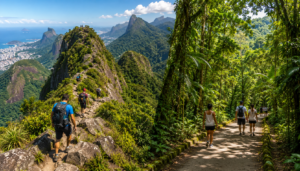
That’s an entirely different type of experience from stopping at Cascatinha Taunay or taking a short forest walk.
It also demonstrates just how much hiking exists within Tijuca.
A traveler could visit the park several times and have completely different experiences each day.
Trilha dos Estudantes – An Easier Forest Experience
Not everyone visiting Rio wants an intense mountain climb.
For a gentler introduction to Tijuca, the Trilha dos Estudantes is one option.
The park describes it as an easy trail in terms of access, movement and navigation.
That makes it useful for visitors whose priority is enjoying the rainforest atmosphere rather than reaching a difficult summit.
An easier trail also leaves time for waterfalls, viewpoints and photography elsewhere in the park.
The Transcarioca Trail
One of the most interesting hiking connections in Rio is the Transcarioca Trail.
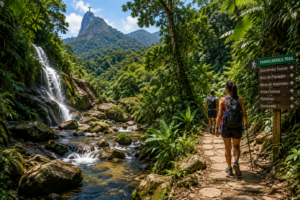
Rather than existing entirely inside Tijuca National Park, this long-distance route connects different natural landscapes across Rio.
Within Tijuca, sections pass attractions including Cascatinha Taunay, Bico do Papagaio, Mesa do Imperador, Vista Chinesa, Paineiras and Corcovado before continuing toward other areas of the city.
That creates an intriguing opportunity for hikers who want to see Rio as a connected outdoor destination rather than a collection of isolated attractions.
You don’t need to complete the entire long-distance route to experience part of it.
Waterfalls & Forest Streams
Cascatinha Taunay may be Tijuca’s best-known waterfall, but water appears throughout the landscape.
Streams, smaller cascades and waterfalls add another dimension to hiking through the Atlantic Forest.
The Serra da Carioca area includes the Cachoeiras do Horto, while waterfalls and water features can also appear along various hiking routes.
After rain, forest scenery can become especially lush, although wet conditions can also make trails and rocks slippery.
Always put safety ahead of getting the perfect photograph.
Photography in Tijuca National Park
Tijuca is a fantastic place for outdoor photography because the scenery changes constantly.
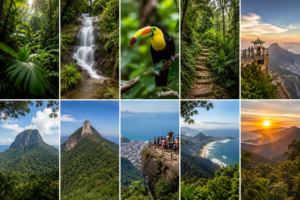
You can photograph waterfalls in one area, dense jungle in another and enormous Rio panoramas from the mountains.
Good subjects include:
Rainforest vegetation
Cascatinha Taunay
Birds and wildlife
Jungle hiking trails
Vista Chinesa
⛰️ Pico da Tijuca
Pedra Bonita
Rio’s coastline from elevated viewpoints
Historic forest paths
Mountain light near the beginning or end of the day
Keep cameras and phones protected from moisture, particularly around waterfalls and during periods of rain.
What to Bring for Tijuca National Park

Preparation can make a rainforest outing considerably more comfortable.
Consider bringing:
Hiking shoes or trail shoes with dependable traction
Plenty of drinking water
Lightweight daypack
Insect repellent
☀️ Sunscreen
Hat or cap
Snacks or a light meal
Fully charged phone
Camera or action camera
Lightweight rain protection
Offline map or downloaded trail information
The park itself recommends comfortable clothing, closed footwear with non-smooth soles, insect repellent, sunscreen, water and a light snack before hiking.
⚠️ Hiking Safely in Tijuca
A rainforest located within a major city is still a natural environment.
Trails can contain slippery surfaces, roots, steep terrain and other hazards.
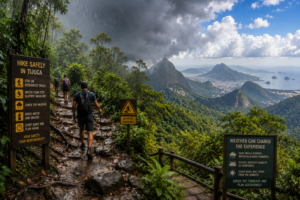
Stay on designated routes, pay attention to weather conditions and avoid beginning long hikes too late in the day.
For more demanding routes, consider hiking with an experienced local guide.
Most importantly, choose a trail appropriate for your experience rather than simply choosing the one with the most dramatic photographs.
Weather Can Change the Experience
Rio’s tropical environment means conditions can change.
Rain can transform the forest into an incredibly lush landscape and increase water flow, but it can also make rocks and trails slippery.
Clouds can dramatically reduce visibility from mountain viewpoints.
If panoramic scenery is your priority, check the forecast before committing to a major summit hike.
If you’re primarily interested in the rainforest itself, even an overcast day can create beautiful conditions beneath the canopy.
⏰ How Much Time Should You Spend in Tijuca National Park?
You could experience a small portion of Tijuca in several hours, but travelers who enjoy hiking and nature could easily dedicate most of a day to the park.
A simple visit might include:
Morning: Cascatinha Taunay and an easier forest trail.
Midday: Explore the forest and stop for lunch or a snack.
Afternoon: Visit a viewpoint or complete another moderate hike.
Travelers wanting to climb Pico da Tijuca or tackle another substantial route should plan the day around that hike rather than trying to squeeze too many attractions together.
And serious hikers could easily justify multiple visits during a longer stay in Rio.
Combining Tijuca With Rio’s Beaches
One of my favorite things about building a Rio itinerary is the contrast.
You don’t have to choose between a rainforest vacation and a beach vacation.
You can have both.
Spend one day exploring Copacabana, Ipanema or Rio’s hidden beaches, and spend another beneath the rainforest canopy of Tijuca.

A longer Rio vacation could alternate between:
Beach day
Rainforest day
Coastal hiking day
Water adventure day
City sightseeing day
Mountain/viewpoint day
That keeps the trip varied without constantly traveling to another destination.
From Rainforest to Coastline
Tijuca also helps explain why Rio’s scenery is so unusual.
The mountains aren’t simply sitting behind the city. They’re covered in tropical forest that descends toward neighborhoods and ultimately meets an extraordinary coastline.
From elevated areas you can appreciate the entire geography at once:
Rainforest → mountains → city → beaches → Atlantic Ocean.
Few major cities offer that combination in such a compact area.
Where to Stay for a Tijuca National Park Adventure

Travelers don’t necessarily need to stay beside the park.
Many visitors can base themselves in Rio’s established tourist areas and make Tijuca a day trip.
Staying around Copacabana, Ipanema, Leblon or other well-connected parts of Rio also makes it easier to combine rainforest exploration with beaches, restaurants and other attractions.
Travelers primarily interested in hiking may prefer accommodations that make transportation toward the park convenient.
👉Book Your Stay in Rio de Janeiro
Compare hotels, resorts and other accommodations around Rio so you can combine Tijuca National Park with the city’s beaches, mountains and other attractions.
Getting to Tijuca National Park
Because Tijuca covers a large mountainous area, there isn’t a single entrance that works for every attraction.
Your transportation plan should depend on which sector and trail you intend to visit.
For the Floresta sector, the park identifies its entrance around Praça Afonso Viseu in Alto da Boa Vista. Public transportation can reach portions of the park, while cars and other transportation may be convenient for certain forest and viewpoint areas.
Plan your destination before leaving your accommodation rather than simply navigating to “Tijuca National Park.”
Check Current Park Conditions Before Your Visit
Conditions, access and trail availability can change because of weather, maintenance, fire risk or other circumstances.
The official park website currently lists general visiting hours as 8:00 a.m. to 5:00 p.m. daily, but visitors should verify current information before heading out.
The park also publishes maps, notices and information about current trail access.
Tijuca National Park official visitor information
Explore More of Rio de Janeiro

Tijuca National Park is only one part of the outdoor experience surrounding Rio.
After exploring the rainforest, continue discovering the city’s beaches, coastal trails, water adventures, hidden tropical escapes, landmarks and mountain scenery.
Best Beaches in Rio de Janeiro – Copacabana, Ipanema & Beyond
Discover Rio’s famous stretches of sand along with beautiful beaches beyond the city’s best-known coastline.
Rio de Janeiro Beach Adventures – Surfing, Swimming & Water Sports
Explore surfing, swimming, paddleboarding and other ways to enjoy Rio’s Atlantic coastline.
Hidden Beaches of Rio de Janeiro – Secluded Tropical Escapes
Discover quieter beaches, wild stretches of coastline and tropical escapes away from Rio’s busiest sands.
Rio’s Beaches, Coastal Trails & Outdoor Adventures
Combine ocean scenery with coastal hiking, viewpoints and outdoor experiences around Rio.
Final Thoughts – Discover Rio’s Wild Side
Tijuca National Park reveals a side of Rio de Janeiro that can be easy to overlook when first planning a trip.
The beaches may capture your attention first, but beyond them lies a landscape of Atlantic rainforest, waterfalls, wildlife, historic trails and rugged mountain peaks.

You can photograph Cascatinha Taunay, hike beneath a dense forest canopy, climb toward Pico da Tijuca, enjoy the views from Vista Chinesa, explore Pedra Bonita or simply spend several peaceful hours surrounded by tropical vegetation.
And that’s what makes Tijuca such a valuable addition to a Rio adventure.
Rio isn’t only a beach destination.
It’s a place where rainforest, mountains, waterfalls, wildlife, city and ocean all come together—sometimes within the same view.
Explore the rainforest.
Follow the trails.
Discover the waterfalls.
Watch for wildlife.
Take in the views.
Then head back toward the coast and discover another completely different side of Rio de Janeiro.
Hiking Footwear for Rio’s Trails
 Hiking Footwear for Rio’s Trails
Planning to explore Rio’s coastal trails, rainforest paths and mountain viewpoints? The right footwear can make hiking more comfortable and provide better traction on rocky, uneven or potentially wet terrain.
 Ultimate Hiking Footwear Guide: 50 Best Hiking Boots, Sandals & Sneakers for Every Adventure
Explore hiking boots, trail shoes, sandals and sneakers for everything from easy coastal walks to longer outdoor adventures.
Explore More Rio de Janeiro Adventures
 Explore More Rio de Janeiro Adventures
Want to discover even more of Rio? Visit the complete Rio de Janeiro Adventure Hub to explore beaches, coastal trails, water activities, hidden beaches, outdoor adventures, places to stay, and more.
Explore the Complete Rio de Janeiro Adventure Hub
Explore the beaches. Follow the trails. Get out on the water. And discover just how wild Rio de Janeiro can be.
Thank you for visiting MyCampingVacationSites! I hope this guide helps you plan an unforgettable outdoor adventure. If you enjoyed this article, feel free to leave a comment below and explore more travel guides, hiking destinations, camping adventures, and outdoor experiences throughout the site. Have a wonderful vacation wherever your next journey takes you!
— Jeffrey
 Explore More Hubs
 Water Adventure Gear
50 Must-Have Water Adventure Items (Complete Gear Guide) Ultimate Jet Ski Gear & Accessories Guide  (Top Picks for Speed & Fun) Best River Rafts & Floating Docks
  (Rafting & Floating Essentials)
 Camping & Tent Gear
Tents: Best Tents for Camping & Outdoor Adventures (Top-Rated Picks) Ultimate Glamping Gear: 50 Must-Have Tents & Adventure Essentials  (Luxury Setup Guide)
 RV & Camper Gear
RV Adventure Gear: Must-Have Essentials for Road Trips & Camping (Full Travel Setup) Ultimate Interior RV & Camper Gear Guide  (Comfort & Living Upgrades)
Leave a Reply