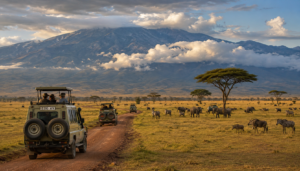
East Africa is one of the world’s legendary safari destinations, where enormous savannas, volcanic landscapes, forests, wetlands, and wildlife-rich plains create extraordinary opportunities for exploring from the ground.
Thank you for reading this post, don't forget to subscribe!A ground safari places you directly inside these landscapes.
Instead of viewing the wilderness from above or traveling along a river, you can follow dusty tracks across the savanna in a 4×4 vehicle, stop beside a herd of elephants, watch lions resting beneath an acacia tree, or leave the vehicle behind and explore portions of the African wilderness on foot with experienced guides.
From the vast plains of the Serengeti and Maasai Mara to the elephant country of Amboseli and the remote wilderness areas of Tanzania, Kenya, Uganda, and Rwanda, East Africa offers an incredible variety of ground-based safari adventures.
This guide explores 4×4 game drives, walking safaris, wildlife encounters, photography, safari camps, landscapes, safety, gear, and planning an East Africa ground safari.

Watch the East Africa Ground Safari Adventure
Experience the excitement of an East Africa ground safari as 4×4 vehicles travel across vast savannas in search of lions, elephants, giraffes, zebras, wildebeest, cheetahs, and other incredible wildlife.
The accompanying video brings the adventure to life through 4×4 game drives, walking safaris, wildlife encounters, dramatic landscapes, and the unforgettable scenery of East Africa. Game drives and guided walking safaris offer distinctly different perspectives on the region’s wildlife and ecosystems.
👉Watch the East Africa Ground Safaris Video on YouTube
Why Explore East Africa by Ground Safari?
Ground safaris remain one of the most immersive ways to experience Africa’s wildlife.
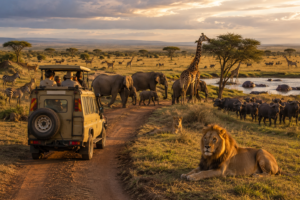
Traveling by vehicle or on foot allows you to spend considerable time within wildlife habitats while watching the landscape change around you.
A single safari day might include:
- Lions resting near a safari track
- Elephants crossing the savanna
- Giraffes feeding from acacia trees
- Zebras moving across open grasslands
- Hippos gathering near rivers
- Buffalo grazing in large herds
- Cheetahs scanning the plains
- Leopards resting in trees
- Antelope moving through tall grass
- Colorful birds throughout the landscape
Unlike a fixed viewpoint, a ground safari allows guides to explore different habitats and respond to wildlife activity throughout the day.
Every game drive can be different.
4×4 Game Drives Across East Africa
The classic 4×4 game drive is at the heart of many East African safaris.
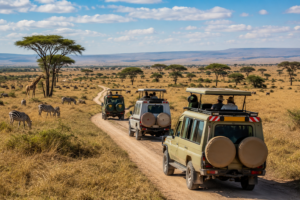
Safari vehicles are designed for rough tracks and wildlife viewing, often featuring elevated seating, large windows, pop-up roofs, or open sides.
From these vehicles, travelers can explore huge areas while carrying cameras, binoculars, water, and other safari equipment.
Popular wildlife encountered during game drives can include:
- Lions
- Leopards
- Cheetahs
- African elephants
- Cape buffalo
- Black and white rhinos
- Giraffes
- Zebras
- Wildebeest
- Hippos
- Hyenas
- Warthogs
- Gazelles
- Impalas
- Baboons and monkeys
Game drives are especially valuable because experienced guides can interpret tracks, animal behavior, bird calls, and signs that most visitors would otherwise overlook.
Serengeti National Park – Tanzania
The Serengeti is one of Africa’s most famous safari landscapes.
Vast grasslands stretch toward the horizon while rocky outcrops, seasonal rivers, woodland, and scattered acacia trees provide habitats for an extraordinary range of wildlife.

The Serengeti is particularly famous for the Great Migration, when enormous numbers of wildebeest, zebras, and other grazing animals move through the wider Serengeti ecosystem.
Predators often follow.
Game drives may reveal:
- Lions
- Cheetahs
- Leopards
- Hyenas
- Elephants
- Giraffes
- Wildebeest
- Zebras
- Gazelles
- Hippos
Even outside the major migration periods, the Serengeti offers outstanding wildlife viewing.
Its enormous scale is part of the experience.
Driving across the plains can make you realize just how large and wild East Africa remains.
Maasai Mara National Reserve – Kenya

Across the border from the Serengeti lies Kenya’s legendary Maasai Mara.
Its rolling grasslands and river systems create another exceptional destination for ground safaris.
The Mara is particularly well known for large predators.
Lions are frequently encountered, while cheetahs use open plains for hunting and leopards may be spotted around wooded river corridors.
During portions of the Great Migration, huge herds can enter the region.
One of the most dramatic events occurs when animals attempt to cross rivers while navigating steep banks, strong currents, and crocodiles.
A 4×4 safari allows travelers to explore different sections of this ecosystem while searching for wildlife throughout the day.
Amboseli National Park – Kenya
Few safari scenes are as recognizable as African elephants with Mount Kilimanjaro rising in the background.
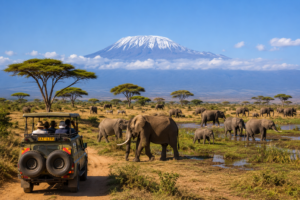
Amboseli National Park is famous for its elephants and open landscapes.
Large herds may move across dusty plains or gather around wetlands fed by underground water originating from the Kilimanjaro region.
Wildlife can include:
- Elephants
- Lions
- Cheetahs
- Giraffes
- Zebras
- Wildebeest
- Buffalo
- Hippos
- Numerous bird species
Clear mornings can provide spectacular views of Kilimanjaro.
For photographers, the combination of wildlife, open terrain, wetlands, and Africa’s highest mountain can create extraordinary compositions.
Walking Safaris – Exploring Africa on Foot
A walking safari creates a completely different wilderness experience.
Instead of covering large distances by vehicle, travelers slow down and examine the landscape at ground level.
Walking safaris are normally conducted with trained professional guides and, where required, appropriate wildlife protection personnel.
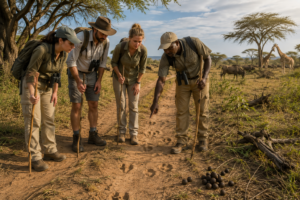
The focus often expands beyond large animals.
Guides may explain:
- Animal tracks
- Droppings and other wildlife signs
- Medicinal and native plants
- Insects
- Bird calls
- Animal behavior
- Trees and vegetation
- Predator tracks
- Ecosystem relationships
You begin noticing details that can easily disappear during a vehicle safari.
A footprint in the dust suddenly becomes a story.
A broken branch may indicate where an elephant recently passed.
Alarm calls from birds or monkeys may reveal the presence of a predator.
Walking turns the safari into an exploration of the entire ecosystem.
What Makes a Walking Safari Different?
A vehicle provides distance and mobility.
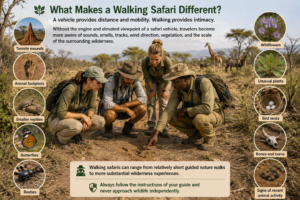
Walking provides intimacy.
Without the engine and elevated viewpoint of a safari vehicle, travelers become more aware of sounds, smells, tracks, wind direction, vegetation, and the scale of the surrounding wilderness.
You may notice things such as:
- Termite mounds
- Animal footprints
- Smaller reptiles
- Butterflies
- Beetles
- Wildflowers
- Unusual plants
- Bird nests
- Bones and horns
- Signs of recent animal activity
Walking safaris can range from relatively short guided nature walks to more substantial wilderness experiences.
Always follow the instructions of your guide and never approach wildlife independently.
Wildlife Adventures Beyond the Big Five
The Big Five — lion, leopard, elephant, rhino, and buffalo — receive enormous attention, but an East African safari offers much more.
The supporting cast of animals is extraordinary.
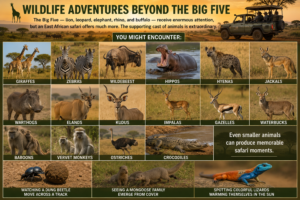
You might encounter:
- Giraffes
- Zebras
- Wildebeest
- Hippos
- Hyenas
- Jackals
- Warthogs
- Elands
- Kudus
- Impalas
- Gazelles
- Waterbucks
- Baboons
- Vervet monkeys
- Ostriches
- Crocodiles
Even smaller animals can produce memorable safari moments.
Watching a dung beetle move across a track, seeing a mongoose family emerge from cover, or spotting colorful lizards warming themselves in the sun adds another dimension to the experience.
Uganda & Rwanda – Forest Wildlife Adventures
East Africa’s ground adventures extend far beyond the open savanna.
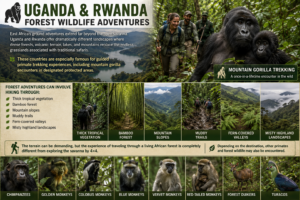
Uganda and Rwanda offer dramatically different landscapes where dense forests, volcanic terrain, lakes, and mountains replace the endless grasslands associated with traditional safaris.
These countries are especially famous for guided primate trekking experiences, including mountain gorilla encounters in designated protected areas.
Forest adventures can involve hiking through:
- Thick tropical vegetation
- Bamboo forest
- Mountain slopes
- Muddy trails
- Fern-covered valleys
- Misty highland landscapes
The terrain can be demanding, but the experience of traveling through a living African forest is completely different from exploring the savanna by 4×4.
Depending on the destination, other primates and forest wildlife may also be encountered.
Ngorongoro Crater – Wildlife Inside an Ancient Volcano
Tanzania’s Ngorongoro Crater offers one of East Africa’s most unusual ground safari environments.

The enormous volcanic caldera contains grasslands, wetlands, woodland, and lakes surrounded by steep crater walls.
Safari vehicles descend into the crater to explore its wildlife habitats.
Animals can include:
- Lions
- Elephants
- Buffalo
- Zebras
- Wildebeest
- Hippos
- Hyenas
- Gazelles
- Black rhinos
The surrounding crater walls create a spectacular natural backdrop.
From viewpoints along the rim, the landscape below can appear almost like an enormous natural amphitheater filled with wildlife.
Searching for East Africa’s Predators
Predator sightings are among the most exciting moments on a safari.
East Africa supports several remarkable hunters.
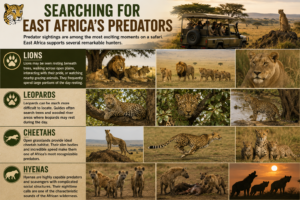
Lions
Lions may be seen resting beneath trees, walking across open plains, interacting with their pride, or watching nearby grazing animals.
They frequently spend large portions of the day resting.
Leopards
Leopards can be much more difficult to locate.
Guides often search trees and wooded river areas where leopards may rest during the day.
Cheetahs
Open grasslands provide ideal cheetah habitat.
Their slim bodies and incredible speed make them one of Africa’s most recognizable predators.
Hyenas
Hyenas are highly capable predators and scavengers with complicated social structures.
Their nighttime calls are one of the characteristic sounds of the African wilderness.
Sunrise & Sunset Game Drives

Early morning and late afternoon are often among the most rewarding periods for safari exploration.
Temperatures are cooler, the light is softer, and many animals can be more active.
A sunrise game drive might begin while the landscape is still dark.
Gradually the horizon changes color.
Silhouettes of acacia trees appear against the sky, birds begin calling, and animals emerge from the darkness.
Late afternoon offers another transformation.
Golden light spreads across the grasslands before the sun drops below the horizon.
These periods can be particularly rewarding for wildlife photography.
Wildlife Photography From a Safari Vehicle
Ground safaris offer outstanding photography opportunities because travelers can sometimes spend extended periods observing animals.
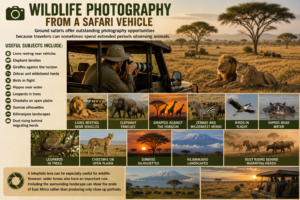
Useful subjects include:
- Lions resting near vehicles
- Elephant families
- Giraffes against the horizon
- Zebras and wildebeest herds
- Birds in flight
- Hippos near water
- Leopards in trees
- Cheetahs on open plains
- Sunrise silhouettes
- Kilimanjaro landscapes
- Dust rising behind migrating herds
A telephoto lens can be especially useful for wildlife.
However, wider lenses also have an important role.
Including the surrounding landscape can show the scale of East Africa rather than producing only close-up portraits.
Don’t Forget East Africa’s Birds
Safari vehicles are not only for searching for large mammals.
East Africa has remarkable birdlife.
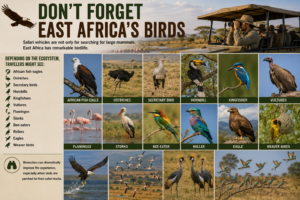
Depending on the ecosystem, travelers might see:
- African fish eagles
- Ostriches
- Secretary birds
- Hornbills
- Kingfishers
- Vultures
- Flamingos
- Storks
- Bee-eaters
- Rollers
- Eagles
- Weaver birds
Binoculars can dramatically improve the experience, especially when birds are perched far from safari tracks.
Safari Camps & Lodges

Where you stay can become part of the safari experience.
East Africa offers everything from relatively simple camps to luxurious wilderness lodges.
Options may include:
- Tented safari camps
- Mobile migration camps
- Permanent wilderness camps
- Safari lodges
- Eco-lodges
- Luxury tented accommodations
- Community-operated camps
- Remote bush camps
Some camps overlook plains, rivers, watering holes, or forest areas.
At night, the wilderness takes on a completely different character.
You might hear insects, frogs, distant hyenas, hippos, or other wildlife while sitting around camp.
Always follow camp rules, especially after dark.
Wild animals may travel through unfenced safari areas.
Book Your East Africa Safari Stay
Turn your East Africa ground safari into a multi-day wildlife adventure by staying near the region’s national parks, game reserves, and safari gateways.
From safari lodges and tented camps to hotels and wilderness accommodations, there are options for travelers exploring destinations such as the Serengeti, Maasai Mara, Amboseli, Ngorongoro, Arusha, and other East African safari regions.
Staying near your safari destination can make it easier to get an early start for 4×4 game drives, wildlife photography, guided walks, sunrise adventures, and full-day wildlife excursions.
👉Book Your East Africa Safari Stay
Nights in the African Wilderness

One of the most memorable parts of a safari can happen after the day’s game drive has ended.
Away from major cities, the night sky can become spectacular.
Stars stretch across the sky while sounds from the surrounding wilderness replace traffic and city noise.
Depending on the camp, evenings might include:
- Outdoor dinners
- Campfires
- Stargazing
- Wildlife sounds
- Nighttime photography
- Conversations with guides
- Preparing for the next day’s game drive
The combination of wildlife during the day and wilderness atmosphere at night makes multi-day safaris particularly rewarding.
What to Bring on an East Africa Ground Safari
Packing for a ground safari requires balancing comfort, sun protection, photography equipment, and luggage restrictions.
Useful items can include:
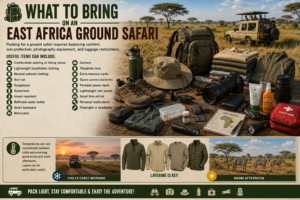
- Comfortable walking or hiking shoes
- Lightweight breathable clothing
- Neutral-colored clothing
- Sun hat
- Sunglasses
- Sunscreen
- Insect repellent
- Refillable water bottle
- Small backpack
- Binoculars
- Camera
- Telephoto lens
- Extra memory cards
- Spare camera batteries
- Portable power bank
- Lightweight rain jacket
- Small first-aid kit
- Personal medications
- Flashlight or headlamp
Temperatures can vary considerably between chilly early-morning game drives and warm afternoons.
Layers can be particularly useful.
Binoculars for Wildlife Viewing
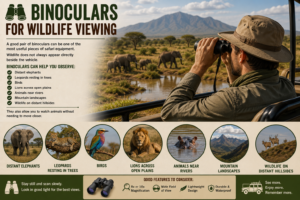
A good pair of binoculars can be one of the most useful pieces of safari equipment.
Wildlife does not always appear directly beside the vehicle.
Binoculars can help you observe:
- Distant elephants
- Leopards resting in trees
- Birds
- Lions across open plains
- Animals near rivers
- Mountain landscapes
- Wildlife on distant hillsides
They also allow you to watch animals without needing to move closer.
Footwear for Walking Safaris
Comfortable footwear becomes especially important when your safari includes walking.
Depending on the terrain, trails may involve:
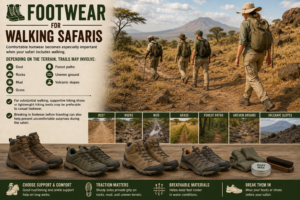
- Dust
- Rocks
- Mud
- Grass
- Forest paths
- Uneven ground
- Volcanic slopes
For substantial walking, supportive hiking shoes or lightweight hiking boots may be preferable to casual footwear.
Breaking in footwear before traveling can also help prevent uncomfortable surprises during the safari.
 Hiking Boots for East Africa Walking Safaris
 Hiking Boots for East Africa Walking Safaris
Supportive hiking boots or trail shoes can make walking safaris much more comfortable when exploring dusty trails, rocky terrain, grasslands, muddy paths, forests, and uneven ground.
Look for footwear with good traction, breathable materials, comfortable cushioning, and dependable support for longer days exploring East Africa on foot.
 Ultimate Hiking Footwear Guide
Understanding East Africa’s Safari Seasons

There is no single perfect safari season for every traveler.
Conditions vary by country, elevation, ecosystem, rainfall, and wildlife movement.
Drier periods can concentrate wildlife around water sources and make some roads easier to travel.
Greener periods can transform the landscape.
Fresh vegetation, dramatic skies, young animals, and birdlife can create excellent photography opportunities.
The Great Migration also moves through different parts of the Serengeti–Mara ecosystem during the year.
Instead of simply asking, “What is the best month for Africa?”, consider asking:
“What wildlife and landscape do I most want to experience?”
Then choose the destination and timing accordingly.
Ground Safari Safety
East Africa’s wildlife is genuinely wild.

That is part of what makes a safari exciting, but it also means rules should always be taken seriously.
Important precautions include:
- Follow your guide’s instructions
- Remain inside the vehicle unless told it is safe to exit
- Never approach wildlife independently
- Keep a safe distance from animals
- Do not feed wildlife
- Avoid sudden movements around nearby animals
- Keep noise under control
- Follow camp rules after dark
- Stay on approved walking routes
- Never begin an unguided walking safari in wildlife areas
- Respect national park and reserve regulations
Professional guides understand local animal behavior and conditions.
Their instructions should always take priority.
Combining Several Ground Safari Destinations
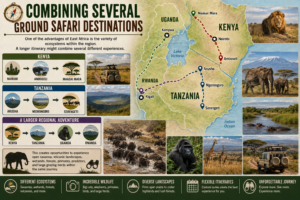
One of the advantages of East Africa is the variety of ecosystems within the region.
A longer itinerary might combine several different experiences.
For example:
Kenya
Nairobi → Amboseli → Maasai Mara
Tanzania
Arusha → Ngorongoro → Serengeti
Or a larger regional adventure could combine:
Kenya → Tanzania → Uganda or Rwanda
This creates opportunities to experience open savanna, volcanic landscapes, wetlands, forests, primates, predators, and large grazing herds within the same journey.
Game Drives vs. Walking Safaris
You do not necessarily have to choose between them.
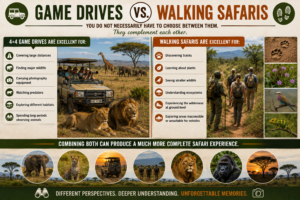
They complement each other.
4×4 game drives are excellent for:
- Covering large distances
- Finding major wildlife
- Carrying photography equipment
- Watching predators
- Exploring different habitats
- Spending long periods observing animals
Walking safaris are excellent for:
- Discovering tracks
- Learning about plants
- Seeing smaller wildlife
- Understanding ecosystems
- Experiencing the wilderness at ground level
- Exploring areas inaccessible or unsuitable for vehicles
Combining both can produce a much more complete safari experience.

Take Your East Africa Safari to the Water
After spending days traveling across dusty plains, exploring East Africa from the water provides a completely different perspective.
Rivers, lakes, wetlands, and channels attract wildlife while creating opportunities for boat-based exploration.
From the water, travelers may encounter hippos, crocodiles, elephants near shorelines, aquatic birds, and other wildlife.
A river or boat safari can therefore make an excellent companion to a ground safari.
Explore East Africa River Safaris – Wildlife, Boat Adventures & Scenic Waterways
✈️ See East Africa From Above
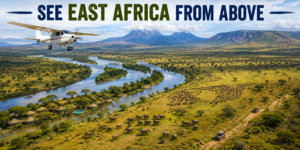
After experiencing the savanna at ground level, seeing the same landscape from the air reveals its enormous scale.
Aerial safari experiences can provide views of:
- Wildlife herds
- Rivers
- Mountains
- Savannah
- Volcanic landscapes
- Remote wilderness
- Safari camps
- Migration routes
The contrast between ground, water, and aerial exploration creates three dramatically different perspectives of East Africa.
Explore East Africa Aerial Safaris
Continue the Adventure with an East Africa Camper Safari

Travelers looking for a road-based adventure can also explore East Africa through camping and overland safari experiences.
Camper and camping safaris can combine:
- Wildlife viewing
- Scenic road travel
- Camping
- Safari parks
- Outdoor cooking
- Photography
- Remote landscapes
- Multi-day overland exploration
Explore East Africa Camper Safaris
Explore More East Africa Safari Adventures

A ground safari is only one way to experience East Africa.
Continue exploring the region through wildlife safaris, river adventures, aerial experiences, camping journeys, scenic landscapes, remote safari camps, and other outdoor adventures.
East Africa River Safaris – Wildlife, Boat Adventures & Scenic Waterways
Discover East Africa from its rivers, lakes, and wetlands while exploring wildlife-rich waterways and spectacular landscapes.
✈️ East Africa Aerial Safaris
Experience the scale of East Africa from above with aerial views of savannas, wildlife habitats, mountains, rivers, and remote wilderness.
East Africa Camper Safaris
Experience the freedom of exploring African landscapes by combining camping, wildlife viewing, road travel, and outdoor adventure.
Explore the East Africa Safari Hub
Discover more East Africa safari adventures, wildlife destinations, outdoor experiences, travel planning ideas, and safari gear.
Final Thoughts – Exploring East Africa from the Ground
There is something extraordinary about traveling across an African savanna and seeing wildlife living within a landscape that seems to stretch forever.
A ground safari makes you part of that environment.
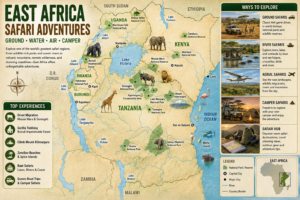
You can watch elephants crossing a track in front of your vehicle, follow giraffes moving between acacia trees, search the grasslands for cheetahs, listen for distant lions, examine animal tracks during a guided walk, and watch the African sun disappear beyond the horizon.
The famous animals are certainly part of the attraction.
But the real experience is larger.
It is the combination of wildlife, landscapes, guides, photography, camps, changing light, distant sounds, dusty roads, forests, rivers, mountains, and the enormous scale of East Africa.
Combine a 4×4 game drive with a guided walking safari, then add river, aerial, or camping experiences, and you can discover East Africa from several completely different perspectives.
For travelers who want to experience African wildlife at eye level, an East Africa ground safari remains one of the world’s great outdoor adventures.
Thank you for visiting MyCampingVacationSites! I hope this guide helps you plan an unforgettable outdoor adventure. If you enjoyed this article, feel free to leave a comment below and explore more travel guides, hiking destinations, camping adventures, and outdoor experiences throughout the site. Have a wonderful vacation wherever your next journey takes you!
— Jeffrey
 Explore More Hubs
 Water Adventure Gear
50 Must-Have Water Adventure Items (Complete Gear Guide) Ultimate Jet Ski Gear & Accessories Guide  (Top Picks for Speed & Fun) Best River Rafts & Floating Docks
  (Rafting & Floating Essentials)
 Camping & Tent Gear
Tents: Best Tents for Camping & Outdoor Adventures (Top-Rated Picks) Ultimate Glamping Gear: 50 Must-Have Tents & Adventure Essentials  (Luxury Setup Guide)
 RV & Camper Gear
RV Adventure Gear: Must-Have Essentials for Road Trips & Camping (Full Travel Setup) Ultimate Interior RV & Camper Gear Guide  (Comfort & Living Upgrades)
Leave a Reply