🏔️ Introductio
n — Discover Two Extraordinary Treasures of the Sacred Valley
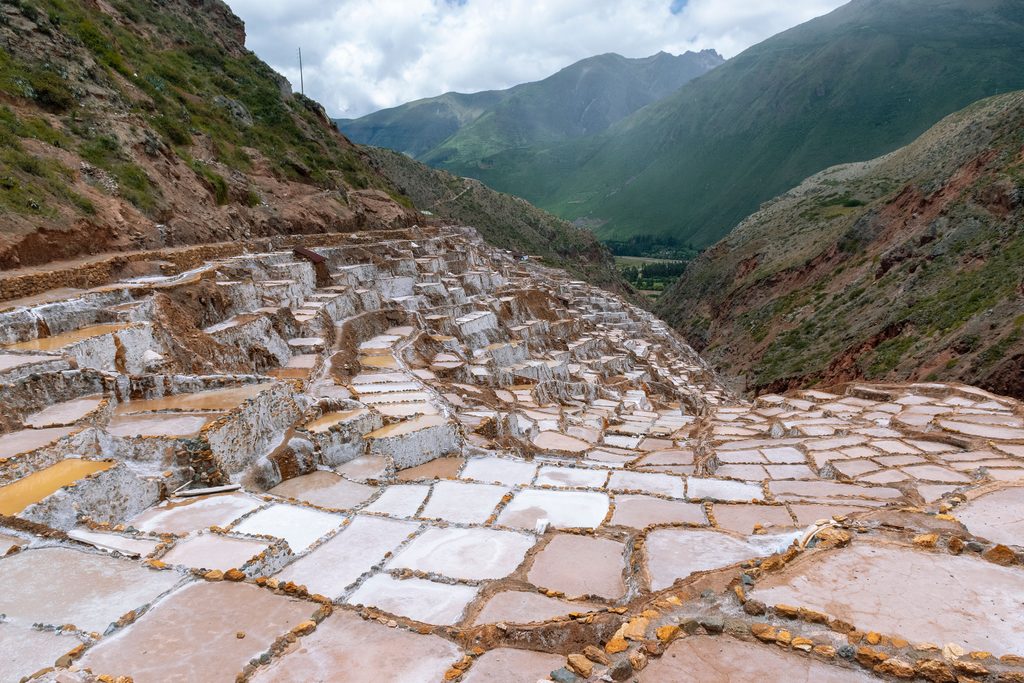
Thank you for reading this post, don't forget to subscribe!Hidden among the magnificent Andes Mountains near Cusco, Peru, the Maras Salt Mines and Moray Terraces offer one of the most fascinating combinations of natural beauty, ancient engineering, cultural history, and outdoor adventure in the Sacred Valley.
Imagine standing above thousands of shimmering salt pools cascading down a mountainside, then exploring the remarkable circular terraces that the Incas constructed within enormous natural depressions.
These two destinations reveal different sides of Peru’s extraordinary heritage.
At Maras, generations of local families have harvested salt from naturally occurring mineral-rich water using traditional techniques. At Moray, the Incas transformed the Andean landscape into an impressive system of agricultural terraces that may have helped them study growing conditions at different elevations.
Whether you’re planning a day trip from Cusco, exploring the Sacred Valley before visiting Machu Picchu, or searching for beautiful landscapes to photograph, Maras and Moray deserve a place on your Peru travel itinerary.
🧂 1. Maras Salt Mines — Thousands of Shimmering Salt Terraces
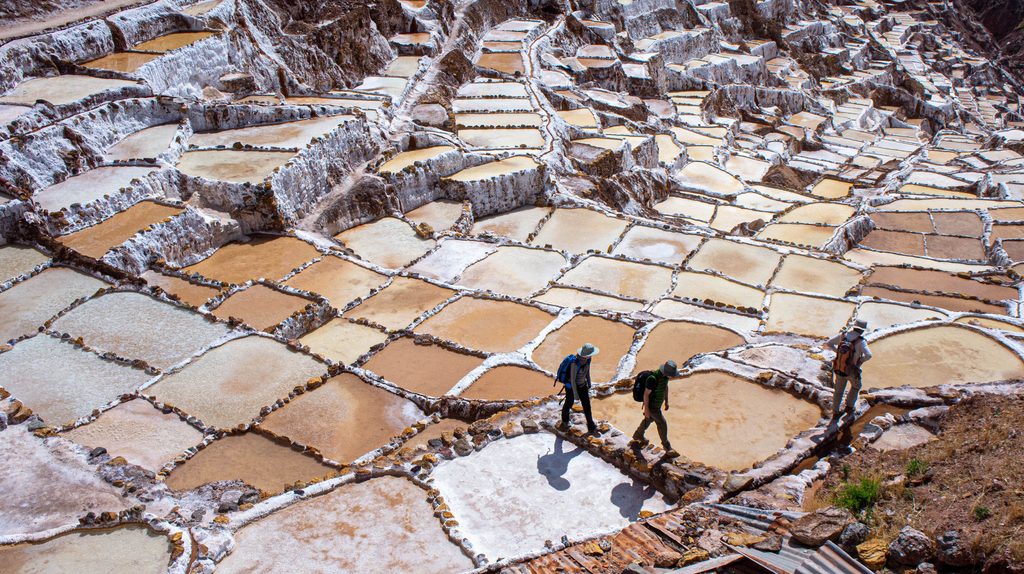
The Salineras de Maras, commonly called the Maras Salt Mines, are among the most visually distinctive landscapes in Peru.
Thousands of small salt evaporation pools form a spectacular patchwork of white, cream, pink, and earthy brown across a steep Andean hillside.
Unlike underground salt mines, Maras consists of shallow, open-air pools fed by naturally salty spring water.
How the Maras Salt Mines Work
The traditional salt-harvesting process involves several steps:
- Mineral-rich spring water flows into a network of small channels.
- Water is directed into shallow, carefully maintained salt pools.
- Sunshine and dry mountain air gradually evaporate the water.
- Salt crystals form and are collected by local producers.
- The salt is processed and prepared for sale.
This remarkable system has roots extending back to pre-Inca times and remains part of the region’s living cultural heritage.
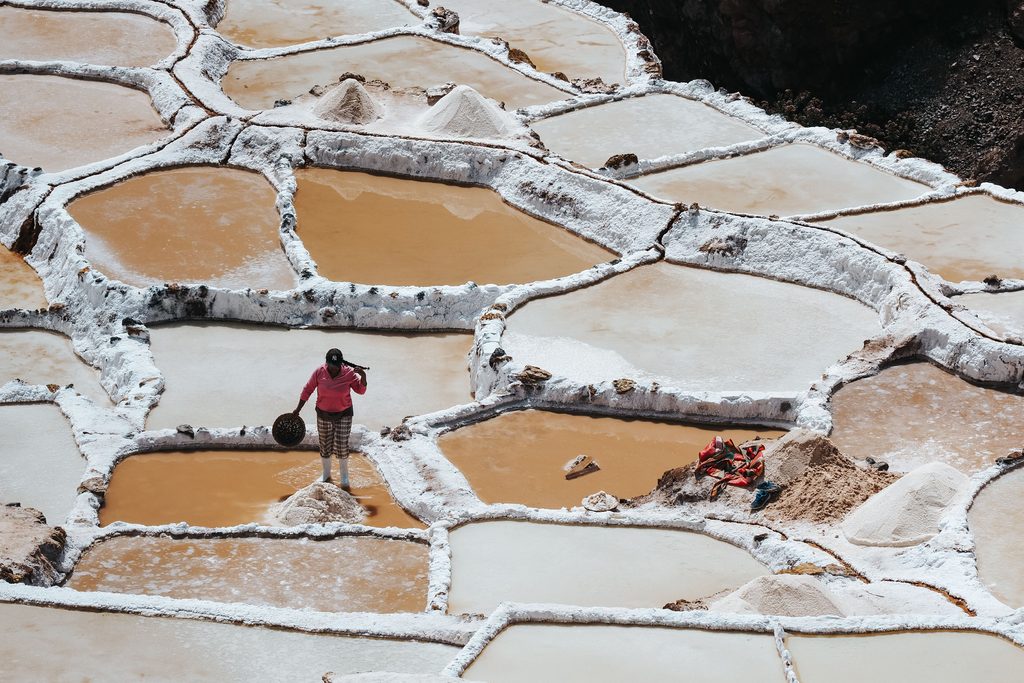
The salt pools are associated with the communities of Maras and Pichingoto, whose families have preserved traditional salt-production knowledge across generations.
What Makes Maras Special?
- Thousands of geometric salt pools covering a mountainside
- Traditional salt production that continues today
- Spectacular views of the Sacred Valley landscape
- Excellent opportunities for scenic photography
- Local salt products and regional specialties
- A fascinating connection between nature, history, and community traditions
📸 Photography at Maras
One of the best experiences is viewing the salt terraces from designated overlooks.
From above, the pools resemble a giant mosaic carved into the mountainside.
Morning and afternoon lighting can create beautiful contrasts between the white salt crystals, surrounding hills, and changing mountain shadows.
Visitors should remain within designated public viewing areas. The salt pools are working production areas, not recreational walking paths.
🌿 2. Moray Terraces — An Ancient Inca Agricultural Wonder
A short journey from Maras brings visitors to Moray, one of the Sacred Valley’s most unusual archaeological sites.
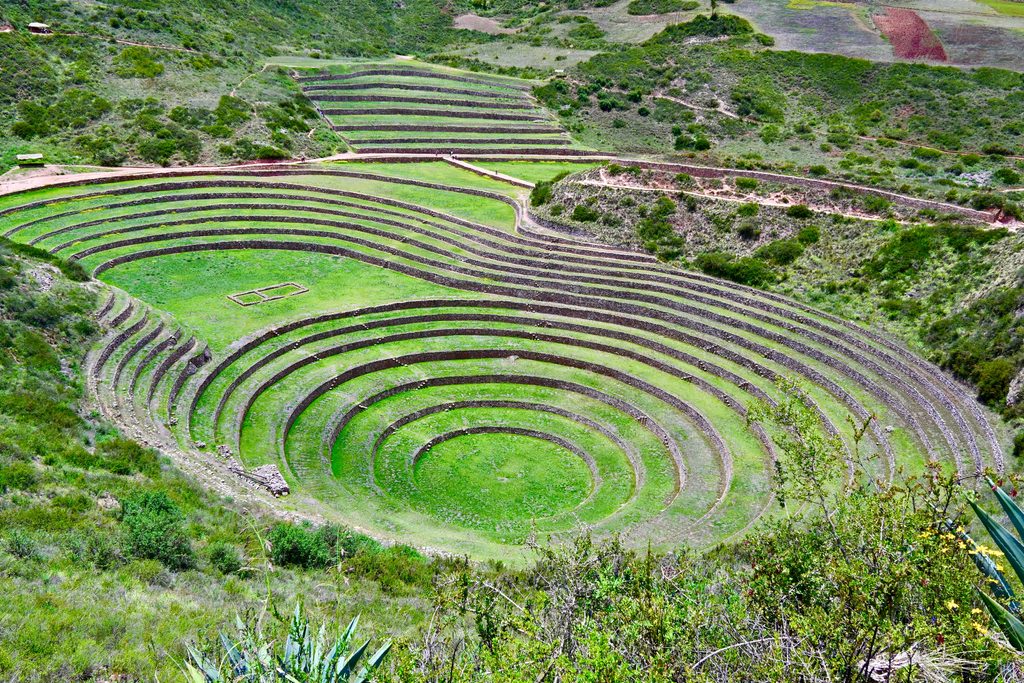
Here, enormous circular and elliptical terraces descend into natural depressions in the earth, creating formations that resemble giant amphitheaters.
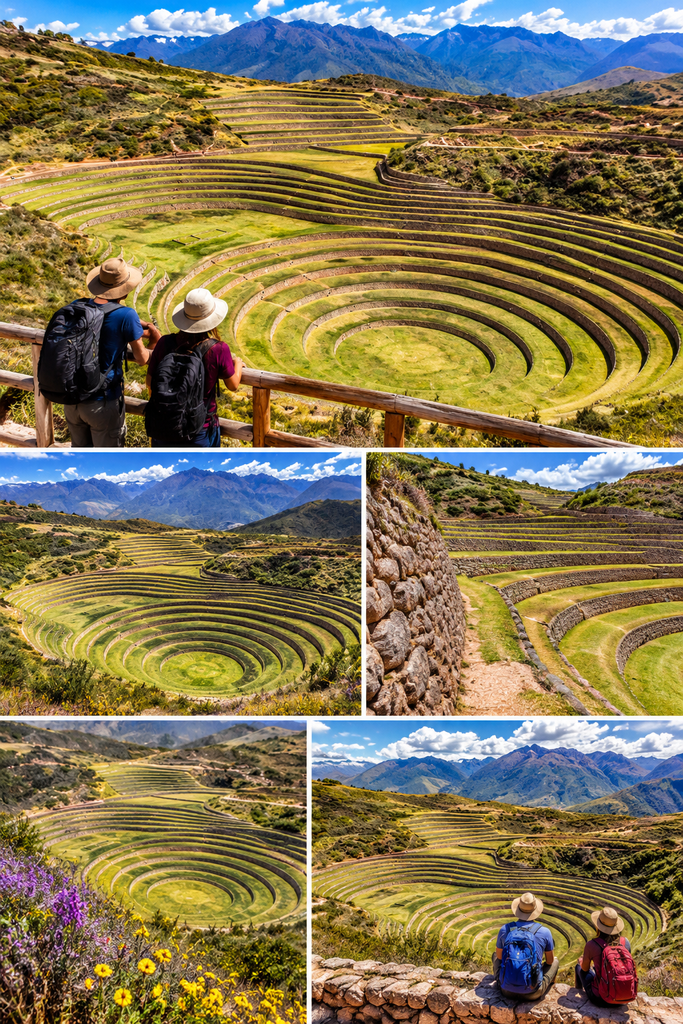
The site demonstrates the Incas’ extraordinary ability to adapt agricultural engineering to challenging mountain environments.
What Were the Moray Terraces Used For?
Moray is widely interpreted as a possible center for agricultural experimentation.
Researchers believe that variations in sunlight, temperature, elevation, and exposure between terrace levels may have allowed the Incas to study different growing conditions.
These microclimates could have helped them understand how crops adapted to different environments.
However, the site’s exact historical functions remain a subject of archaeological study.
Highlights of Moray
- Spectacular concentric Inca agricultural terraces
- Impressive ancient stonework and landscape engineering
- Panoramic views of the surrounding Andes
- Opportunities to learn about Inca farming traditions
- Scenic viewpoints and designated walking paths
- Beautiful mountain scenery for travel photography
📸 Best Photography Opportunities
The elevated viewpoints provide some of the most memorable perspectives.
From these locations, visitors can photograph the circular terrace patterns against the surrounding green or golden Andean landscape.
The contrast between the precise terrace formations and the natural mountain environment makes Moray particularly photogenic.
Visitors must remain on permitted paths and should not climb the archaeological walls or enter restricted terrace areas.
🥾 3. Hiking, Mountain Biking & Outdoor Adventures
Maras and Moray offer more than archaeological sightseeing.
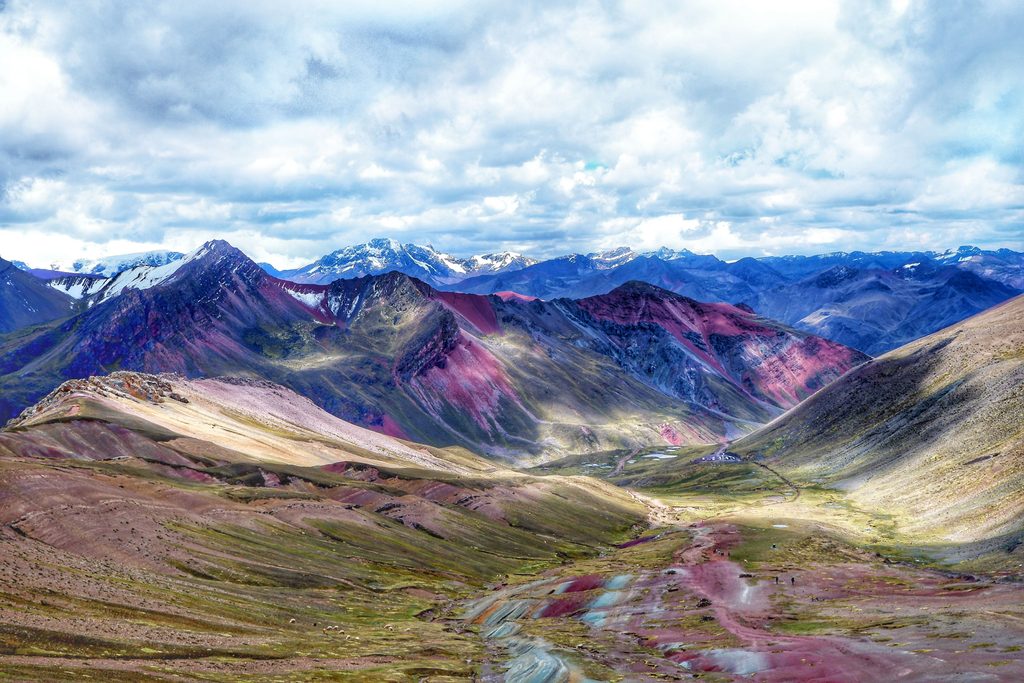
The surrounding countryside features rolling farmland, traditional villages, dirt tracks, scenic roads, and magnificent Andean Mountain views.
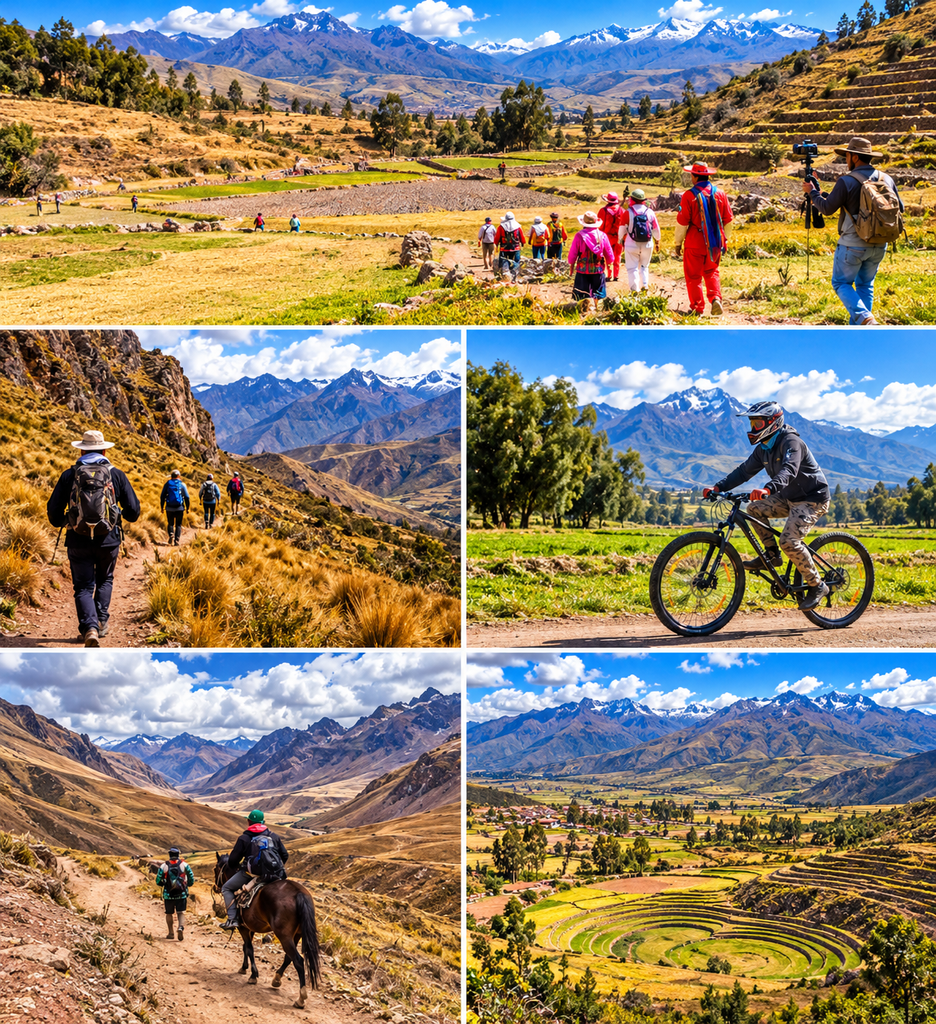
Scenic Walking and Hiking
Travelers can enjoy guided countryside walks through agricultural landscapes surrounding Maras and Moray.
Depending on the route, these excursions may include:
- Beautiful views across the Sacred Valley
- Traditional Andean farmland
- Rural villages and community landscapes
- Mountain photography stops
- Opportunities to learn about local agriculture
Choose established public trails or community-approved routes and remember that private farmland and protected archaeological areas should be respected.
🚴 Mountain Biking Adventures
Mountain biking is another popular way to experience the region.
Guided routes may travel through countryside tracks connecting the Maras and Moray area, with views of mountains, fields, and rural settlements.
Some organized excursions combine cycling with visits to both archaeological and salt-production attractions.
Because the region sits at high altitude, visitors should acclimatize before attempting strenuous activities.
🐎 Horseback Riding and Countryside Experiences
Some local operators and community tourism programs offer horseback riding and guided rural experiences.
These activities provide a different perspective on the Andean landscape while introducing visitors to traditional farming communities.
Choose responsible operators that prioritize animal welfare and respect local residents.
🦅 4. Wildlife & Nature Around Maras and Moray
Although Maras and Moray are best known for their cultural landmarks, the surrounding Andean countryside also supports interesting wildlife.
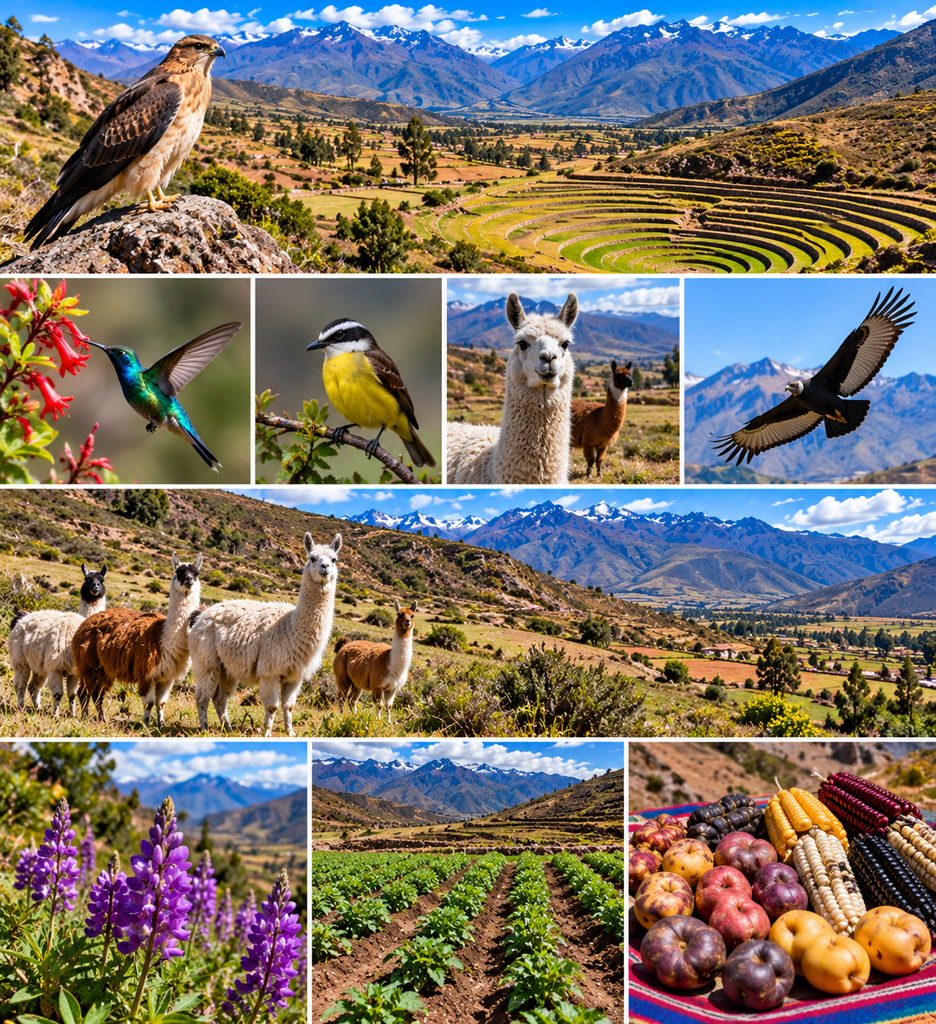
Visitors exploring open farmland, hillsides, and rural landscapes may encounter a variety of birds and small animals.
Andean Birds
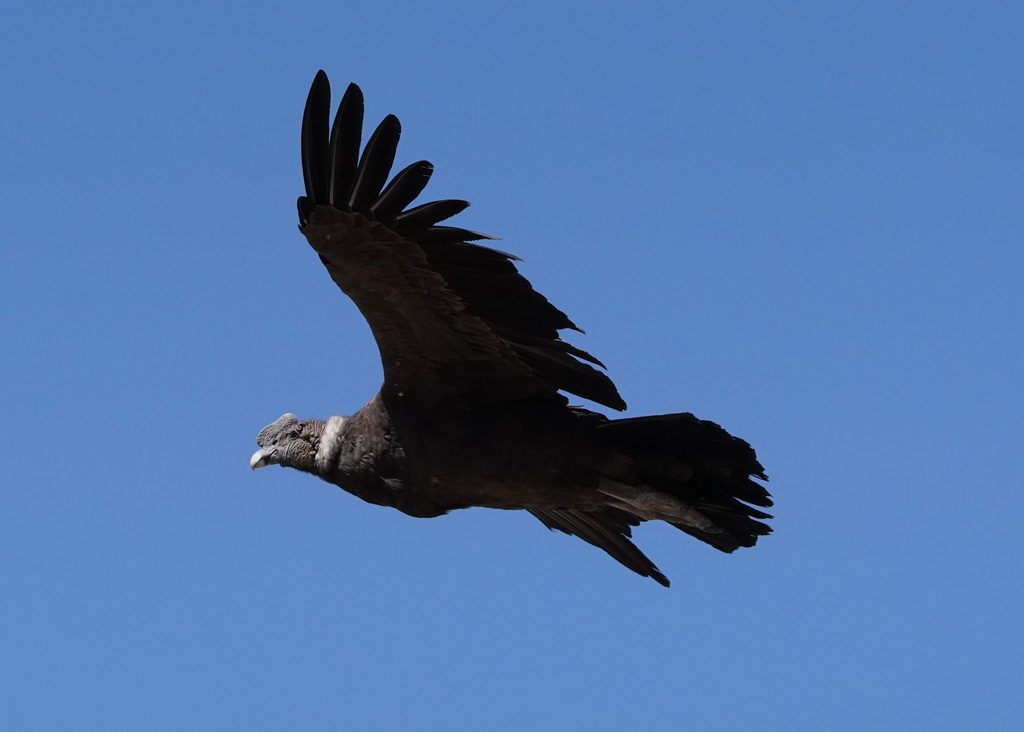
Depending on habitat and season, travelers may observe hummingbirds, small songbirds, raptors, and other birds adapted to the high Andes.
Bring binoculars if you enjoy birdwatching.
Mountain Mammals
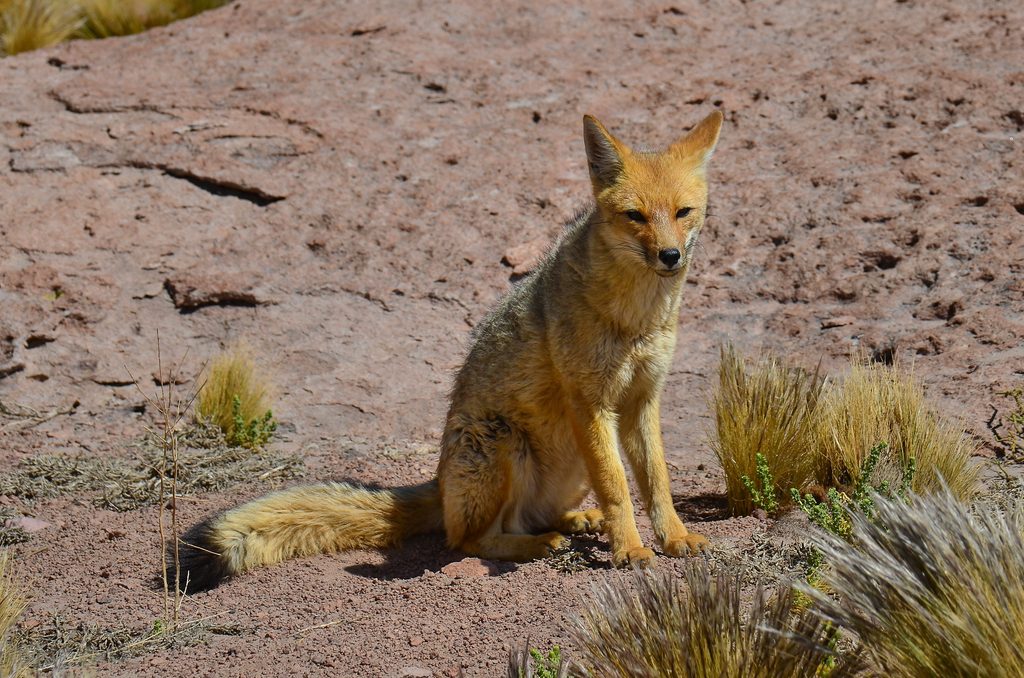
Small mammals and other wildlife inhabit the broader Sacred Valley landscape, although sightings around the busy tourist attractions are unpredictable.
The region is also home to domesticated alpacas and llamas, which visitors may encounter in rural communities or agricultural settings.
Native Plants and Agricultural Landscapes
The surrounding countryside includes grasses, shrubs, cultivated fields, and traditional Andean crops.
Potatoes, maize, and other agricultural products remain important to the region’s communities and cultural identity.
Wildlife tip: Observe animals from a respectful distance and avoid feeding them.
🏘️ 5. Explore Maras Village & Nearby Andean Communities
The village of Maras offers a quieter cultural experience beyond the famous salt terraces.
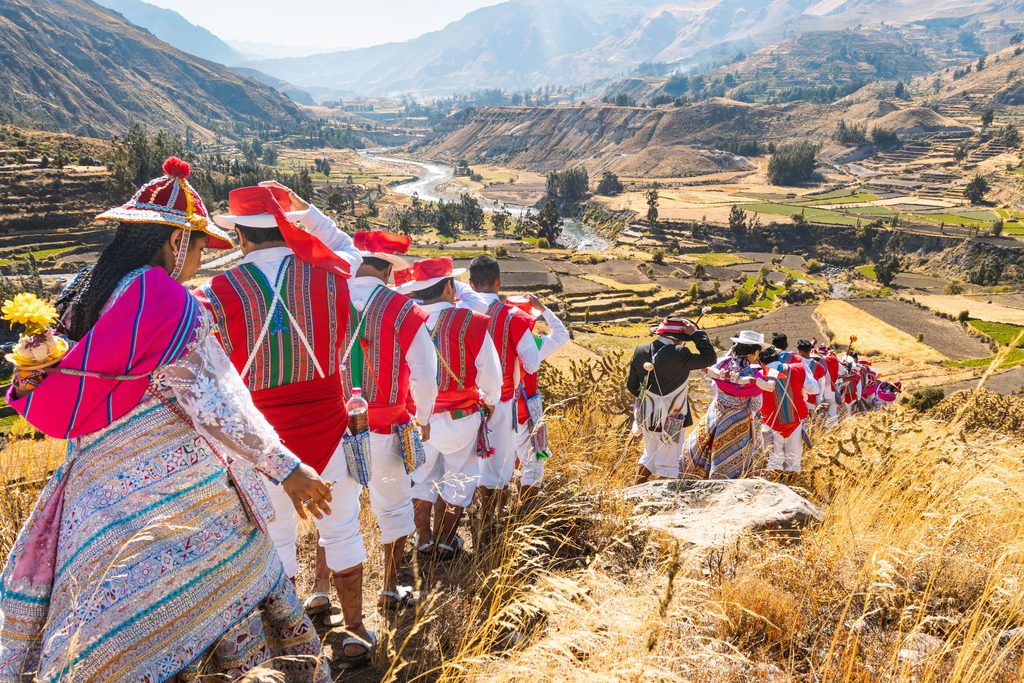
Visitors can explore traditional streets, historic architecture, and the surrounding agricultural landscape.
The community has longstanding connections to salt production and regional trade.
Cultural Experiences
Consider including:
- A walk through Maras village
- Visits to authorized local shops selling Maras salt
- Traditional Andean food experiences
- Guided introductions to regional agricultural practices
- Community-led cultural activities
Nearby Misminay offers community tourism experiences that may include agricultural demonstrations, traditional textile activities, local meals, and countryside excursions.
Supporting locally operated experiences helps keep more tourism benefits within the communities that maintain these cultural landscapes.
☀️ 6. Best Time to Visit Maras & Moray
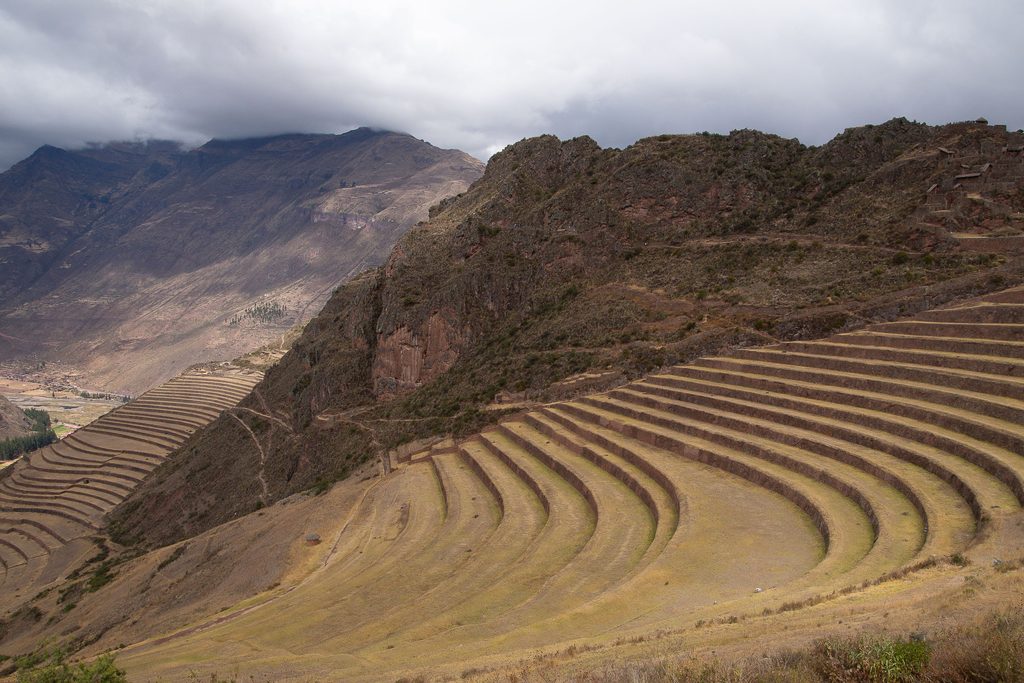
Maras and Moray can be visited throughout much of the year, but weather conditions change noticeably between Peru’s dry and rainy seasons.
🌞 Dry Season — Approximately May to October
The dry season generally offers:
- More frequent clear skies
- Excellent mountain photography opportunities
- Drier countryside paths
- Cool mornings and evenings
- Strong sunshine during the day
This is a popular period for outdoor sightseeing, hiking, and Sacred Valley excursions.
🌧️ Rainy Season — Approximately November to April
During the wetter months, visitors may experience:
- Greener surrounding hillsides
- More frequent clouds and afternoon showers
- Muddy or slippery walking surfaces
- Changing visibility in the mountains
- Beautiful contrasts between vegetation and archaeological terraces
Weather can vary considerably, so carry a waterproof jacket and remain flexible with outdoor plans.
What About Winter?
Peru’s Andean winter generally overlaps with the dry season, particularly June through August.
Days can be sunny, but mornings and nights may be very cold.
Layered clothing is essential, especially when exploring exposed high-altitude viewpoints.
🚗 7. How to Get to Maras & Moray from Cusco
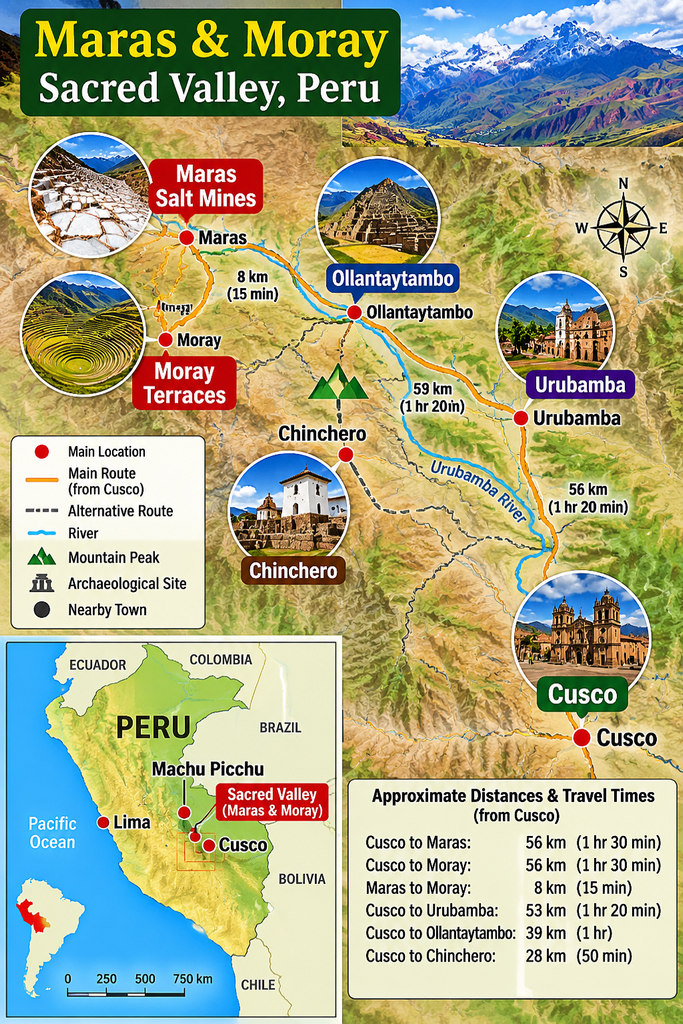
Maras and Moray are located northwest of Cusco in Peru’s Sacred Valley region.
Both attractions are commonly combined into a half-day or full-day excursion.
From Cusco
Allow approximately 1½ hours by road to reach the area, depending on your route, traffic, and stops.
Popular transportation choices include:
- Guided sightseeing tours
- Private drivers
- Organized cycling excursions
- Rental vehicles for experienced travelers
From Urubamba or Ollantaytambo
Travelers staying in the Sacred Valley can also arrange visits from nearby towns.
This may be particularly convenient when combining Maras and Moray with other Sacred Valley attractions.
Suggested One-Day Itinerary
Morning: Depart Cusco or your Sacred Valley accommodation and visit Moray’s archaeological terraces.
Late morning: Continue toward the Maras Salt Mines and enjoy the panoramic viewpoints.
Lunch: Stop at an appropriate restaurant or community dining experience in the surrounding area.
Evening: Return to Cusco or continue to your Sacred Valley accommodation.
Allow extra time if you’re including hiking, cycling, or community visits.
🎟️ 8. Entrance Tickets, Altitude & Visitor Information
Entrance Tickets
Moray is included in eligible Cusco Tourist Ticket circuits, while the Maras Salt Mines have a separate admission arrangement.
Ticket prices and accepted payment methods may change, so verify the current requirements before traveling.
Altitude
Moray is situated at approximately 3,480 meters (11,417 feet) above sea level.
The high elevation can affect visitors who have recently arrived in Cusco.
Consider spending time acclimatizing before strenuous hiking or mountain biking.
What to Bring
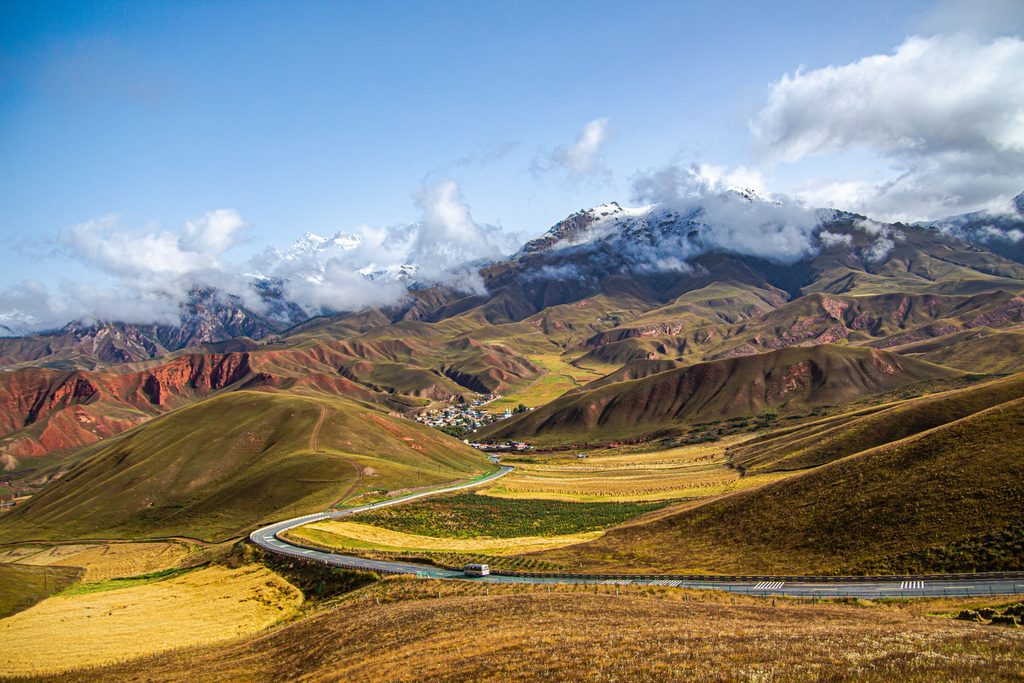
- Comfortable walking shoes with good traction
- Sunscreen and sunglasses
- A sun hat
- Refillable water bottle
- Waterproof jacket
- Warm layers for changing temperatures
- Camera or smartphone
- Cash for local purchases and applicable entry fees
- Small daypack
Respecting the Sites
Both attractions have important cultural and economic significance.
Follow local signs, respect restricted areas, avoid damaging archaeological structures, and never enter working salt pools without explicit authorization.
9. 🏨 Book Your Sacred Valley Stay — Maras & Moray, Peru
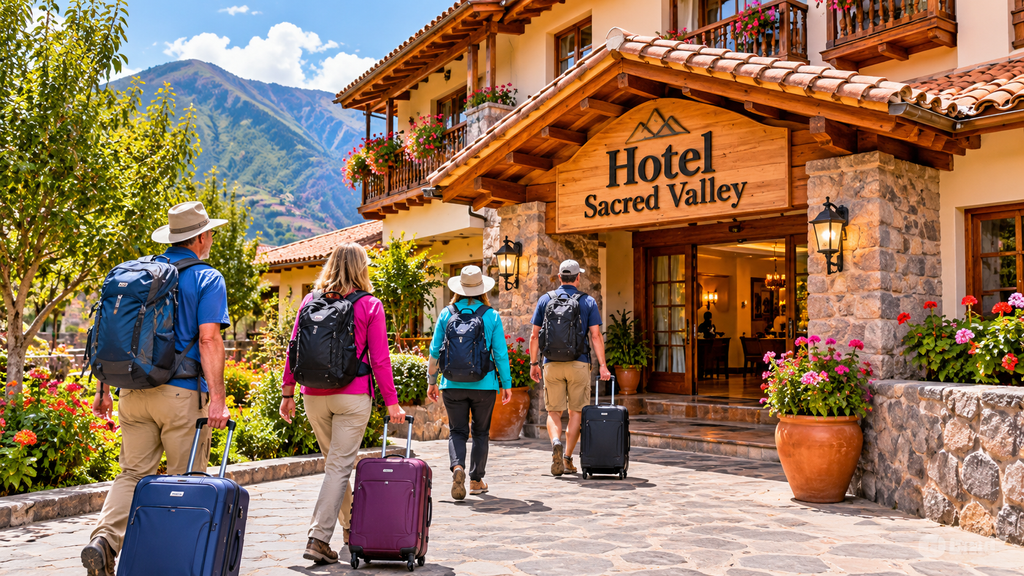
🌄 Ready to explore the Maras Salt Mines and Moray Terraces?
Discover comfortable hotels, charming countryside lodges, and unique mountain accommodations in Urubamba, Ollantaytambo, and Cusco. Find the perfect place to relax while exploring Peru’s beautiful Sacred Valley.
👉 Explore Sacred Valley Hotels & Stays on Expedia
📢 Affiliate Booking Disclosure
This section contains affiliate booking links. If you book through our Expedia Travel Creator links, we may earn a small commission at no additional cost to you. Thank you for supporting My Camping Vacation Sites and our outdoor travel guides!
🌎 10. Continue Exploring Machu Picchu & the Sacred Valley
Your adventure doesn’t have to end at Maras and Moray!
The Sacred Valley contains remarkable archaeological sites, mountain landscapes, historic villages, and outdoor destinations waiting to be discovered.
🏛️ Machu Picchu — Peru’s Legendary Inca Citadel
Explore one of the world’s most celebrated archaeological destinations, surrounded by dramatic mountain scenery and centuries of Inca history.
🏔️ Ollantaytambo — Ancient Ruins & Mountain Adventures
Discover impressive Inca stonework, historic village streets, and beautiful Sacred Valley landscapes.
🌄 Pisac — Terraces, Culture & Scenic Views
Explore agricultural terraces, archaeological landmarks, local markets, and spectacular mountain viewpoints.
💦 Humantay Lake — A Turquoise Andean Adventure
Discover a beautiful high-altitude lake surrounded by dramatic mountain peaks and unforgettable hiking scenery.
⛺ Sacred Valley Glamping & Unique Mountain Stays
Enjoy comfortable accommodations surrounded by Andean landscapes, historic communities, and outdoor adventures.
Explore More: Add your existing Machu Picchu & Sacred Valley Adventure Hub link here so visitors can discover the complete 10-article collection.
🧂 Final Thoughts — Experience the Wonders of Maras & Moray
Maras and Moray are two remarkable examples of how people have shaped and adapted to Peru’s dramatic Andean environment.
At Maras, centuries-old salt-harvesting traditions continue across thousands of hillside pools.
At Moray, extraordinary circular terraces reveal the Incas’ sophisticated understanding of agriculture and landscape engineering.
Together, these destinations offer an unforgettable combination of history, culture, scenic photography, outdoor adventure, and local traditions.
Whether you’re exploring the Sacred Valley for a single day or planning an extended Peru vacation, make time to discover these fascinating places.
🏔️ Discover the beauty of Maras and Moray — where ancient traditions, breathtaking Andes scenery, and unforgettable Sacred Valley adventures come together!
👉 Explore the Machu Picchu & Sacred Valley Adventure Hub
🌄 One incredible region — endless opportunities for history, nature, culture, and adventure!
Thank you for visiting MyCampingVacationSites! I hope this guide helps you plan an unforgettable outdoor adventure. If you enjoyed this article, feel free to leave a comment below and explore more travel guides, hiking destinations, camping adventures, and outdoor experiences throughout the site. Have a wonderful vacation wherever your next journey takes you!
— Jeffrey
Leave a Reply