Imagine standing in Yellowstone National Park on a crisp winter morning, surrounded by snow-covered mountains, frosty evergreen forests, and clouds of steam rising from the frozen landscape. Across a white valley, a herd of American bison moves slowly through deep snow. Farther away, a pack of wolves may be traveling along a distant ridgeline.
Thank you for reading this post, don't forget to subscribe!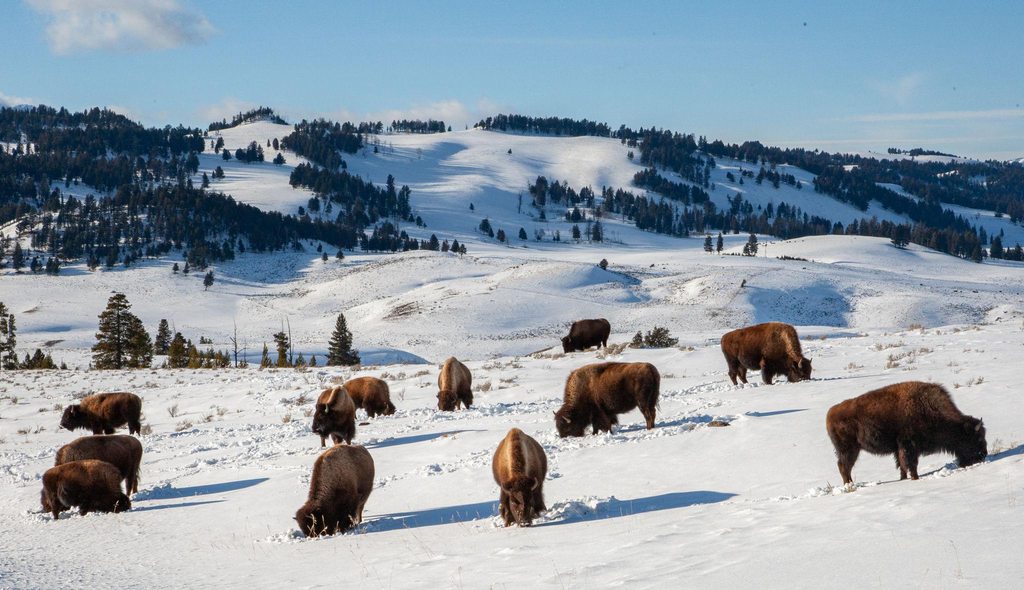
Winter transforms Yellowstone into one of North America’s most extraordinary wildlife destinations.
While many visitors explore Yellowstone during summer, winter offers a completely different experience. Snow-covered valleys make animals easier to spot against the white landscape, fewer visitors create a quieter atmosphere, and the park’s famous geothermal features provide dramatic scenery.
From the wildlife-rich Lamar Valley to the steaming landscapes around Mammoth Hot Springs, Yellowstone winter wildlife adventures combine nature photography, guided wildlife tours, scenic drives, and unforgettable encounters with animals adapted to some of America’s harshest winter conditions.
Whether you’re hoping to photograph bison in the snow, search for wolves with an experienced guide, or simply experience Yellowstone’s peaceful winter wilderness, this guide will help you plan your adventure.
🦬 Yellowstone Bison – Giants of the Winter Wilderness
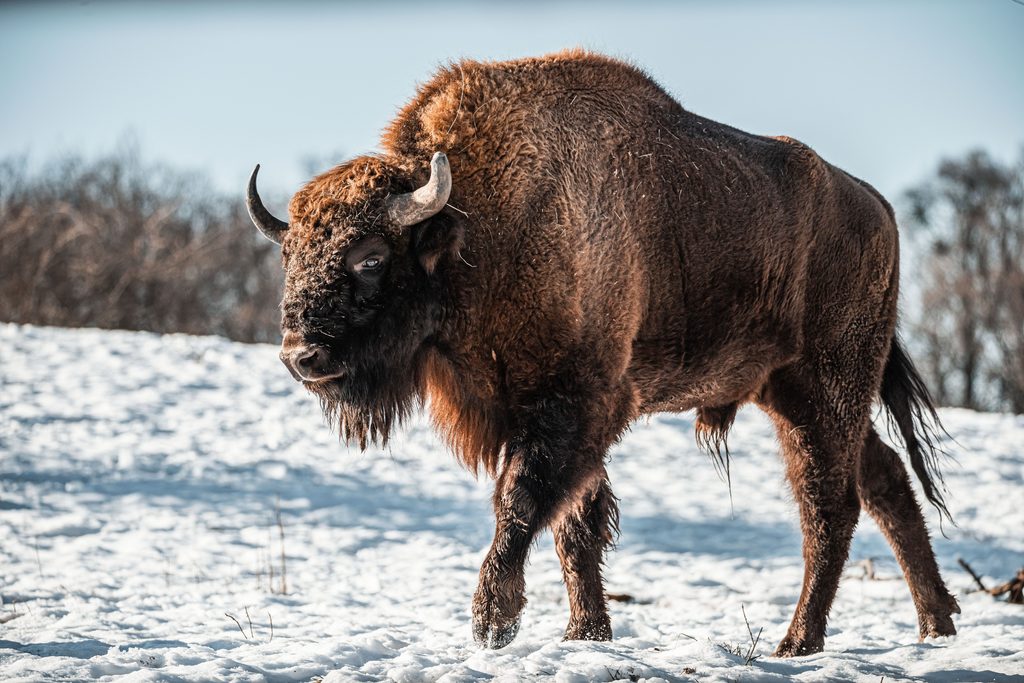
Few sights capture Yellowstone’s winter beauty quite like an American bison standing in deep snow.
Yellowstone is home to one of the largest remaining wild bison populations in the United States. These powerful animals have survived harsh winters for thousands of years, developing remarkable adaptations to cold temperatures and heavy snowfall.
Their thick winter coats provide insulation, while their enormous heads and strong neck muscles help them sweep snow aside to reach grasses underneath.
During winter, bison can often be seen moving through open valleys, traveling along snow-packed routes, and gathering in areas where snow conditions allow them to feed.
Best Places to See Bison in Winter
Lamar Valley: One of Yellowstone’s most famous wildlife-watching destinations, offering broad views of bison herds against snowy mountains.
Mammoth Hot Springs area: Bison may be seen around open grasslands and roads near the northern entrance.
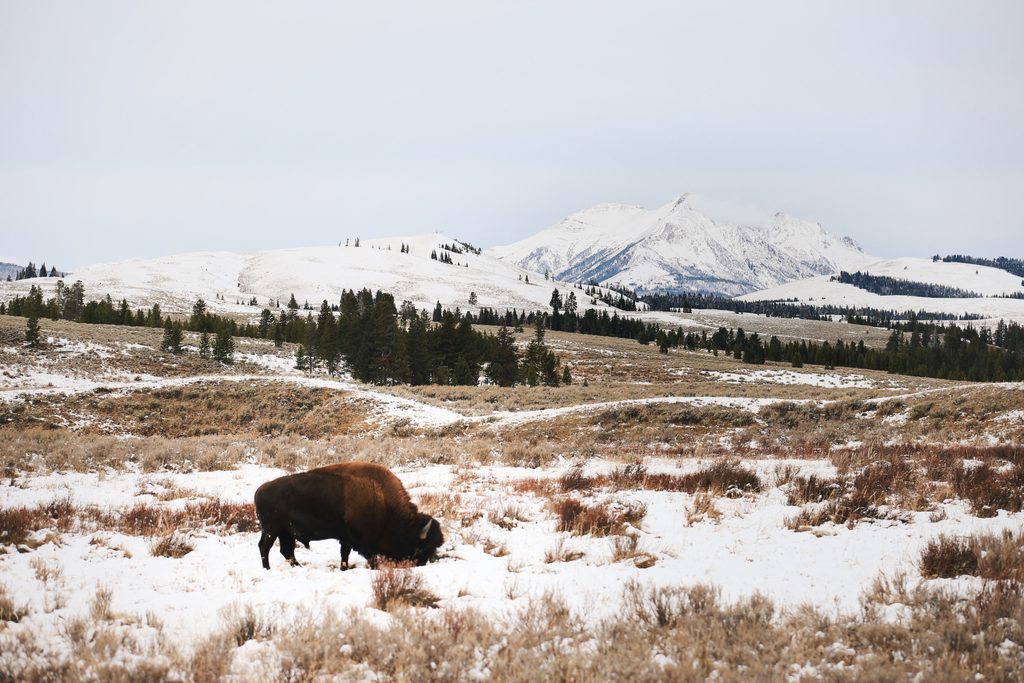
Gardiner and the northern park corridor: Wildlife frequently moves through the surrounding valleys and lower-elevation landscapes.
Hayden Valley: A major bison habitat, although ordinary vehicle access is generally unavailable during winter.
Tips for Photographing Bison
Early morning and late afternoon light can create beautiful contrasts between dark bison coats and white snow.
A telephoto lens allows you to capture close-looking wildlife photographs without approaching the animals.
Keep at least 25 yards (23 meters) from bison and other large wildlife, and never attempt to move closer for a photograph.
Bison can run much faster than people expect, even in snowy conditions.
🐺 Wolves in Yellowstone – Winter’s Most Fascinating Predators
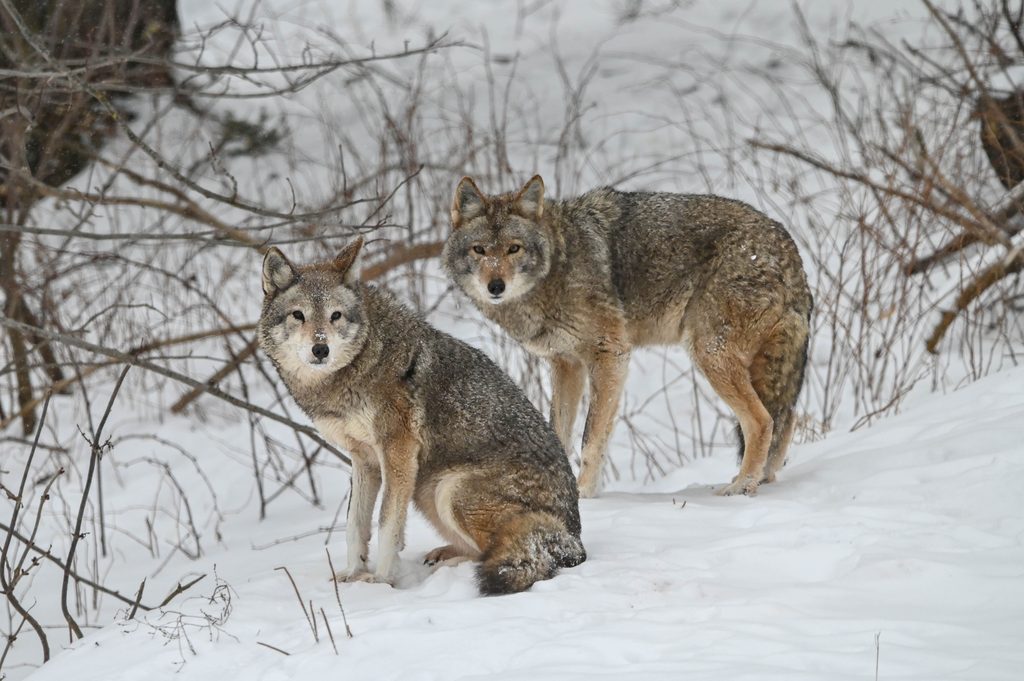
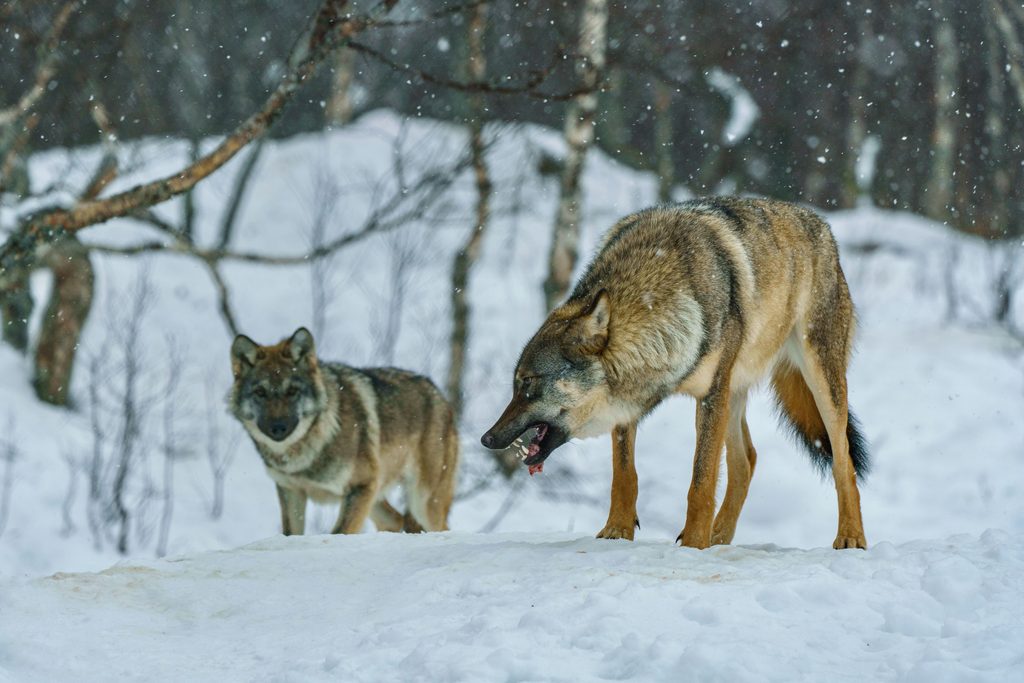
Yellowstone is internationally known for its wolves, and winter is one of the most rewarding seasons for observing them.
The park’s wolf population plays an important ecological role, influencing elk behavior and interacting with scavengers such as ravens, coyotes, and eagles.
Against the snow, wolves can sometimes be easier to detect than during summer, particularly when traveling through open valleys.
However, wolves remain wild, unpredictable animals. Sightings are never guaranteed.
Lamar Valley – Yellowstone’s Wolf-Watching Country
Lamar Valley is among the best-known places in the park for wolf watching.
Its open terrain provides long-distance views of hillsides, river corridors, and snowy meadows where wolves and other wildlife may appear.
Experienced wildlife guides often bring high-powered spotting scopes and know how to identify distant movement.
Visitors may observe wolves traveling, resting, interacting with pack members, or moving across snowy ridgelines.
For many travelers, simply seeing a wild wolf through a spotting scope is an unforgettable experience.
Best Time to Look for Wolves
Wolves may be active throughout the day, but early morning and late afternoon are often productive wildlife-watching periods.
Cold weather does not prevent wolves from traveling, and fresh snowfall can make tracks more visible.
Bring binoculars, dress warmly, and be prepared to spend time observing distant landscapes.
Wolf-Watching Safety
Always remain at least 100 yards (91 meters) from wolves and bears.
Never follow, feed, or approach wolves.
Use a spotting scope or telephoto lens rather than attempting to get closer.
A guided wildlife tour can be particularly valuable for first-time visitors.
🦌 Elk in Yellowstone’s Snow-Covered Valleys
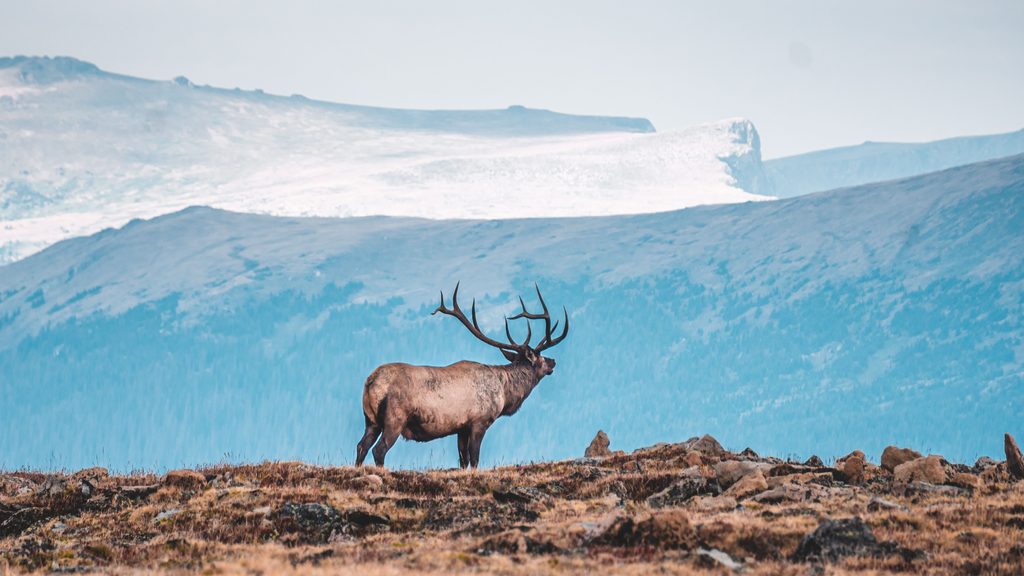
Elk are another important part of Yellowstone’s winter wildlife experience.
During colder months, many elk move toward lower elevations where conditions are less severe and food may be easier to reach.
The northern Yellowstone region, including areas near Mammoth Hot Springs and Gardiner, offers opportunities to observe elk during winter.
Large bulls, groups of cows, and younger elk may be seen in open meadows, along river corridors, or near the park’s northern boundary.
What Makes Winter Elk Watching Special?
Winter landscapes provide a beautiful backdrop for elk photography.
Snow-covered mountains, frosty grasses, and dramatic morning light create opportunities for scenic wildlife photographs.
Elk also provide an interesting contrast to bison and wolves because their seasonal movements and feeding behavior reflect different survival strategies.
Always maintain at least 25 yards of distance from elk. They can be dangerous, particularly when approached or disturbed.
🦊 Other Yellowstone Wildlife to Watch for in Winter
Yellowstone’s winter wilderness supports far more than bison, wolves, and elk.
Red Foxes
Red foxes may be seen moving across snow-covered meadows, listening for small mammals beneath the snow.
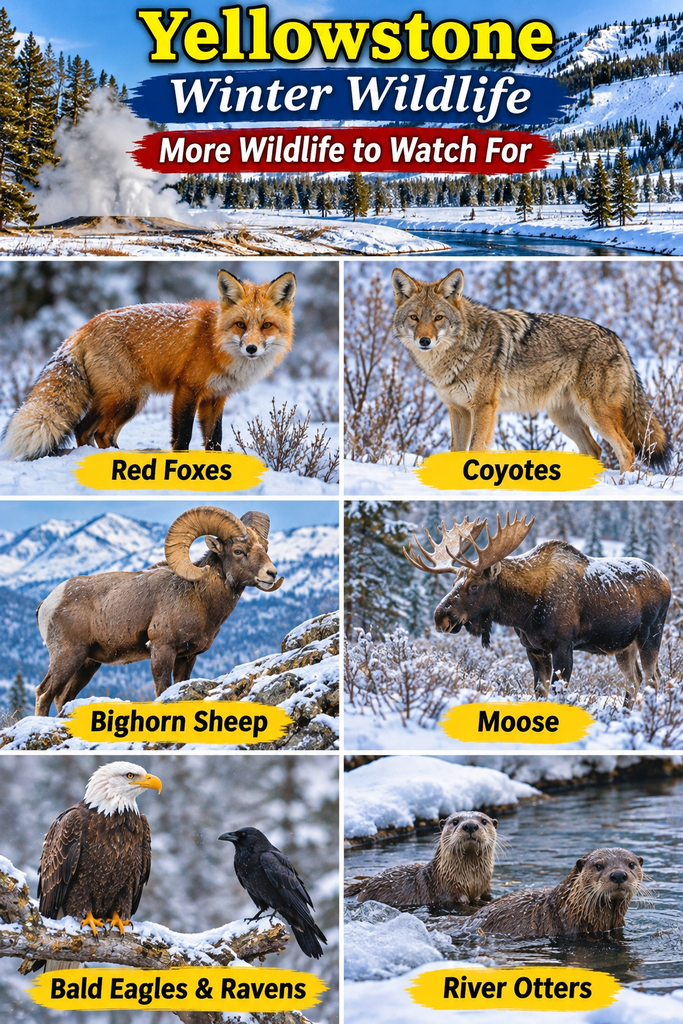
Their reddish coats create striking contrasts against white winter landscapes.
Coyotes
Coyotes remain active throughout Yellowstone’s winter season.
They may be observed searching for rodents, traveling across valleys, or scavenging.
Bighorn Sheep
Bighorn sheep sometimes occupy rocky slopes and lower-elevation areas around Yellowstone’s northern region.
Their ability to navigate steep terrain makes them fascinating animals to observe and photograph.
Moose
Moose inhabit parts of the Greater Yellowstone Ecosystem, particularly wooded areas and wetland habitats.
Sightings within Yellowstone can be less predictable, and moose should never be approached.
Bald Eagles and Ravens
Birdwatchers may spot bald eagles near rivers and ravens traveling through winter valleys.
Ravens are especially interesting because they sometimes interact with wolves and other predators around carcasses.
River Otters
Where rivers remain open, river otters may occasionally be observed swimming, playing, or moving along snowy banks.
Wildlife sightings vary by location, weather, and animal movements, so patience is essential.
🏔️ Lamar Valley – Yellowstone’s Winter Wildlife Paradise
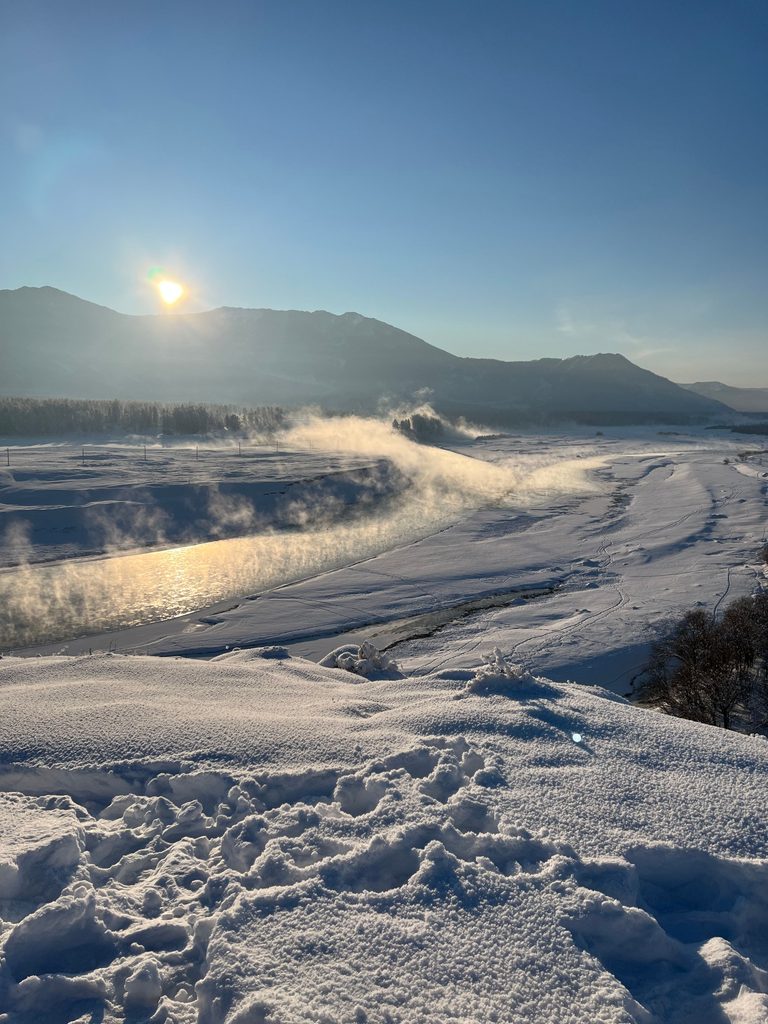
Lamar Valley deserves a special place on almost every Yellowstone winter wildlife itinerary.
Located in the park’s northeastern region, this spectacular valley is surrounded by rugged mountains, open meadows, winding rivers, and expansive winter scenery.
It is one of Yellowstone’s premier locations for watching bison, wolves, elk, coyotes, and other animals.
The broad landscape makes it possible to scan large areas with binoculars or a spotting scope.
Why Lamar Valley Is So Popular
- Expansive open landscapes ideal for wildlife observation
- Well-known opportunities for wolf watching
- Bison herds against dramatic mountain scenery
- Beautiful sunrise and sunset photography
- Access from the park’s northern winter road corridor, subject to conditions
How to Reach Lamar Valley in Winter
Visitors generally enter Yellowstone through the North Entrance near Gardiner, Montana, and travel toward Mammoth Hot Springs, Tower Junction, and Lamar Valley.
The northern road corridor toward the Northeast Entrance is generally open to regular vehicles year-round, weather permitting. Temporary closures, snow, ice, and changing road conditions can affect travel.
The road beyond the Northeast Entrance toward Cooke City is not a through-route to all surrounding destinations during winter.
Check current conditions before leaving.
♨️ Mammoth Hot Springs – Wildlife and Steaming Winter Landscapes
Mammoth Hot Springs offers a completely different Yellowstone winter experience.
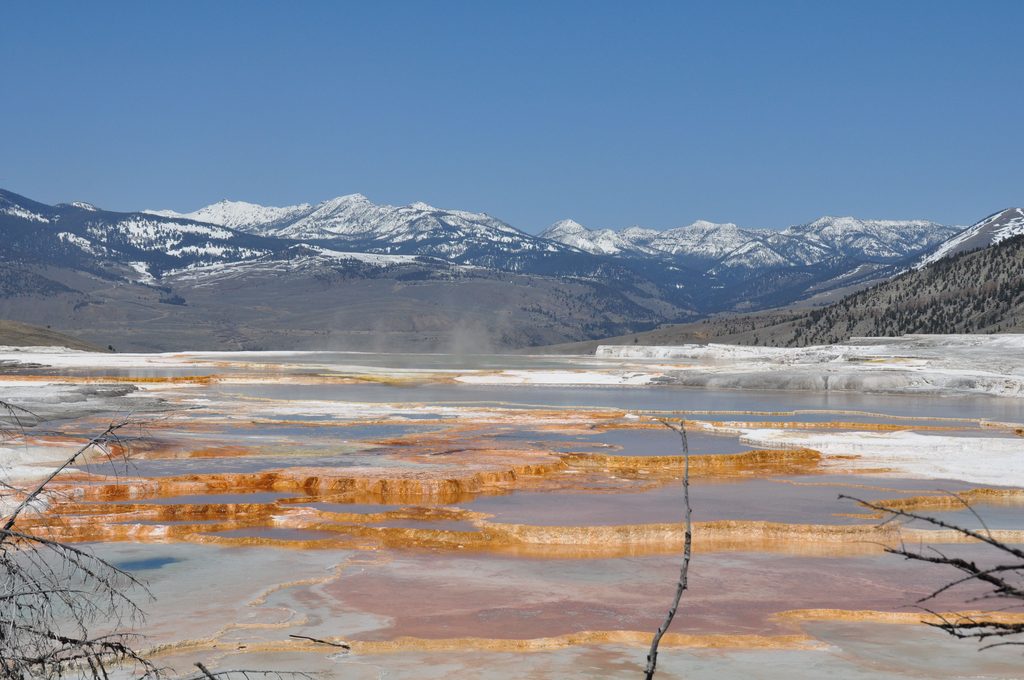
Here, steaming thermal terraces contrast with snow-covered hillsides and evergreen forests.
The area is accessible from the North Entrance and provides an excellent base for exploring Yellowstone’s northern wildlife corridor.
Bison and elk may sometimes be seen in surrounding areas, while the nearby roads offer opportunities for scenic winter photography.
What to Explore Near Mammoth
Mammoth Hot Springs Terraces: Fascinating travertine formations, steam, and seasonal ice and snow.
Historic Fort Yellowstone: Historic buildings and visitor facilities in a remarkable mountain setting.
Gardiner River corridor: Scenic views and possible wildlife sightings.
Northern Range: One of the park’s most important winter wildlife habitats.
Stay on designated boardwalks around thermal features. Thin crusts and extremely hot water can create life-threatening hazards.
📸 Yellowstone Winter Wildlife Photography Tips
Winter photography in Yellowstone offers extraordinary opportunities, but the conditions can challenge both photographers and equipment.
Recommended Camera Equipment
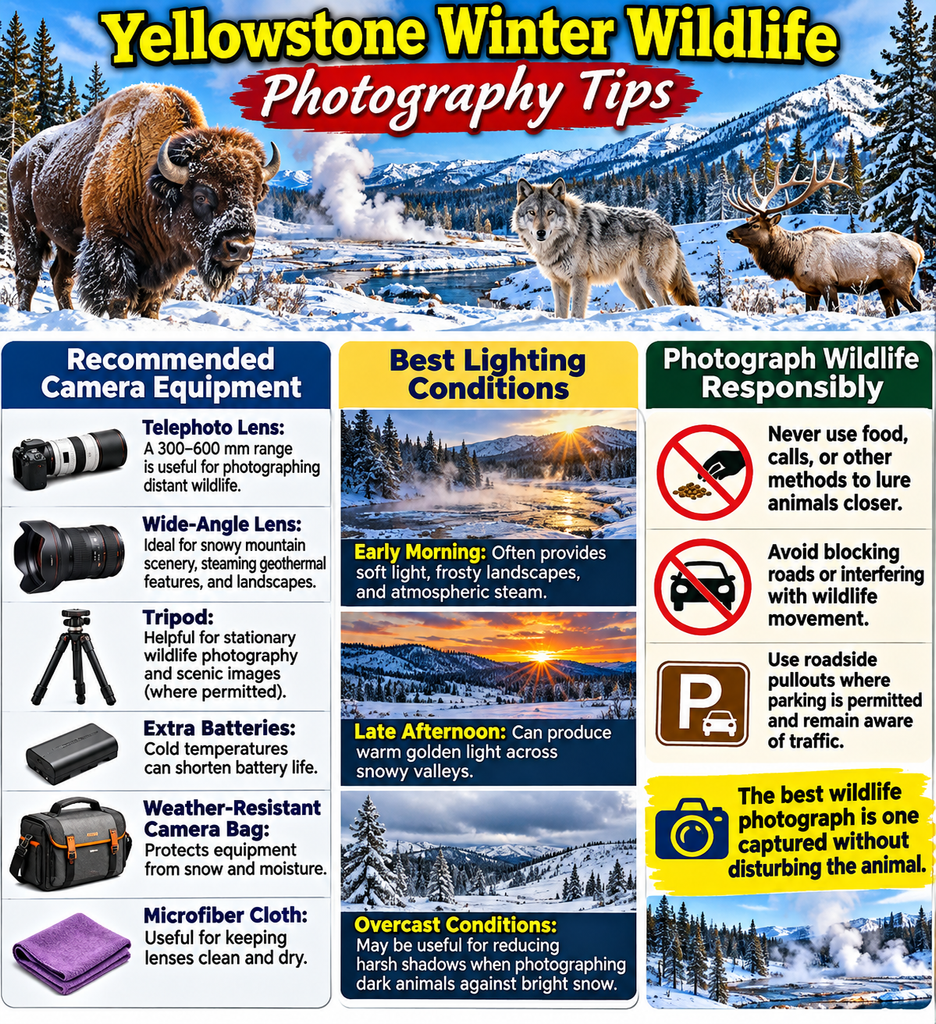
Telephoto lens: A 300–600 mm lens range is useful for photographing distant wildlife, although other focal lengths can also work.
Wide-angle lens: Ideal for snowy mountain scenery, steaming geothermal features, and dramatic landscapes.
Tripod: Helpful for stationary wildlife photography and scenic images where permitted.
Extra batteries: Cold temperatures can shorten battery life.
Weather-resistant camera bag: Protects equipment from snow and moisture.
Microfiber cloth: Useful for keeping lenses clean and dry.
Best Lighting Conditions
Early morning often provides soft light, frosty landscapes, and atmospheric steam.
Late afternoon can produce warm golden light across snowy valleys.
Overcast conditions may be useful for reducing harsh shadows when photographing dark animals against bright snow.
Photograph Wildlife Responsibly
Never use food, calls, or other methods to lure animals closer.
Avoid blocking roads or interfering with wildlife movement.
Use roadside pullouts where parking is permitted and remain aware of traffic.
The best wildlife photograph is one captured without disturbing the animal.
🚐 Yellowstone Winter Wildlife Tours and Guided Adventures
Guided wildlife tours are one of the most convenient ways to explore Yellowstone during winter.
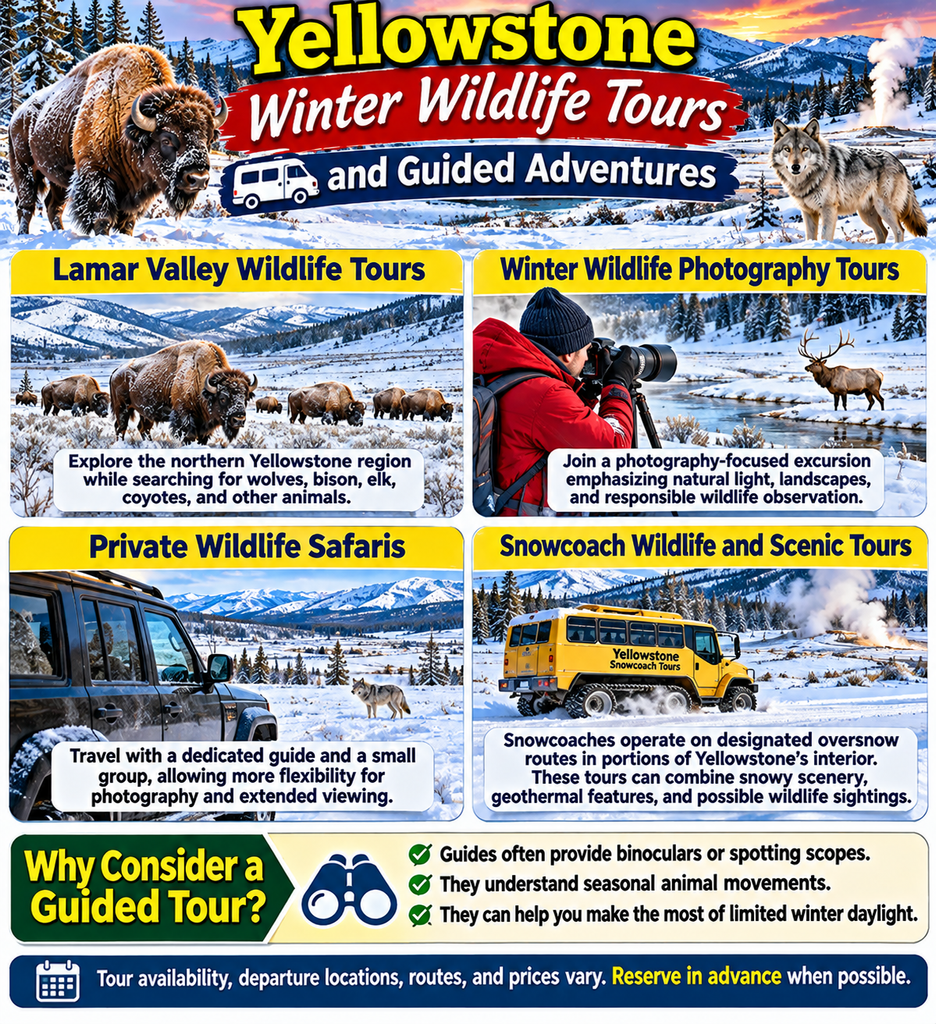
Professional guides can help visitors identify animal tracks, locate distant wildlife, understand animal behavior, and navigate winter travel conditions.
Popular Tour Experiences
Lamar Valley Wildlife Tours
Explore the northern Yellowstone region while searching for wolves, bison, elk, coyotes, and other animals.
Winter Wildlife Photography Tours
Join a photography-focused excursion emphasizing natural light, landscapes, and responsible wildlife observation.
Private Wildlife Safaris
Travel with a dedicated guide and a small group, allowing more flexibility for photography and extended viewing.
Snowcoach Wildlife and Scenic Tours
Snowcoaches operate on designated oversnow routes in portions of Yellowstone’s interior during the winter season. These tours can combine snowy scenery, geothermal features, and possible wildlife sightings.
Why Consider a Guided Tour?
Guides often provide binoculars or spotting scopes, understand seasonal animal movements, and can help visitors make the most of limited winter daylight.
Tour availability, departure locations, routes, and prices vary. Reserve in advance when possible.
❄️ Best Time to Visit Yellowstone for Winter Wildlife
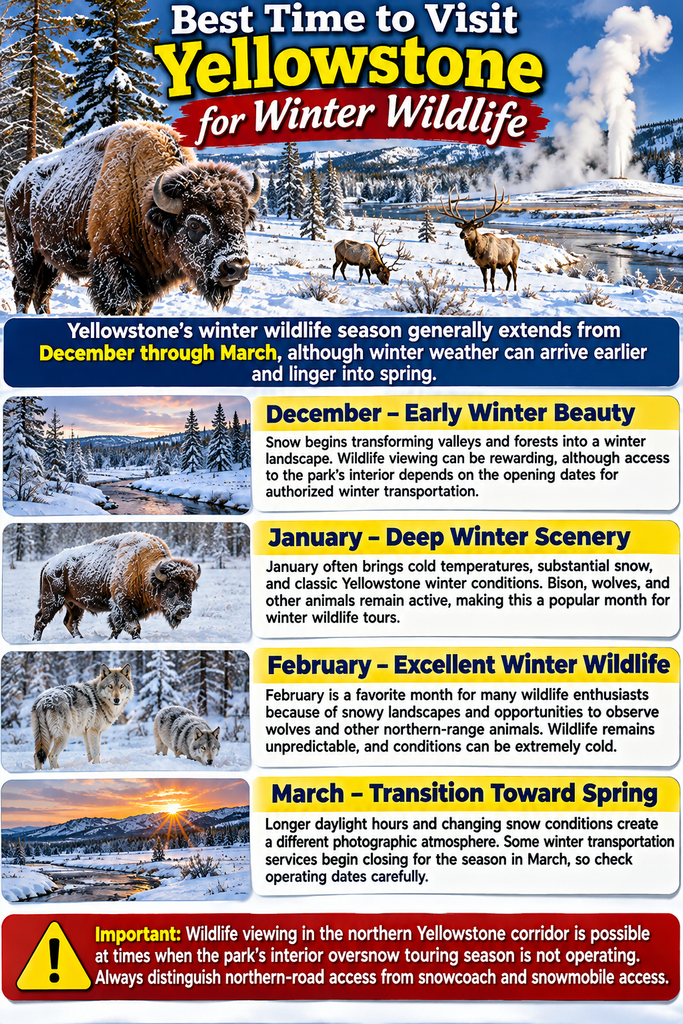
Yellowstone’s winter wildlife season generally extends from December through March, although winter weather can arrive earlier and linger into spring.
December – Early Winter Beauty
Snow begins transforming valleys and forests into a winter landscape.
Wildlife viewing can be rewarding, although access to the park’s interior depends on the opening dates for authorized winter transportation.
January – Deep Winter Scenery
January often brings cold temperatures, substantial snow, and classic Yellowstone winter conditions.
Bison, wolves, and other animals remain active, making this a popular month for winter wildlife tours.
February – Excellent Winter Wildlife Opportunities
February is a favorite month for many wildlife enthusiasts because of snowy landscapes and opportunities to observe wolves and other northern-range animals.
Wildlife remains unpredictable, and conditions can be extremely cold.
March – Transition Toward Spring
Longer daylight hours and changing snow conditions create a different photographic atmosphere.
Some winter transportation services begin closing for the season in March, so check operating dates carefully.
Important: Wildlife viewing in the northern Yellowstone corridor is possible at times when the park’s interior oversnow touring season is not operating. Always distinguish northern-road access from snowcoach and snowmobile access.
🧤 What to Wear for Yellowstone Winter Wildlife Watching
Winter temperatures in Yellowstone can drop well below freezing, particularly in the early morning.
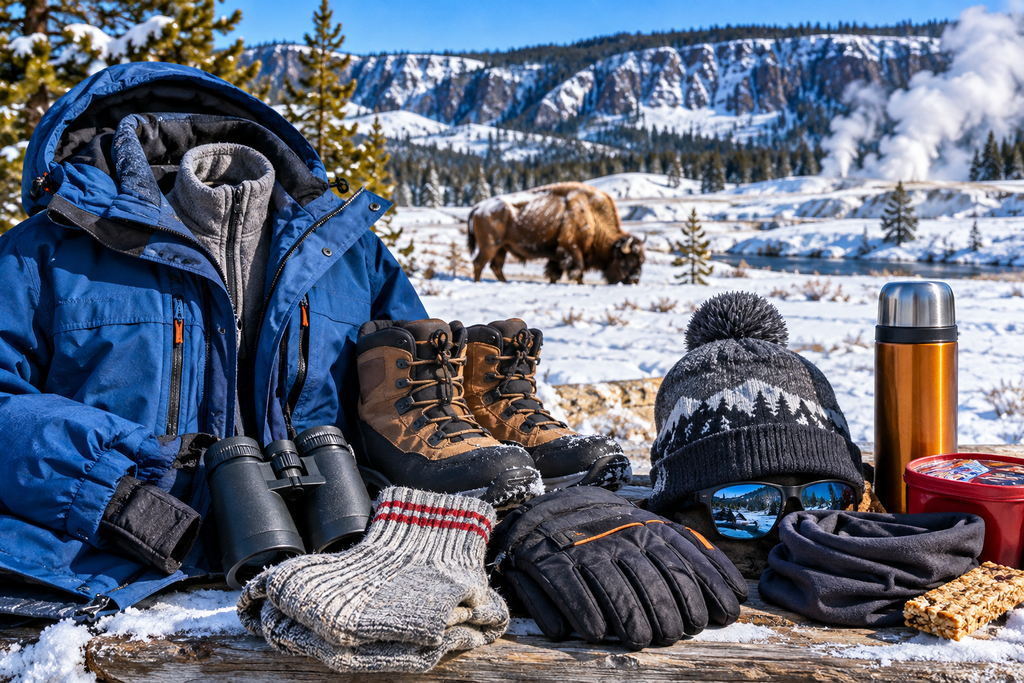
Standing still while watching distant wolves can feel much colder than walking or hiking.
Essential Winter Clothing
- Insulated winter jacket with a wind-resistant outer layer
- Thermal base layers
- Warm fleece or wool midlayers
- Waterproof insulated boots
- Wool socks
- Insulated gloves or mittens
- Warm hat covering the ears
- Neck gaiter or face covering
- Sunglasses for bright snow conditions
- Hand and foot warmers
Bring water, snacks, and extra clothing.
A thermos of warm coffee, tea, or hot chocolate can make extended wildlife-watching sessions more comfortable.
🗺️ Planning Your Yellowstone Winter Wildlife Route
For visitors arriving by regular passenger vehicle, Yellowstone’s northern entrance provides one of the most practical starting points.
Suggested Northern Yellowstone Wildlife Route
Gardiner, Montana → North Entrance → Mammoth Hot Springs → Tower Junction → Lamar Valley
This route connects several important winter wildlife areas.
Visitors can stop at designated pullouts, scan open valleys, and photograph mountain scenery along the way.
Travel time varies significantly with road conditions, wildlife traffic, weather, and photography stops.
Important Winter Road Information
Most Yellowstone roads are closed to ordinary vehicle travel during winter.
The northern corridor between Gardiner and the Northeast Entrance generally remains accessible to regular vehicles, conditions permitting.
Travel into the park’s interior, including Old Faithful, usually requires authorized snowmobile or snowcoach transportation during the winter operating season.
Always consult the National Park Service for current road conditions, closures, and winter transportation rules.
Official Yellowstone National Park website: https://www.nps.gov/yell/index.htm
🏨 Where to Stay for Yellowstone Winter Wildlife Adventures
Choosing the right accommodations can make a major difference when planning early-morning wildlife excursions.
Gardiner, Montana – Convenient Northern Entrance Access
Gardiner is one of the most practical places to stay for winter wildlife adventures.
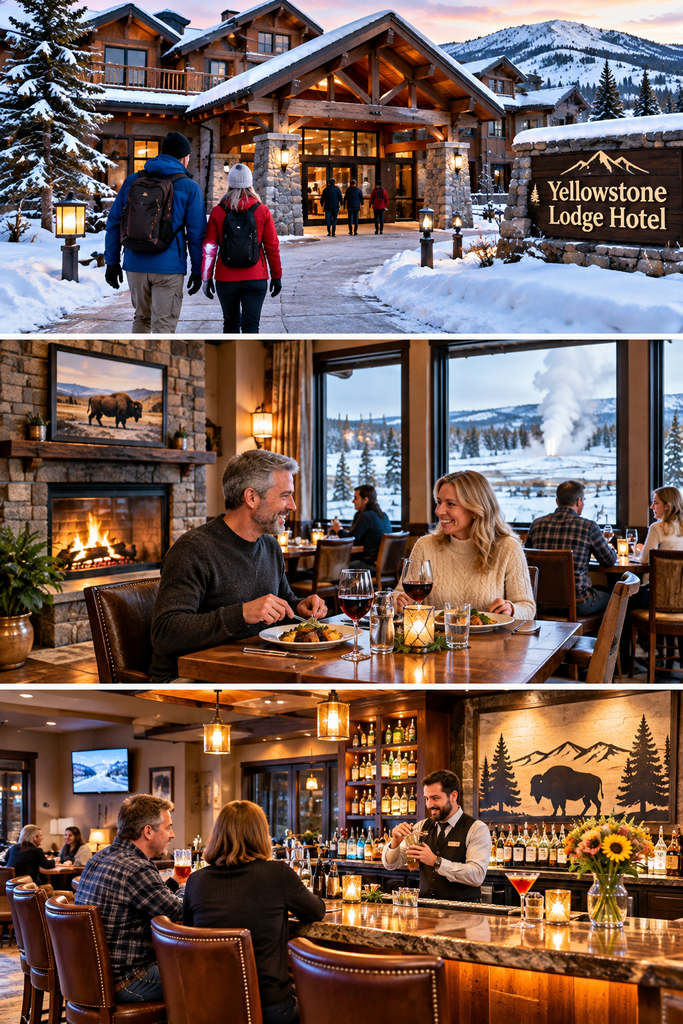
Its proximity to Yellowstone’s North Entrance makes it a popular choice for visitors exploring Mammoth Hot Springs and Lamar Valley.
Travelers can find hotels, cabins, vacation rentals, and local tour operators.
Mammoth Hot Springs Area – Inside the Park
Seasonal lodging at Mammoth Hot Springs can provide convenient access to Yellowstone’s northern attractions.
Winter lodging availability and operating dates vary, so confirm current options before planning your trip.
Cooke City, Montana – Remote Winter Mountain Atmosphere
Cooke City offers a small mountain-community experience near Yellowstone’s northeastern region.
It can be appealing for travelers interested in snowy scenery and remote winter adventures.
However, winter road closures outside the park can significantly affect access. Plan routes carefully and verify conditions before booking.
West Yellowstone, Montana – Snowcoach and Snowmobile Tours
West Yellowstone is a popular winter base for authorized snowmobile and snowcoach trips into Yellowstone’s interior.
It is especially convenient for visitors who want to combine wildlife interests with geothermal attractions such as Old Faithful.
However, regular vehicles cannot use the park’s West Entrance to drive into the interior during winter.
🏨 Book Your Yellowstone Winter Stay
Planning a Yellowstone winter wildlife getaway?
Explore hotels, cozy mountain cabins, vacation rentals, and convenient accommodations near Yellowstone’s winter gateways.
Choose a location based on whether your priority is Lamar Valley wildlife watching, northern-road scenic driving, or guided snowcoach and snowmobile excursions.
Explore Yellowstone accommodations through our Expedia Creator travel collection.
Affiliate disclosure: This website may earn a commission from qualifying bookings made through affiliate links, at no additional cost to you.
📅 Three-Day Yellowstone Winter Wildlife Itinerary
Day 1 – Mammoth Hot Springs and Northern Yellowstone
Arrive through Gardiner, Montana, and enter Yellowstone through the North Entrance.
Explore the Mammoth Hot Springs area, photograph winter scenery, and look for wildlife along the northern corridor.
Spend the evening in Gardiner or at available seasonal lodging.
Day 2 – Lamar Valley Wolf and Bison Watching
Begin early for a wildlife-focused trip into Lamar Valley.
Look for bison, elk, wolves, coyotes, and other animals across the snowy landscape.
Bring binoculars, a spotting scope, and warm clothing.
Spend time at designated pullouts and allow plenty of flexibility for unexpected wildlife encounters.
Return to your accommodations after an unforgettable day of winter exploration.
Day 3 – Scenic Wildlife Photography and Winter Landscapes
Use the final day for additional wildlife viewing, scenic photography, and exploring areas you may have missed.
Depending on conditions and interests, revisit Lamar Valley or spend more time near Mammoth Hot Springs.
Travelers wanting to explore Old Faithful or Yellowstone’s interior should plan a separate authorized snowcoach or snowmobile excursion from an appropriate winter gateway, allowing for the tour’s departure location and schedule.
🛡️ Yellowstone Winter Wildlife Safety
Yellowstone is a wilderness destination, and winter requires additional preparation.
Keep a Safe Distance from Wildlife
Stay at least 100 yards from wolves and bears, and at least 25 yards from bison, elk, and other wildlife.
Move farther away if an animal changes its behavior because of your presence.
Never Feed Wild Animals
Feeding wildlife is dangerous for animals and visitors and is prohibited in Yellowstone.
Prepare for Extreme Weather
Carry emergency supplies, extra clothing, food, and water.
Winter storms can create hazardous driving conditions and temporary road closures.
Stay on Safe, Designated Routes
Do not walk onto frozen lakes, rivers, or geothermal areas.
Ice conditions can be unpredictable, especially near thermal features.
Check Conditions Every Day
Before entering the park, review current National Park Service alerts and road information.
Yellowstone current conditions: https://www.nps.gov/yell/planyourvisit/conditions.htm
🌲 Why Yellowstone Winter Wildlife Adventures Are So Special
Yellowstone’s winter wildlife experience is unlike an ordinary national park vacation.
The landscape becomes quieter, the colors more dramatic, and the animals more visible against snow-covered valleys.
Bison push through deep snow, wolves travel across open hillsides, elk gather in lower-elevation habitats, and steam rises from Yellowstone’s geothermal features.
For wildlife photographers, nature lovers, and travelers seeking a memorable winter escape, these experiences create lasting memories.
A Yellowstone winter vacation is not simply about seeing animals. It is about experiencing the natural rhythms of a remarkable wilderness during one of its most beautiful seasons.
❓ Frequently Asked Questions About Yellowstone Winter Wildlife
Can you see wolves in Yellowstone during winter?
Yes. Wolves remain active throughout winter, and Lamar Valley is one of the best-known areas for observing them. Sightings are not guaranteed, and a spotting scope or experienced guide can improve the viewing experience.
Where is the best place to see bison in winter?
Lamar Valley and other areas along Yellowstone’s northern road corridor offer opportunities to observe bison in snowy landscapes.
Can you drive through Yellowstone in winter?
Regular vehicles can generally travel the northern road corridor between Gardiner and the Northeast Entrance, weather permitting. Most other park roads are closed to ordinary vehicles during winter.
Is Yellowstone open in December and January?
Yes, Yellowstone remains open year-round, but access is limited during winter. Interior oversnow travel operates seasonally and requires authorized transportation.
What animals can you see in Yellowstone during winter?
Visitors may see bison, wolves, elk, coyotes, foxes, bighorn sheep, eagles, ravens, and occasionally other wildlife.
Are Yellowstone winter wildlife tours worth it?
Guided tours can be particularly helpful for visitors hoping to observe wolves, learn about wildlife behavior, and navigate winter conditions.
Is February a good month for Yellowstone wildlife photography?
February can offer excellent snowy scenery and opportunities for winter wildlife photography, although temperatures can be extremely cold and sightings vary.
Where should I stay for Lamar Valley wildlife watching?
Gardiner, Montana, is a practical base because of its access to Yellowstone’s northern entrance and road corridor.
🏞️ Explore More Yellowstone Winter Adventures
Continue your journey through our Yellowstone Winter Adventures series and discover even more ways to experience America’s first national park during the snowy season.
🛷 Yellowstone Snowmobile Adventures – Explore a Winter Wonderland
Ride through snow-covered forests, experience steaming geysers, explore winter landscapes, and discover guided snowmobile adventures in Yellowstone.
Read our Yellowstone Snowmobile Adventures guide.
❄️ Yellowstone Frozen Waterfalls – Ice Formations & Winter Canyon Wonders
Discover spectacular frozen waterfalls, icy canyon scenery, and Yellowstone’s breathtaking winter landscapes.
Coming soon.
♨️ Yellowstone Winter Geysers – Steaming Hot Springs & Snow-Covered Landscapes
Explore the extraordinary contrast between Yellowstone’s geothermal wonders and deep winter snow.
Coming soon.
📸 Yellowstone Winter Photography & Scenic Adventures
Discover scenic viewpoints, winter photography opportunities, and unforgettable snowy landscapes throughout Yellowstone National Park.
Coming soon.
Return to our main Yellowstone National Park adventure hub for more camping, glamping, wildlife, waterfalls, hiking, and year-round travel inspiration.
🌎 Final Thoughts – Experience Yellowstone’s Wild Winter Beauty
Yellowstone Winter Wildlife – Bison, Wolves & Snowy Landscapes offers an unforgettable opportunity to discover one of America’s greatest wilderness destinations during its quietest and most dramatic season.
Whether you’re watching bison cross a snow-covered valley, searching for wolves in Lamar Valley, photographing elk near Mammoth Hot Springs, or enjoying the peaceful beauty of Yellowstone’s northern mountains, winter reveals a remarkable side of the park.
Plan carefully, respect wildlife, dress for extreme cold, and allow plenty of time to enjoy the experience.
Your Yellowstone winter wildlife adventure is waiting!
Thank you for visiting MyCampingVacationSites! I hope this guide helps you plan an unforgettable outdoor adventure. If you enjoyed this article, feel free to leave a comment below and explore more travel guides, hiking destinations, camping adventures, and outdoor experiences throughout the site. Have a wonderful vacation wherever your next journey takes you!
— Jeffrey
Leave a Reply