Discover Yellowstone’s spectacular winter geysers, steaming hot springs, snow-covered landscapes, and unforgettable geothermal adventures in America’s first national park.
Thank you for reading this post, don't forget to subscribe!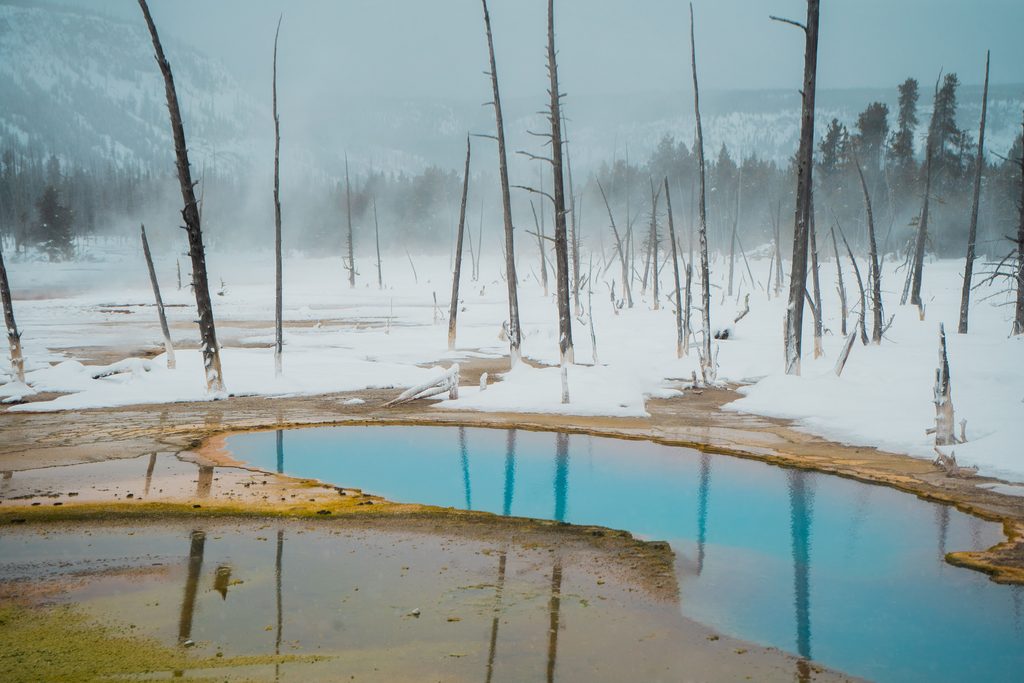
Yellowstone National Park transforms into a remarkable winter wilderness where powerful geysers erupt through freezing air, colorful hot springs release clouds of steam, and deep snow blankets the surrounding forests and mountains.
While much of the park becomes inaccessible to ordinary passenger vehicles during winter, guided snowcoach and snowmobile excursions allow visitors to explore some of Yellowstone’s most extraordinary geothermal attractions.
At the center of these adventures is Old Faithful, one of the world’s most famous geysers. Its dramatic eruptions become even more impressive against Yellowstone’s snowy winter scenery.
From the steaming pools of the Upper Geyser Basin to the colorful geothermal features of Midway Geyser Basin, Yellowstone offers winter experiences unlike almost anywhere else in North America.
Whether you’re planning a winter photography trip, a guided snowcoach excursion, or a multi-day wilderness vacation, this guide will help you discover Yellowstone’s extraordinary geothermal wonders.
🌋 Old Faithful Geyser – Yellowstone’s Most Famous Winter Eruption
Old Faithful is one of Yellowstone National Park’s most recognizable natural attractions and an extraordinary destination during winter.
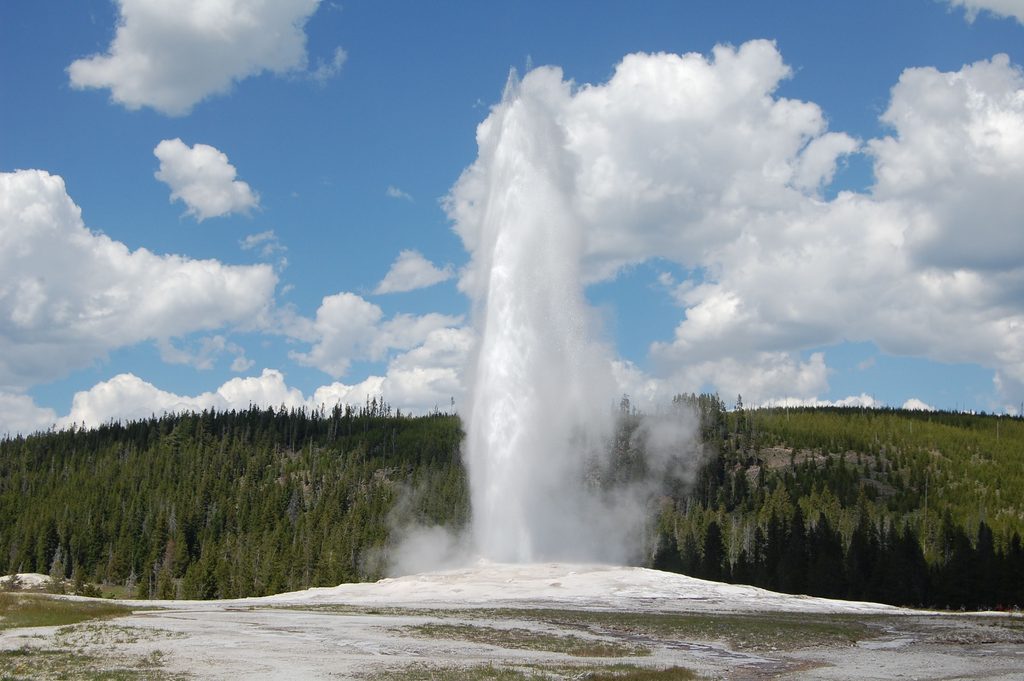
Located in the Upper Geyser Basin, this famous geyser regularly sends powerful columns of hot water and steam high into the air.
During winter, the contrast between the boiling water, rising steam, and snow-covered landscape creates an unforgettable scene.
What Makes Old Faithful Special in Winter?
Old Faithful typically erupts approximately every 60–110 minutes, although actual intervals vary. Eruption predictions are estimates rather than guarantees.
Its eruptions can reach heights of approximately 100–180 feet, with enormous clouds of steam becoming particularly visible in cold winter temperatures.
Visitors may experience:
- Towering eruptions surrounded by snowy forests.
- Thick steam clouds drifting across the geyser basin.
- Snow-covered boardwalks and geothermal landscapes.
- Beautiful winter sunlight illuminating the eruption.
- Opportunities to photograph one of Yellowstone’s most famous natural wonders.
Winter visitors should allow extra time for changing weather, transportation schedules, and eruption predictions.
Winter travel tip: Old Faithful is generally reached by authorized oversnow transportation during the winter season. Check current park access and operating schedules before planning your trip.
❄️ Upper Geyser Basin – A Winter Wonderland of Geothermal Activity
The Upper Geyser Basin contains one of the world’s greatest concentrations of geysers.
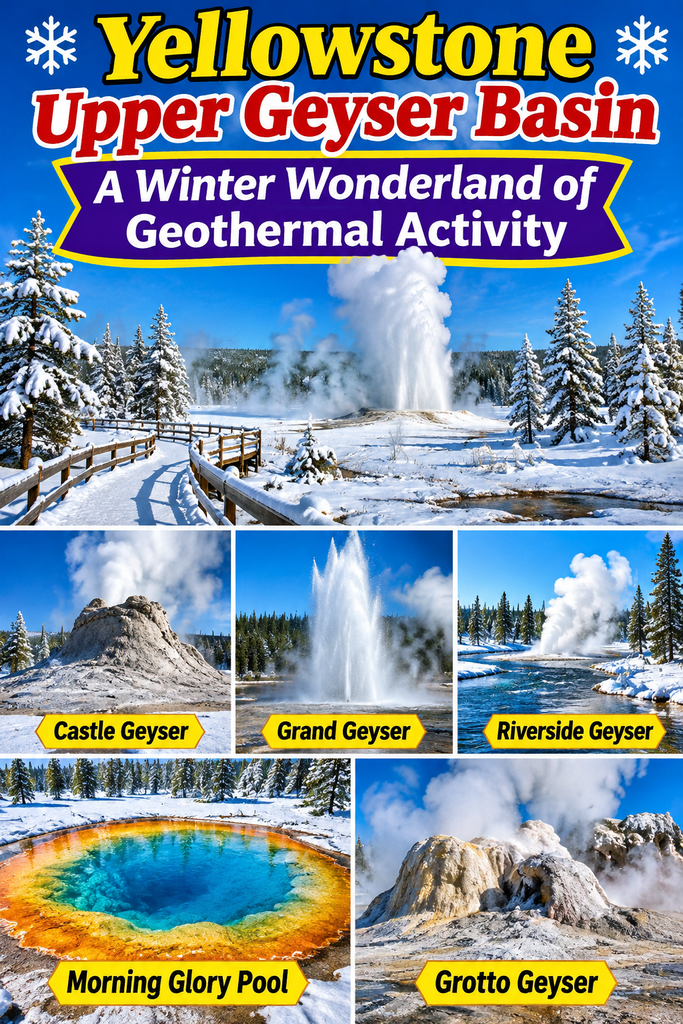
Located around Old Faithful, this geothermal landscape features hundreds of hot springs, geysers, and other hydrothermal features.
During winter, steam rises above snow-covered ground, creating an almost dreamlike environment.
Highlights of Upper Geyser Basin
Castle Geyser
Castle Geyser is known for its impressive cone formation and powerful eruptions. Its mineral deposits have accumulated over thousands of years.
Grand Geyser
Grand Geyser is among the world’s tallest predictable geysers. When conditions align, its eruptions can produce spectacular fountains of water.
Riverside Geyser
Located near the Firehole River, Riverside Geyser sends water outward in a graceful arc toward the river.
Morning Glory Pool
Morning Glory Pool is famous for its colorful geothermal waters, although its appearance has changed over time due to human impacts.
Grotto Geyser
Grotto Geyser features unusual formations created by mineral deposits and can produce extended eruptions.
Exploring the Basin Safely
Winter boardwalk access varies with snow accumulation, maintenance, and operating conditions.
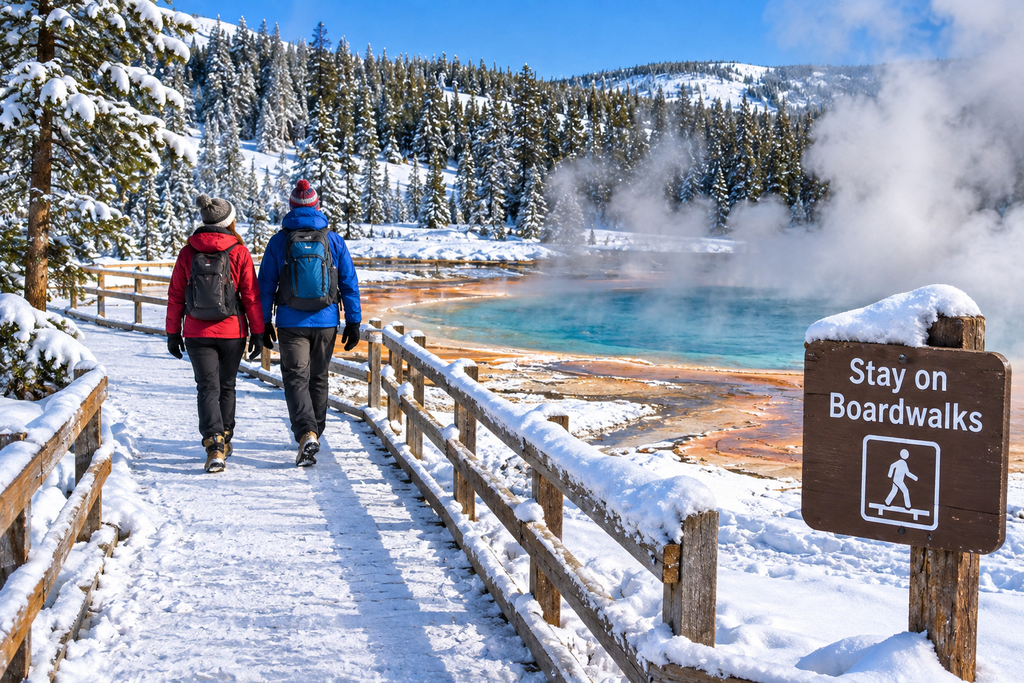
Visitors should stay on designated routes and never step onto snow-covered geothermal ground.
Thin crusts can conceal dangerously hot water and fragile thermal surfaces.
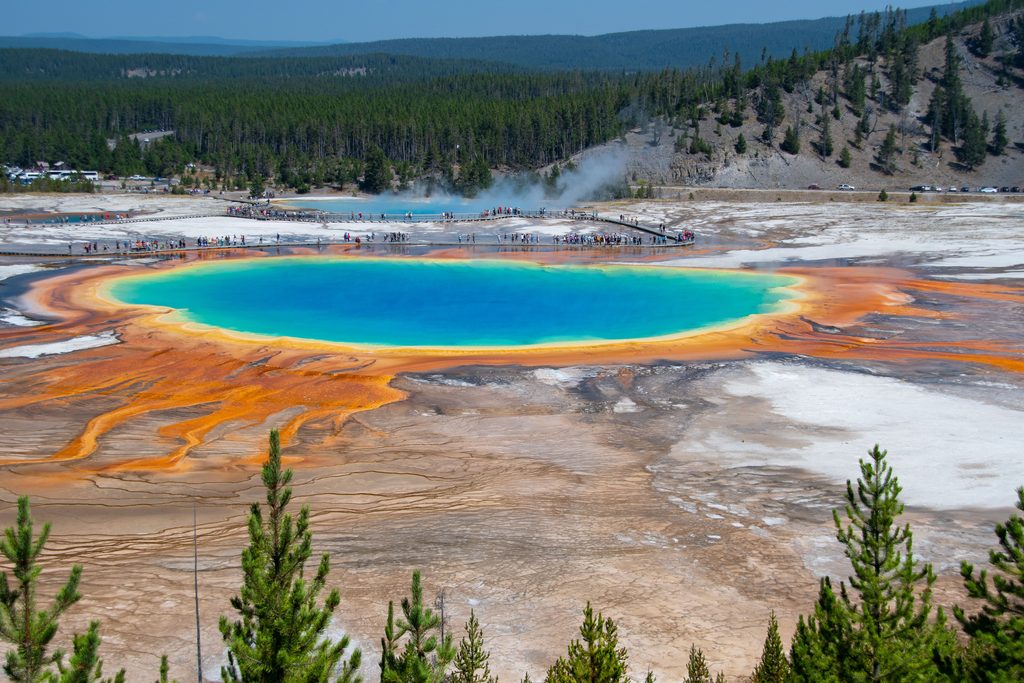
🌈 Grand Prismatic Spring – Yellowstone’s Colorful Winter Hot Spring
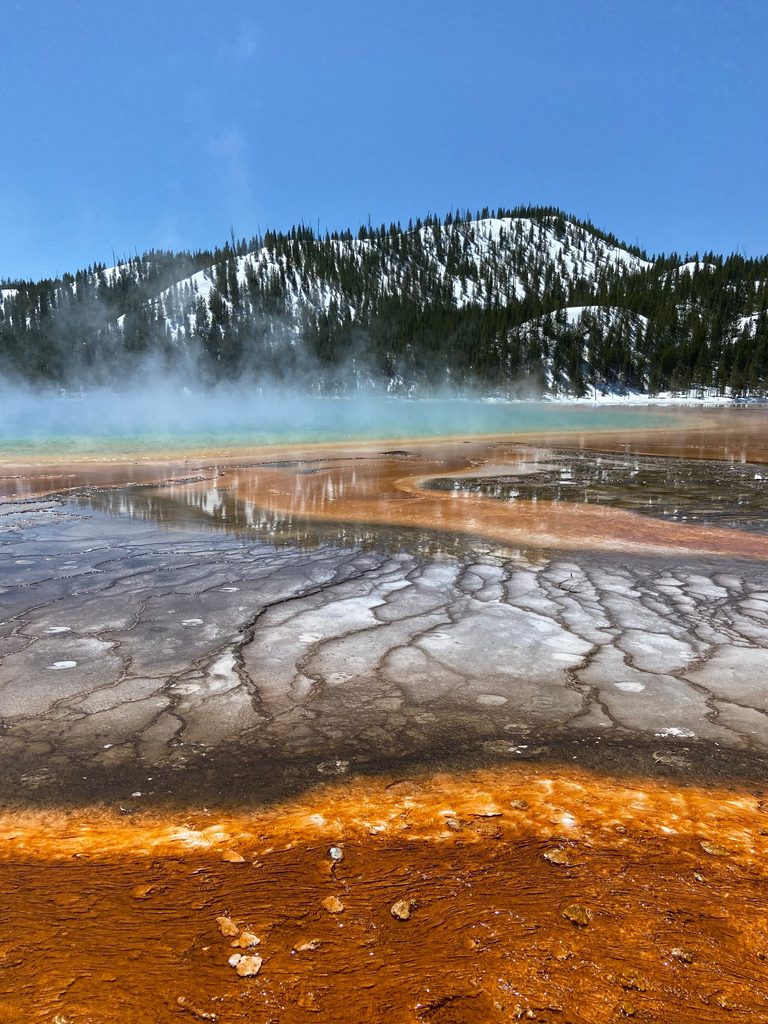
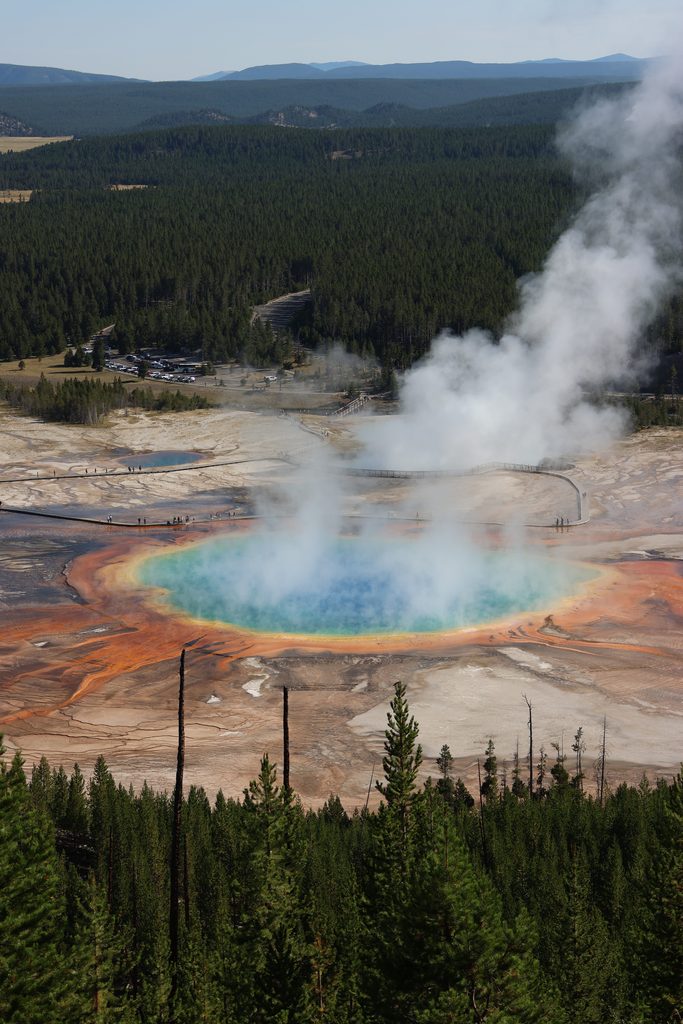
Grand Prismatic Spring is one of Yellowstone’s most spectacular geothermal attractions.
Located in Midway Geyser Basin, this enormous hot spring is famous for its vivid colors, including blue, green, yellow, orange, and red.
Its extraordinary appearance results partly from heat-loving microorganisms living around the spring’s edges.
What Happens During Winter?
Cold air causes enormous amounts of steam to rise from the spring’s hot surface.
The resulting clouds can create dramatic scenery, although they may also obscure the colorful water.
On especially cold days, visitors may see more steam than color.
Winter Access Considerations
Grand Prismatic Spring is not necessarily included on every winter tour. Access to Midway Geyser Basin and its boardwalks depends on current conditions, authorized routes, and tour itineraries.
The popular Grand Prismatic overlook trail is not a dependable winter viewing option.
Photography tip: If your tour includes Midway Geyser Basin, look for opportunities when shifting winds briefly move steam away from the spring.
♨️ Firehole River – Steaming Water Through Snowy Valleys
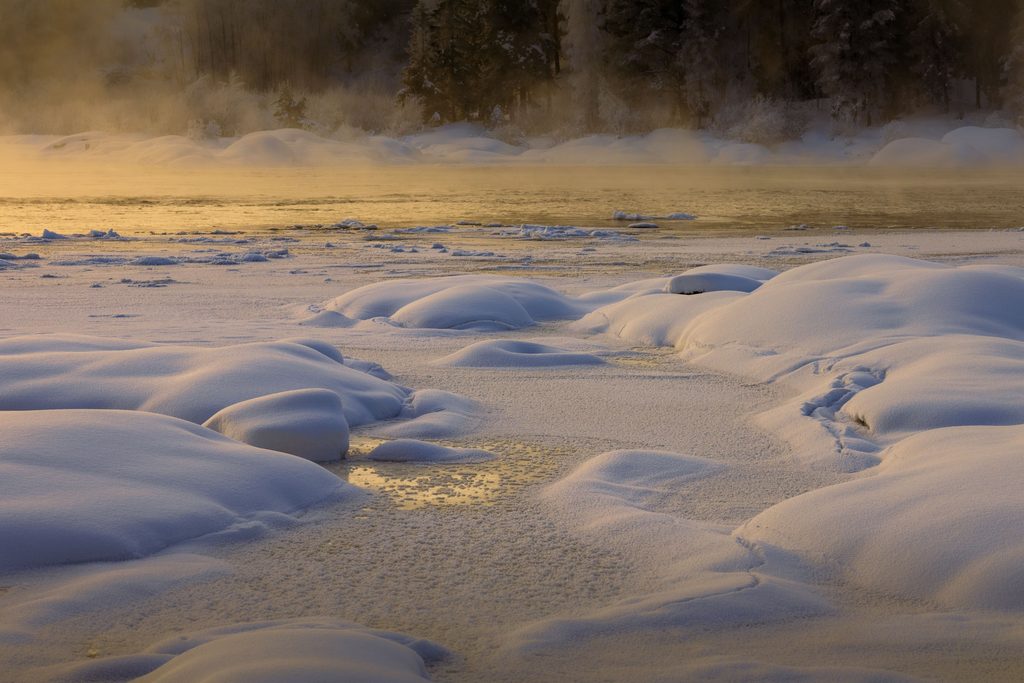
The Firehole River flows through some of Yellowstone’s most remarkable geothermal landscapes.
Warm water from numerous geothermal features enters the river, creating sections where mist rises above the water during freezing winter conditions.
Snow-covered trees, riverbanks, and distant mountains provide beautiful natural scenery.
What Makes the Firehole River Special?
- Rising mist above flowing water.
- Snow-covered riverbanks and evergreen forests.
- Geothermal features near sections of the river.
- Beautiful winter photography opportunities.
- Occasional wildlife sightings in nearby valleys.
Visitors may see bison moving through snowy terrain or resting in areas influenced by geothermal warmth.
Wildlife sightings are never guaranteed.
The Firehole River is not a designated winter swimming destination. Visitors should remain in authorized areas and follow park regulations.
🌋 Norris Geyser Basin – Yellowstone’s Dynamic Geothermal Landscape
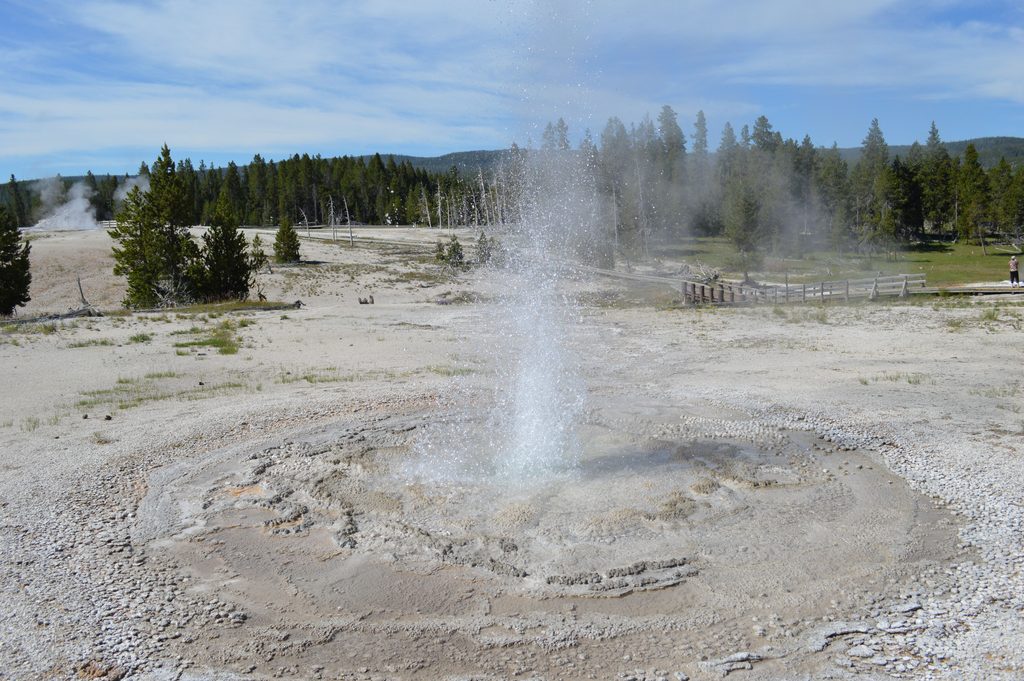
Norris Geyser Basin is among Yellowstone’s hottest and most dynamic geothermal regions.
Its geothermal features include acidic hot springs, steaming vents, colorful mineral deposits, and powerful geysers.
Norris contains two major areas: Porcelain Basin and Back Basin.
Steamboat Geyser
Steamboat Geyser is famous for producing the world’s tallest active geyser eruptions.
Major eruptions can send water more than 300 feet into the air, but they are unpredictable and may be separated by long intervals.
Visitors should never plan a trip expecting to witness a major eruption.
Norris in Winter
Snow and steam create striking scenery around Norris, but winter visitor access is limited and depends on park operations and authorized transportation.
Do not assume the summer boardwalk network will be available.
Check current National Park Service information and tour routes before including Norris in your itinerary.
🚌 Yellowstone Winter Snowcoach Adventures
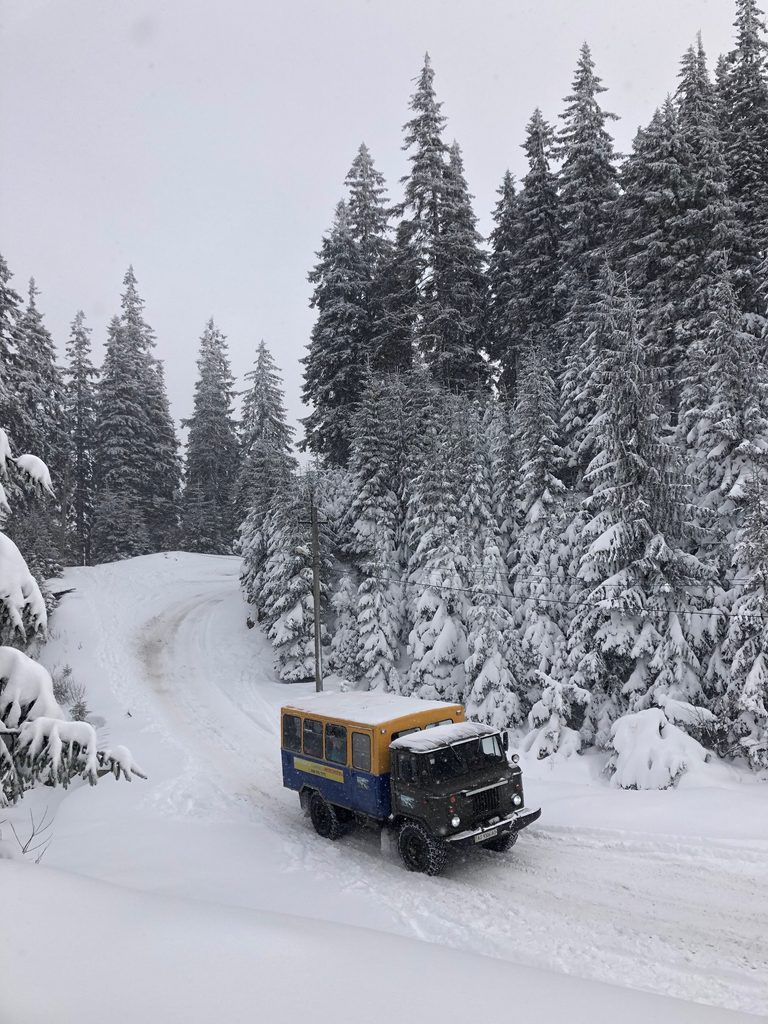
One of the most comfortable ways to experience Yellowstone’s winter geysers is aboard a guided snowcoach.
Snowcoaches are specially equipped vehicles designed to travel over snow-covered park roads.
They provide access to selected winter destinations that ordinary passenger vehicles cannot reach.
What to Expect on a Snowcoach Tour
Depending on the operator and itinerary, a tour may include:
- Scenic snow-covered forests and valleys.
- Guided stops at geothermal attractions.
- Old Faithful geyser viewing.
- Wildlife observation opportunities.
- Photography stops.
- Educational commentary about Yellowstone’s geology and ecology.
Many Old Faithful snowcoach trips depart from the West Yellowstone area or from the park’s southern winter access corridor near Flagg Ranch, depending on seasonal operations.
Routes, schedules, and departure points can change.
Advantages of Snowcoach Travel
Snowcoach excursions are particularly appealing for travelers who prefer a guided experience without operating a snowmobile.
They also offer a practical option for families, photographers, and visitors who want to enjoy the winter landscape with a professional guide.
Reservations are strongly recommended because winter transportation capacity is limited.
🏔️ Guided Snowmobile Adventures to Yellowstone’s Geysers
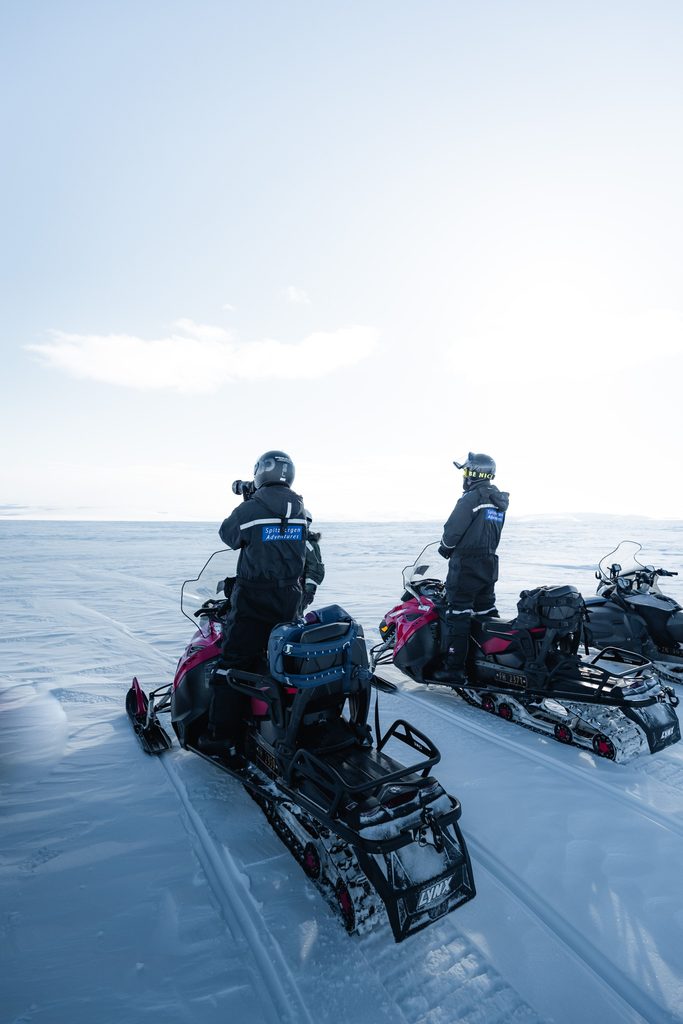
For visitors seeking a more active winter adventure, guided snowmobile tours offer another way to explore Yellowstone’s snow-covered interior.
Snowmobile travel is regulated to protect wildlife, reduce environmental impacts, and manage visitor safety.
Most recreational snowmobile access requires an authorized commercial guide, although a limited non-commercially guided program may be available through a permit system.
Snowmobile Tour Highlights
Depending on the route, guided trips may feature:
- Snow-covered mountain scenery.
- Steaming geothermal areas.
- Old Faithful excursions.
- Winter wildlife viewing.
- Scenic river valleys.
- Opportunities to learn about Yellowstone’s geothermal history.
Preparing for a Snowmobile Excursion
Dress in insulated layers and follow the tour operator’s clothing and equipment requirements.
Helmets, winter outerwear, gloves, and other specialized equipment may be provided or available for rent.
Always confirm what is included before booking.
Snowmobile travel can be physically demanding, particularly in extremely cold temperatures.
🦬 Wildlife Around Yellowstone’s Winter Geothermal Areas
Yellowstone’s geothermal landscapes also provide opportunities to observe wildlife during winter.
Bison sometimes gather in areas where geothermal warmth influences snow and vegetation conditions.
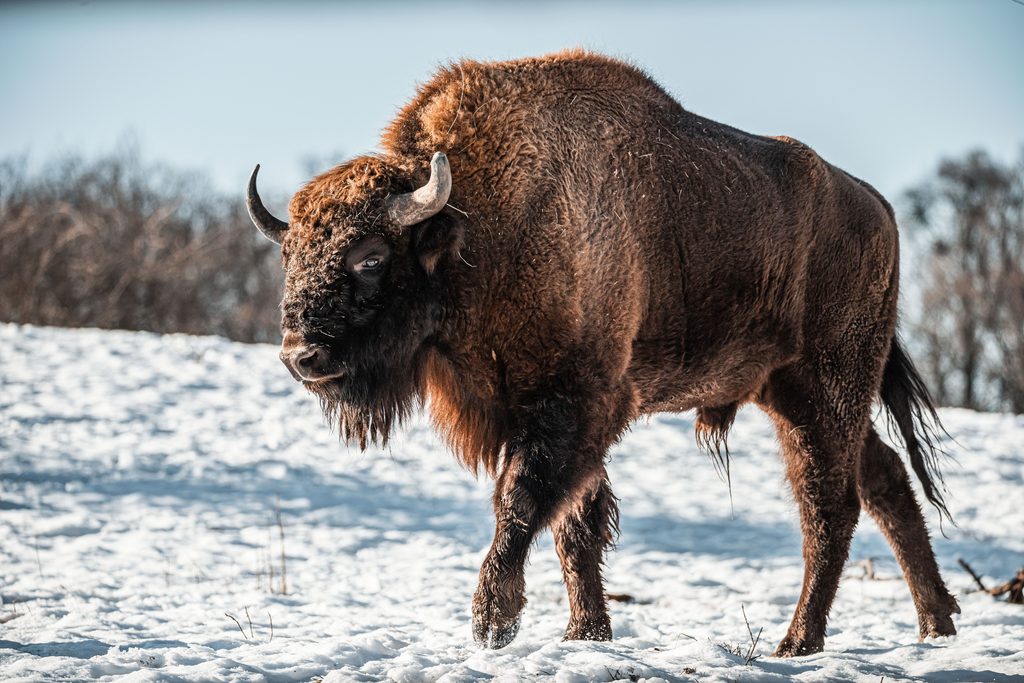
Visitors may also encounter elk, coyotes, foxes, and other animals in suitable habitats.
Bison in the Snow
Yellowstone’s bison are exceptionally well adapted to winter.
Their thick coats, powerful bodies, and ability to move snow aside while searching for vegetation help them survive severe conditions.
A bison standing against a backdrop of rising geothermal steam creates one of Yellowstone’s most memorable winter scenes.
Wildlife Safety
Remain at least 25 yards from bison, elk, and most other wildlife, and at least 100 yards from bears and wolves.
Use binoculars or a telephoto lens rather than approaching animals.
Never block wildlife movement or stop in unsafe areas.
📸 Winter Photography – Capturing Geysers, Steam & Snow
Yellowstone’s geothermal landscapes provide exceptional photography opportunities during winter.
Steam, sunlight, snow, and moving water create constantly changing conditions.
Best Winter Photography Subjects
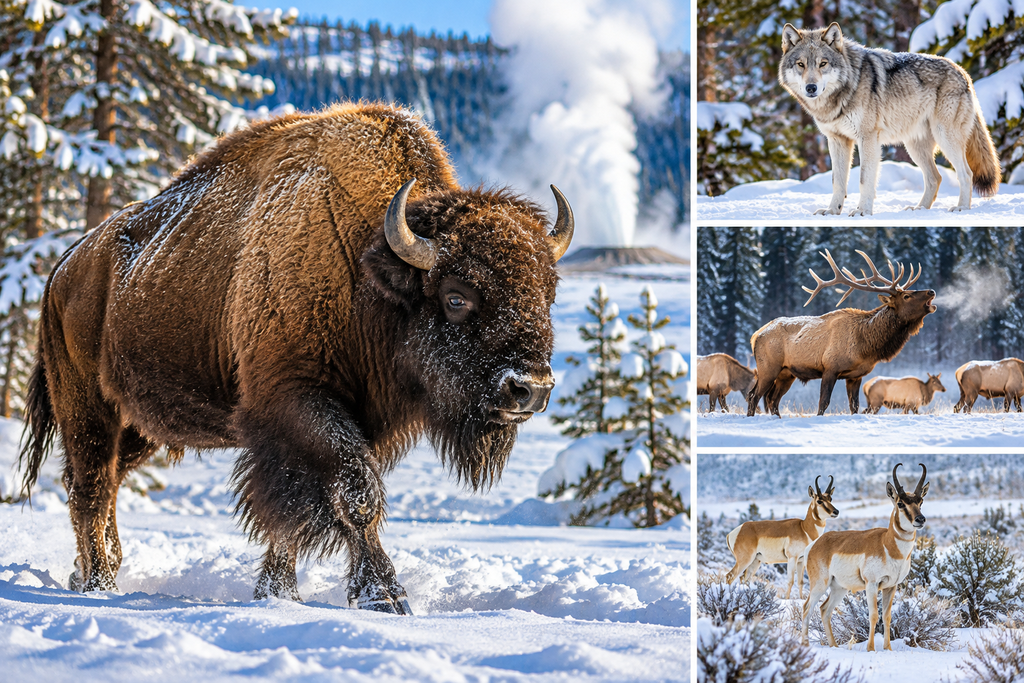
Old Faithful eruptions: Capture towering water and steam columns against the snowy landscape.
Steaming hot springs: Photograph mist rising into cold air.
Snow-covered lodgepole pines: Look for frosted trees surrounding geothermal areas.
Firehole River scenery: Capture flowing water, mist, and winter reflections.
Wildlife and geothermal steam: Photograph animals from safe distances using a telephoto lens.
Photography Tips
- Bring extra camera batteries because cold temperatures reduce battery performance.
- Use a lens cloth to manage condensation and moisture.
- Protect equipment from snow and freezing precipitation.
- Avoid sudden temperature changes that can cause condensation.
- Use a tripod where permitted and practical.
- Include trees or landscape features to show the scale of geyser eruptions.
Steam can obscure subjects unexpectedly, so patience is important.
📅 Best Time to Visit Yellowstone’s Winter Geysers
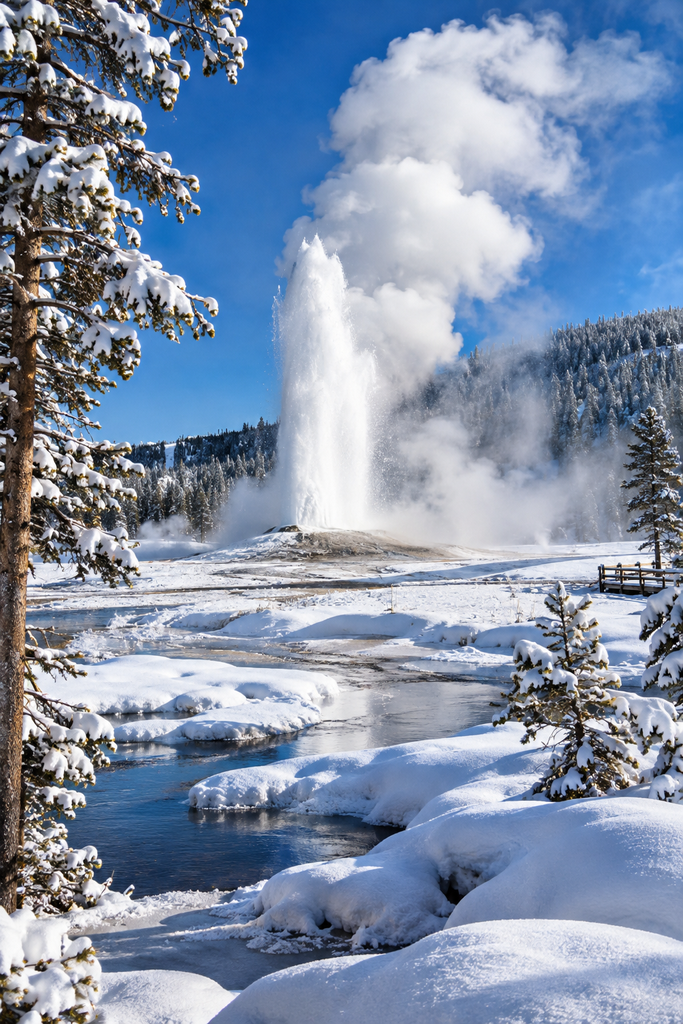
Yellowstone’s winter oversnow travel season generally runs from mid-December through mid-March, subject to annual operating schedules, weather, and road conditions.
Each winter month offers a different experience.
December – Early Winter Scenery
December brings accumulating snow, freezing temperatures, and the beginning of the winter travel season.
Holiday periods can be popular, so advance reservations are especially helpful.
January – Deep Snow & Dramatic Steam
January often delivers some of Yellowstone’s coldest temperatures.
These conditions can produce particularly dramatic steam clouds around geysers and hot springs.
Visitors should prepare for severe cold and rapidly changing weather.
February – Snowy Landscapes & Winter Adventures
February is an excellent month for travelers seeking classic Yellowstone winter scenery.
Snowcoach tours, guided snowmobile adventures, and winter photography remain popular activities.
March – Late-Winter Exploration
Early March can offer beautiful snow-covered landscapes and longer daylight hours.
However, winter transportation operations generally conclude around mid-March, depending on the route and annual schedule.
Best overall planning period: January and February are strong choices for travelers whose priority is a classic snow-covered Yellowstone geyser experience.
🚗 How to Reach Yellowstone’s Winter Geysers
Winter access to Yellowstone differs significantly from summer travel.
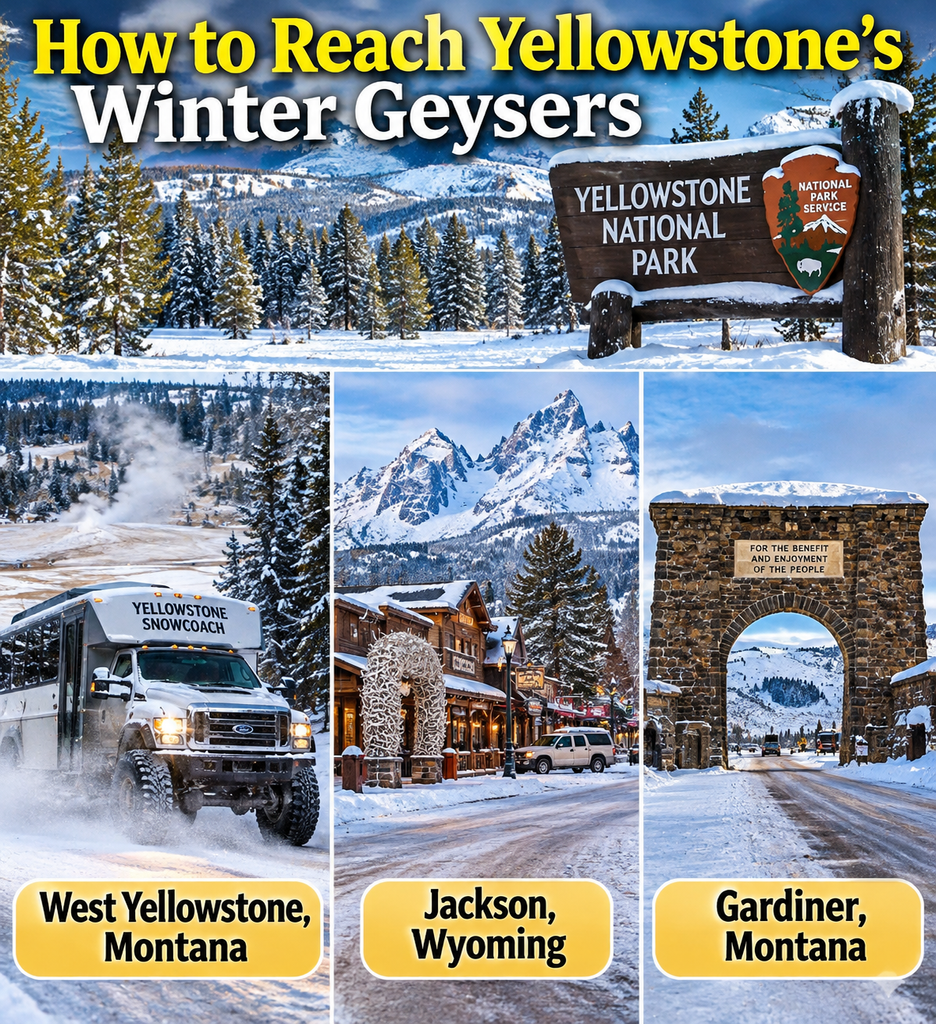
Most park roads close to ordinary passenger vehicles during the winter oversnow season.
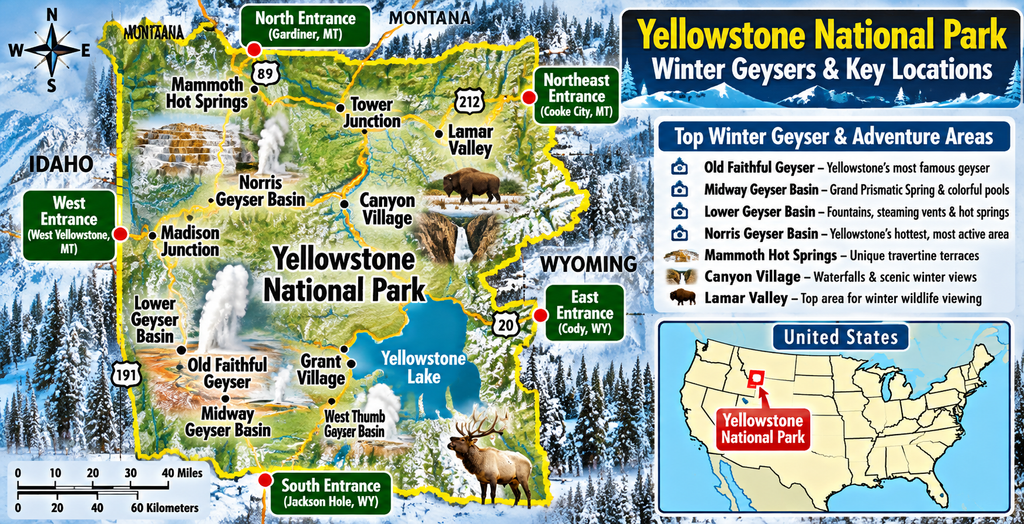
The northern road corridor between Gardiner, Mammoth Hot Springs, and the Northeast Entrance remains the primary year-round route for regular vehicles, subject to weather and temporary closures.
However, this road does not provide ordinary passenger-vehicle access to Old Faithful.
West Yellowstone, Montana
West Yellowstone is a popular winter gateway for authorized snowcoach and guided snowmobile excursions into the park.
Travelers can find hotels, restaurants, tour providers, and winter recreation services in town.
Jackson, Wyoming
Jackson is another winter vacation base for travelers exploring the Greater Yellowstone region.
Some authorized tours reach Yellowstone through the South Entrance corridor, with departure arrangements varying by operator.
Gardiner, Montana
Gardiner provides access to Yellowstone’s northern entrance and the Mammoth Hot Springs area.
It is especially useful for winter wildlife trips and exploration along the northern road corridor.
Old Faithful trips from this area require separate planning and should not be assumed available as a direct winter drive.
🏨 Where to Stay for Yellowstone Winter Geyser Adventures
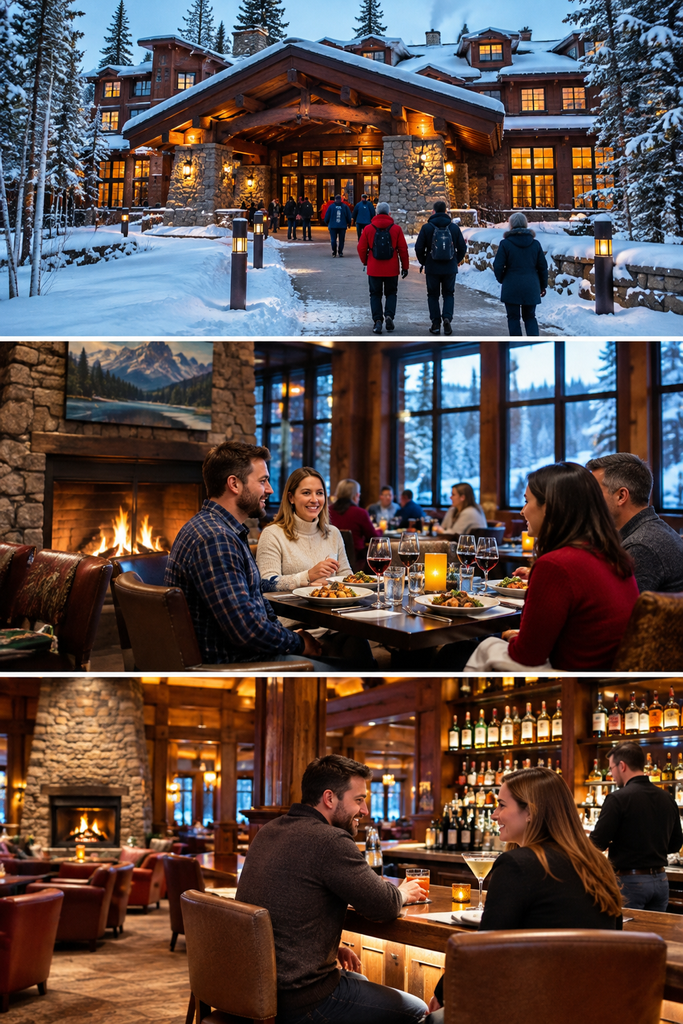
Choosing the right accommodations can make winter travel significantly easier.
Consider where your tour departs before reserving a hotel.
Old Faithful Snow Lodge & Cabins
Old Faithful Snow Lodge is one of Yellowstone’s best-known winter lodging options.
Located near Old Faithful, it provides a distinctive opportunity to stay in the park’s snowy interior.
Winter access generally requires authorized oversnow transportation.
Rooms and transportation should be arranged well in advance, and seasonal availability must be confirmed.
West Yellowstone Hotels
West Yellowstone offers a variety of hotels and vacation accommodations near winter tour departure points.
It is a convenient base for visitors planning Old Faithful snowcoach or snowmobile excursions.
Jackson & Teton Village Lodging
Jackson and nearby Teton Village provide mountain lodges, hotels, cabins, and resort accommodations.
These locations work well for travelers combining Yellowstone with winter activities in the Jackson Hole region.
Gardiner & Mammoth Area
Gardiner offers lodging near Yellowstone’s North Entrance.
It is particularly useful for visitors focusing on Mammoth Hot Springs, northern Yellowstone scenery, and winter wildlife viewing.
Booking tip: Confirm both lodging availability and transportation arrangements before finalizing your winter itinerary.
🏨 Book Your Yellowstone Winter Getaway
Experience the magic of Yellowstone in winter! Discover cozy mountain lodges, comfortable hotels, and welcoming accommodations near Old Faithful, West Yellowstone, Gardiner, and Jackson Hole.
After a day exploring steaming geysers, snowy landscapes, and winter wildlife, relax in a warm and comfortable retreat.
🏨 Book Your Yellowstone Winter Stay Now
Explore available hotels, mountain lodges, and vacation accommodations through our Expedia travel collection.
Affiliate Disclosure: This section contains affiliate booking links. If you book through our Expedia links, we may earn a commission at no additional cost to you. Your support helps keep MyCampingVacationSites.com sharing outdoor adventures and travel guides.🎒 What to Pack for Yellowstone Winter Geyser Adventures
Yellowstone winter temperatures can fall well below freezing, making appropriate clothing essential.
Essential Winter Gear
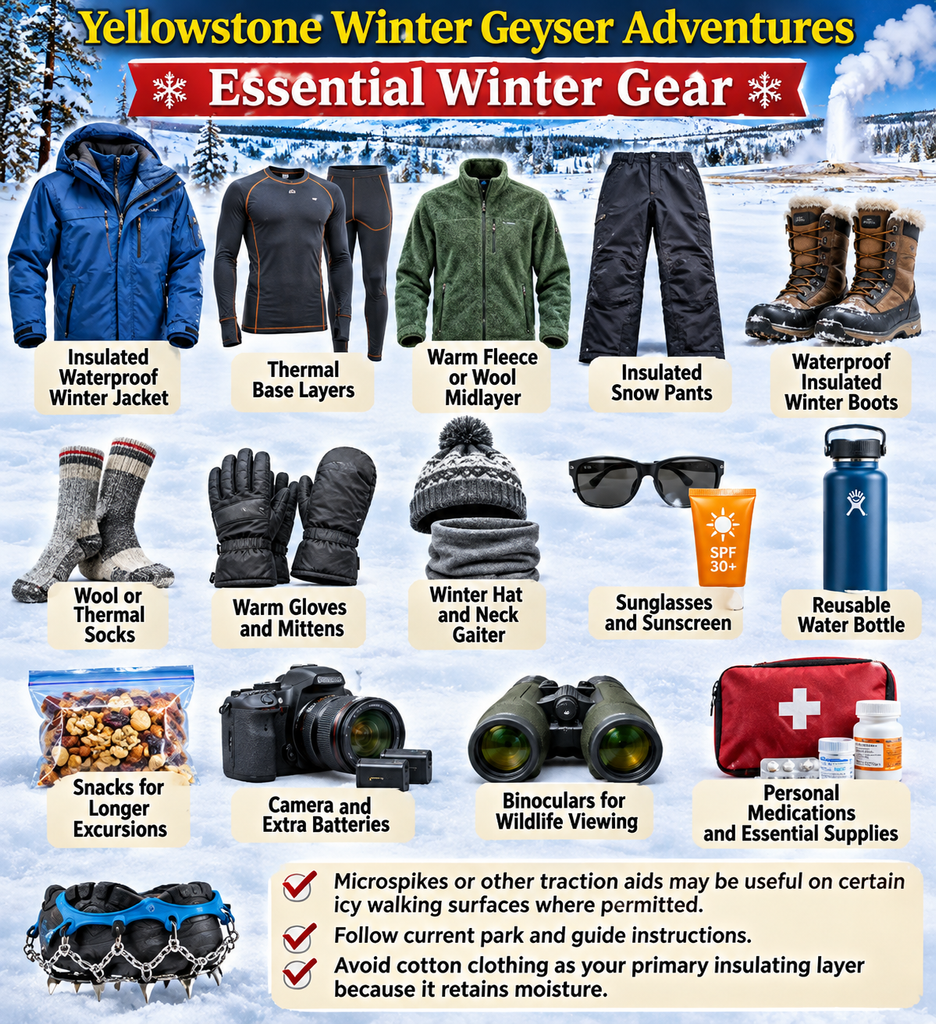
- Insulated waterproof winter jacket.
- Thermal base layers.
- Warm fleece or wool midlayers.
- Insulated snow pants.
- Waterproof insulated winter boots.
- Wool or thermal socks.
- Warm gloves and mittens.
- Winter hat and neck gaiter.
- Sunglasses and sunscreen.
- Reusable water bottle.
- Snacks for longer excursions.
- Camera and extra batteries.
- Binoculars for wildlife viewing.
- Personal medications and essential supplies.
Microspikes or other traction aids may be useful on certain icy walking surfaces where permitted, but visitors should follow current park and guide instructions.
Avoid cotton clothing as your primary insulating layer because it retains moisture.
🗺️ Suggested 3-Day Yellowstone Winter Geyser Itinerary
A three-day winter getaway provides time to experience Yellowstone’s geothermal wonders without rushing every activity.
Day 1 – Arrive in West Yellowstone
- Check into your hotel or lodge.
- Confirm your snowcoach or snowmobile reservations.
- Explore the town and nearby winter scenery.
- Prepare your clothing and photography equipment.
- Enjoy an early evening before your geothermal excursion.
Day 2 – Old Faithful & Upper Geyser Basin
- Depart on a reserved guided oversnow excursion.
- Travel through Yellowstone’s snowy interior.
- Visit Old Faithful and watch for an eruption.
- Explore accessible geothermal features included in your itinerary.
- Photograph steam clouds and winter landscapes.
- Return to your accommodation, unless staying at Old Faithful Snow Lodge.
Actual stops and walking opportunities depend on the tour and operating conditions.
Day 3 – Additional Winter Exploration
Choose an activity based on your interests and available tours.
Possible options include:
- Another authorized geothermal excursion.
- Winter wildlife photography.
- Cross-country skiing on designated trails.
- Snowshoeing in an appropriate accessible area.
- Exploring winter attractions around West Yellowstone.
Allow flexibility for severe weather and transportation delays.
⚠️ Yellowstone Winter Geyser Safety Tips
Yellowstone’s geothermal features are beautiful but potentially dangerous.
Hot water, unstable ground, severe cold, and rapidly changing weather require careful preparation.
Important Safety Guidelines
Stay on designated routes. Never walk across geothermal ground outside authorized trails or boardwalks.
Keep away from hot water. Yellowstone’s thermal waters can cause severe or fatal burns.
Never test the ground. Snow can conceal fragile geothermal crusts.
Follow your guide’s instructions. Authorized winter guides understand route restrictions and changing conditions.
Dress for extreme temperatures. Wind chill and prolonged cold exposure can create dangerous conditions.
Respect wildlife distances. Never approach bison or other wild animals for photographs.
Check park alerts. Winter access, facilities, and transportation schedules can change unexpectedly.
Before traveling, consult the official National Park Service website for current Yellowstone conditions.
❓ Frequently Asked Questions About Yellowstone Winter Geysers
Can you see Old Faithful during winter?
Yes. Old Faithful can be visited during Yellowstone’s winter oversnow season using authorized transportation, subject to weather and seasonal operations.
Does Old Faithful erupt during freezing weather?
Yes. Old Faithful continues its natural geothermal activity throughout winter. Cold temperatures make its steam clouds especially noticeable.
Can you drive your own car to Old Faithful in winter?
Generally, no. The roads leading to Old Faithful are closed to ordinary passenger vehicles during the winter oversnow season.
Are Yellowstone’s hot springs still hot in winter?
Yes. Yellowstone’s geothermal heat continues year-round, and many hot springs release particularly visible steam in cold air.
Can you visit Grand Prismatic Spring in winter?
Access is limited and depends on authorized tour routes, weather, and operating conditions. Not every winter tour includes Midway Geyser Basin.
Is Yellowstone crowded during winter?
Yellowstone generally receives far fewer visitors in winter than during peak summer months. However, guided transportation and lodging availability are limited, so advance reservations remain important.
Is winter a good time for Yellowstone photography?
Absolutely. Snow-covered forests, geyser eruptions, steam clouds, and winter wildlife create exceptional photography opportunities.
Where should you stay to visit Old Faithful in winter?
Old Faithful Snow Lodge is an in-park option when operating. West Yellowstone is a convenient gateway for many guided winter excursions, while Jackson-area accommodations can work for certain South Entrance tours.
🌎 Explore More Yellowstone Winter Adventures
Continue discovering Yellowstone’s spectacular winter landscapes with these related travel guides.
Yellowstone Winter Snowmobile Adventures – Snowy Trails & Scenic Wilderness
Discover guided snowmobile excursions, snowy forests, spectacular mountain scenery, and exciting winter adventures through Yellowstone National Park.
Yellowstone Winter Wildlife Adventures – Bison, Wolves & Snowy Landscapes
Explore Lamar Valley, the northern Yellowstone wildlife corridor, winter bison herds, wolf-watching opportunities, and unforgettable snowy landscapes.
Yellowstone National Park Travel Guide – Geysers, Wildlife, Camping & Scenic Adventures
Explore Yellowstone’s famous attractions, spectacular waterfalls, mountain lakes, wildlife habitats, camping destinations, and year-round travel opportunities.
More Yellowstone Winter Adventures Coming Soon
Discover additional guides to frozen waterfalls, snow-covered wilderness, and Yellowstone’s extraordinary winter scenery.
🏞️ Explore Our Yellowstone National Park Adventure Hub
Discover Yellowstone’s breathtaking geysers, wildlife, waterfalls, scenic lakes, camping destinations, and year-round outdoor adventures.
🏔️ Explore Our Complete Yellowstone National Park Adventure Hub🌋 Final Thoughts – Experience Yellowstone’s Winter Geothermal Wonders
Yellowstone’s winter geysers offer one of the most extraordinary natural experiences in the American West.
Watching Old Faithful erupt through freezing air, seeing steam rise above snow-covered geothermal landscapes, and exploring Yellowstone’s quiet winter wilderness create memories that can last a lifetime.
From guided snowcoach journeys to winter photography and geothermal sightseeing, Yellowstone offers remarkable adventures for travelers willing to embrace the cold.
With careful planning, appropriate winter clothing, and authorized transportation, visitors can experience a quieter and dramatically different side of America’s first national park.
Plan your Yellowstone winter getaway, discover the magic of Old Faithful, and experience the spectacular contrast of fire, ice, steam, and snow.
Thank you for visiting MyCampingVacationSites! I hope this guide helps you plan an unforgettable outdoor adventure. If you enjoyed this article, feel free to leave a comment below and explore more travel guides, hiking destinations, camping adventures, and outdoor experiences throughout the site. Have a wonderful vacation wherever your next journey takes you!
— Jeffrey
Leave a Reply