
Abu Simbel, Egypt – Complete Guide to the Temples of Ramses II & Nefertari
Standing dramatically above the shores of Lake Nasser in southern Egypt, Abu Simbel is one of the most extraordinary ancient sites in the world. Its enormous statues, rock-cut temples, beautifully carved interiors, desert surroundings, and remarkable modern-day rescue make this an unforgettable destination for anyone exploring Egypt.
Thank you for reading this post, don't forget to subscribe!Built during the reign of Pharaoh Ramses II in the 13th century BCE, Abu Simbel consists of two magnificent temples carved directly into the sandstone. The larger Great Temple celebrates Ramses II and Egypt’s gods, while the smaller temple honors Queen Nefertari and the goddess Hathor.
The temples are impressive enough on their own, but Abu Simbel has another incredible story. During the 1960s, the entire complex was carefully dismantled and moved to higher ground to prevent it from disappearing beneath the rising waters created by the construction of the Aswan High Dam.
Today, visitors can walk beneath the colossal statues of Ramses II, enter chambers covered with ancient reliefs, admire the Temple of Nefertari, gaze across Lake Nasser, and experience one of the greatest archaeological treasures of ancient Egypt.
Watch Abu Simbel – Egypt’s Incredible Temples
Experience the massive rock-cut temples of Abu Simbel, built by Pharaoh Ramesses II near the shores of Lake Nasser in southern Egypt.

Abu Simbel – Egypt’s Monumental Legacy
Abu Simbel lies in southern Egypt’s Nubian region, not far from the border with Sudan. Its remote desert location adds considerably to the experience.
Unlike a temple surrounded by the busy streets of Cairo or Luxor, Abu Simbel rises from a dramatic landscape of desert, blue sky, sandstone and the waters of Lake Nasser.
Ramses II ordered the construction of the temples during Egypt’s New Kingdom. The enormous monument projected royal power toward Nubia while also celebrating Ramses II’s relationship with the gods.
More than 3,000 years later, its scale remains astonishing.
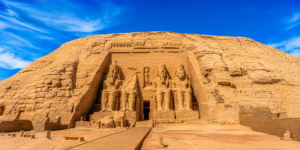
The Great Temple of Ramses II
The first sight most visitors remember is the monumental façade of the Great Temple of Ramses II.
Four enormous seated statues of Ramses II dominate the entrance. Each originally stood approximately 20 meters high, making the human figures walking beneath them appear tiny.
Smaller figures representing members of the royal family stand around the pharaoh’s legs.
The scale was deliberate. Anyone approaching the temple in ancient times would immediately understand the power and importance Ramses II wanted the monument to communicate.
One of the colossal figures was damaged in antiquity, and portions of the statue remain near its feet. Rather than diminishing the monument, the fallen pieces provide another reminder of Abu Simbel’s immense age.
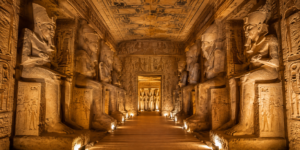
Inside the Great Temple
The extraordinary architecture continues after entering the temple.
Visitors pass into a large pillared hall containing massive statues associated with Ramses II. Ancient reliefs cover the walls, depicting religious ceremonies, military campaigns and scenes celebrating the pharaoh.
The difference between the blazing desert outside and the darker stone chambers inside creates an especially memorable atmosphere.
As you travel farther into the temple, the chambers become progressively more sacred until reaching the innermost sanctuary.
The interior demonstrates that Abu Simbel was much more than a monumental façade. It was a carefully planned religious complex filled with symbolism.
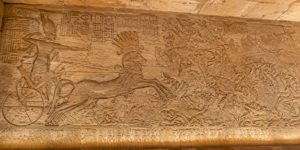
Battle of Kadesh Reliefs
Among the most famous scenes inside Abu Simbel are representations associated with the Battle of Kadesh, fought between the forces of Ramses II and the Hittite Empire.
Ramses II used temple art and inscriptions to portray himself as a powerful warrior king.
The reliefs show the pharaoh in battle scenes involving chariots, soldiers and defeated enemies. Whether viewed as history, royal propaganda or religious symbolism, they provide a fascinating glimpse into how Egyptian rulers presented their achievements.
For travelers interested in ancient warfare and Egyptian history, these carvings are among Abu Simbel’s most interesting details.

Temple of Nefertari & Hathor
Beside the Great Temple stands the smaller but equally fascinating Temple of Hathor and Nefertari.
It was dedicated to the goddess Hathor and Queen Nefertari, the celebrated Great Royal Wife of Ramses II.
The temple’s façade contains six large standing statues. Remarkably, figures of Nefertari are shown on a scale similar to Ramses II.
Inside are columns, religious scenes and beautifully carved representations connected with Hathor, Nefertari and the royal family.
Visiting both temples provides a much more complete understanding of Abu Simbel than seeing the famous colossal statues alone.

The Abu Simbel Solar Alignment
One of Abu Simbel’s most fascinating features is its relationship with sunlight.
Twice each year, traditionally associated with dates around February 22 and October 22, sunlight penetrates deep into the Great Temple and illuminates figures within the sanctuary.
The event demonstrates the sophisticated planning associated with the temple’s orientation.
Following the relocation of Abu Simbel during the 20th century, the phenomenon continues around these dates, although the precise timing changed slightly.
The solar event attracts visitors who travel to Abu Simbel specifically to witness the spectacle.
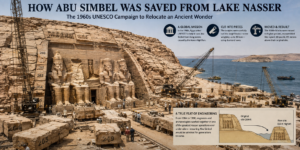
How Abu Simbel Was Saved from Lake Nasser
Abu Simbel’s modern history is almost as remarkable as its ancient history.
Construction of the Aswan High Dam threatened numerous archaeological sites throughout Nubia. As the reservoir behind the dam filled, the rising waters that became Lake Nasser would have submerged Abu Simbel.
Saving the temples required an extraordinary international archaeological and engineering effort.
Rather than allowing the monuments to disappear beneath the lake, specialists dismantled the temples into enormous blocks.
The sections were carefully numbered, moved and reconstructed on higher ground.
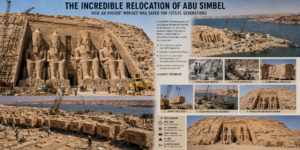
The Incredible Relocation of Abu Simbel
Between 1964 and 1968, the Abu Simbel temples were moved approximately 65 meters higher and about 200 meters away from their original location.
Engineers recreated the appearance and orientation of the original setting as closely as possible.
Visitors today can easily forget that the enormous temples were relocated because the reconstructed setting appears remarkably natural.
The project became one of the world’s most famous examples of international cooperation to preserve cultural heritage.
It also adds another dimension to an Abu Simbel visit: you are seeing both an ancient Egyptian engineering achievement and an extraordinary accomplishment of modern engineering.

Lake Nasser – A Dramatic Backdrop
The relocation saved Abu Simbel from the waters of Lake Nasser, which now form a spectacular backdrop to the temples.
The contrast is striking: golden desert, monumental sandstone architecture and deep blue water.
Spend some time exploring the outdoor areas rather than immediately leaving after touring the temples.
Views toward Lake Nasser provide excellent photography opportunities and help visitors appreciate how dramatically the landscape changed following construction of the Aswan High Dam.
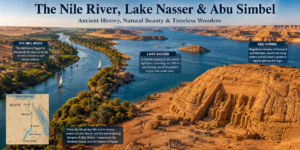
The Nile River, Lake Nasser & Abu Simbel
The story of Abu Simbel is closely connected to the Nile River. For thousands of years, the Nile shaped life throughout ancient Egypt and Nubia, providing water, transportation, fertile land and an important route connecting communities throughout the region.
Today, the landscape around Abu Simbel looks very different from the one Ramses II would have known. The construction of the Aswan High Dam created Lake Nasser, a vast reservoir along the Nile that stretches through southern Egypt and into Sudan.
The rising waters threatened Abu Simbel and numerous other ancient Nubian monuments, ultimately leading to the extraordinary international effort to relocate the temples to higher ground.
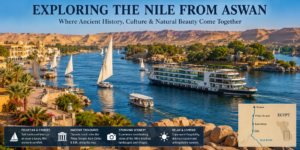
Exploring the Nile from Aswan
For travelers visiting Abu Simbel, Aswan makes an excellent gateway to the Nile. The river winds past islands, desert landscapes, archaeological sites and traditional Nubian communities, creating some of southern Egypt’s most beautiful scenery.
Visitors can experience the area through:
- Nile River cruises and traditional felucca sailing
- Scenic boat trips around Aswan
- Nubian village excursions
- Temple and archaeological tours
- Lake Nasser cruises
- Sunset trips along the Nile
- Wildlife and birdwatching along the river
Combining Abu Simbel, Aswan and a Nile River experience creates a much more complete southern Egypt adventure.
Lake Nasser Cruises & Abu Simbel
Travelers looking for a different experience can also explore Lake Nasser by cruise boat. These journeys travel through remote desert scenery and can include archaeological sites that are difficult to reach by road.
Some Lake Nasser itineraries incorporate Abu Simbel, creating an opportunity to approach one of Egypt’s greatest ancient monuments as part of a longer journey through Nubia.
Explore More Nile River Adventures
Add your Nile River hub/article link here.
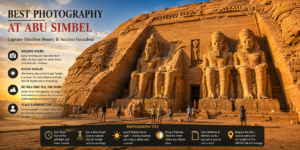
Best Photography at Abu Simbel
Abu Simbel is one of Egypt’s most photogenic archaeological destinations.
Some especially memorable photographs can include:
- The four colossal statues of Ramses II
- A wide view of the entire Great Temple façade
- The entrance beneath the enormous statues
- Temple of Nefertari and Hathor
- Detailed hieroglyphics and relief carvings
- Views across Lake Nasser
- Desert landscapes surrounding the complex
- Early-morning sunlight across the sandstone
- Visitors standing beneath the statues to show their enormous scale
Morning light can be particularly beautiful because it enhances the warm colors of the sandstone.
Always follow current photography rules inside the temples.

Best Time to Visit Abu Simbel
The cooler months are generally the most comfortable time for exploring southern Egypt.
October Through April
Temperatures are typically more manageable than during the extreme summer heat.
Early Morning
Early morning is an excellent time to visit. Temperatures are cooler, the light can be beautiful for photography, and many tours are designed to arrive relatively early.
Summer
Abu Simbel can become extremely hot during summer. Anyone visiting during the hotter months should take sun protection and hydration especially seriously.
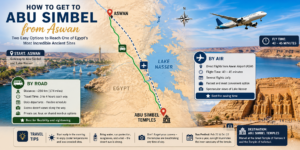
How to Get to Abu Simbel from Aswan
Because Abu Simbel is located far south of Egypt’s main tourist centers, reaching it is part of the adventure.
Aswan is the primary gateway.
Abu Simbel by Road
Many travelers take an organized road excursion from Aswan. The journey crosses a stark desert landscape before reaching Abu Simbel.
Although the trip requires several hours in each direction, the changing scenery and anticipation of seeing the temples make it memorable.
Abu Simbel by Air
Flights between Aswan and Abu Simbel can dramatically shorten the journey.
Flying can be particularly useful for travelers with limited time or those who would prefer to avoid a long road trip.
Schedules and availability can change, so check current transportation options while planning your visit.
Guided Tours of Abu Simbel
A knowledgeable guide can add considerable value to the experience.
Without context, visitors can appreciate the enormous statues and architecture. With a guide, the carvings, temple layout, Ramses II’s reign, Nubian history, solar alignment and relocation project become much easier to understand.
Tours may originate from Aswan and can include transportation and assistance with entrance arrangements.
Always check exactly what is included before booking.

Where to Stay Near Abu Simbel
Some travelers visit Abu Simbel as a day trip from Aswan, while others stay closer to the archaeological site.
Staying overnight can create a more relaxed experience and may allow you to explore the area without spending most of the day traveling back and forth.
Another option is staying in Aswan, where travelers have a much larger selection of hotels, resorts and accommodations along the Nile.
Travelers planning a broader Egypt itinerary can combine accommodations in Aswan with an Abu Simbel excursion before continuing toward Luxor, Cairo or other destinations.

What to Bring to Abu Simbel
Southern Egypt’s desert environment makes preparation important.
Consider bringing:
- Comfortable walking shoes
- Lightweight, breathable clothing
- Sun hat
- Sunglasses
- Sunscreen
- Reusable water bottle
- Camera or smartphone
- Portable charger or power bank
- Small daypack
- Extra camera batteries or memory cards
- Light layer for cool winter mornings
Water and sun protection should be priorities, especially during warmer months.
Abu Simbel Travel Tips
Allow enough time to explore both temples rather than concentrating only on the famous Great Temple façade.
Look closely at the smaller carvings and figures surrounding the enormous statues. Details that seem insignificant from a distance can become some of the most interesting features once you get closer.
Inside the temples, take your time examining the reliefs and columns.
Also leave a little time for the outdoor scenery. Lake Nasser and the surrounding Nubian desert are important parts of the modern Abu Simbel experience.
Most importantly, remember that Abu Simbel is remote. Transportation should be planned before arriving in southern Egypt rather than left until the last minute.

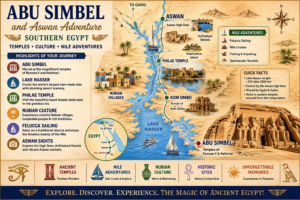
Combine Abu Simbel With an Aswan Adventure
Abu Simbel works exceptionally well as part of a larger southern Egypt itinerary.
Travelers can explore Aswan and the Nile before continuing south to Abu Simbel. Depending on the length of the trip, other experiences can include temples, Nubian culture, Nile cruises and Lake Nasser.
From Aswan, travelers can also continue north toward Luxor, creating an ancient-Egypt route filled with some of the country’s greatest archaeological sites.
A larger itinerary could look something like:
Cairo & Giza → Aswan → Abu Simbel → Nile Cruise → Luxor → Karnak Temple → Luxor Temple
This turns Abu Simbel into part of a much broader Egypt adventure rather than an isolated attraction.
Explore More Ancient Egypt Adventures

Abu Simbel is only one chapter in Egypt’s extraordinary archaeological story.
Continue your journey through ancient Egypt by exploring destinations such as:
Karnak Temple – Luxor, Egypt
Walk among enormous columns, hieroglyphics, statues and sacred structures at one of the largest religious complexes of the ancient world.
Luxor Temple – Heart of Ancient Thebes
Discover colossal statues, towering columns, ancient carvings, the famous obelisk and the Avenue of Sphinxes beside the Nile.
Aswan & the Nile
Explore southern Egypt’s river landscapes, Nubian heritage, islands and archaeological treasures.
The Pyramids of Giza
Experience Egypt’s most famous ancient monuments and one of the world’s greatest archaeological landscapes.
Ancient Egypt Adventures
Continue exploring temples, tombs, pyramids, Nile destinations and remarkable archaeological sites throughout Egypt.
Why Abu Simbel Belongs on Your Egypt Bucket List
Few places combine ancient history, monumental architecture and modern engineering quite like Abu Simbel.
The colossal statues of Ramses II alone would make the journey worthwhile. Yet the experience goes much deeper.
Inside the temples are chambers filled with ancient carvings and stories. Beside the Great Temple stands a remarkable monument to Nefertari and Hathor. Beyond the temples stretches Lake Nasser and the Nubian desert.
Then there is the extraordinary story of the relocation itself.
Thousands of years after Ramses II ordered these monuments carved into the cliffs of Nubia, another generation undertook an enormous engineering project to ensure they survived.
That combination of ancient Egyptian ambition, remarkable artistry, desert scenery and modern preservation makes Abu Simbel one of the most unforgettable destinations in Egypt.
Get Ready for Your Egypt Adventure
Exploring Abu Simbel, Aswan, ancient temples, archaeological sites, and Nile-side attractions can involve plenty of walking, uneven stone surfaces, and hot desert conditions. Comfortable, dependable footwear can make a big difference during a full day of sightseeing.
👉Explore the Ultimate Hiking Footwear Guide Explore Egypt’s legendary pyramids, magnificent temples, Nile River adventures, ancient cities, desert landscapes, and unforgettable archaeological wonders. 👉Egypt Adventures Hub
Thank you for visiting MyCampingVacationSites! I hope this guide helps you plan an unforgettable outdoor adventure. If you enjoyed this article, feel free to leave a comment below and explore more travel guides, hiking destinations, camping adventures, and outdoor experiences throughout the site. Have a wonderful vacation wherever your next journey takes you!
— Jeffrey
 Explore More Hubs
 Water Adventure Gear
 50 Must-Have Water Adventure Items (Complete Gear Guide) Ultimate Jet Ski Gear & Accessories Guide
  (Top Picks for Speed & Fun) Best River Rafts & Floating Docks
  (Rafting & Floating Essentials)
 Camping & Tent Gear
Tents: Best Tents for Camping & Outdoor Adventures (Top-Rated Picks) Ultimate Glamping Gear: 50 Must-Have Tents & Adventure Essentials  (Luxury Setup Guide)
 RV & Camper Gear
RV Adventure Gear: Must-Have Essentials for Road Trips & Camping (Full Travel Setup) Ultimate Interior RV & Camper Gear Guide  (Comfort & Living Upgrades)
Leave a Reply