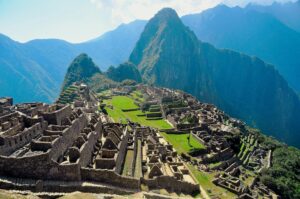
High in the Peruvian Andes, surrounded by steep green mountains, cloud forest, and the winding Urubamba River, Machu Picchu is one of the world’s most extraordinary archaeological destinations.
Thank you for reading this post, don't forget to subscribe!The ancient Inca citadel combines history, architecture, mountain scenery, hiking, wildlife, photography, and adventure in a setting unlike almost anywhere else on Earth.
Built during the height of the Inca Empire in the 15th century, Machu Picchu contains approximately 200 structures spread across agricultural terraces, ceremonial areas, residences, plazas, stairways, and carefully engineered stonework. The wider Historic Sanctuary protects 32,592 hectares of mountains, valleys, archaeological remains, and biologically diverse habitat. UNESCO recognizes Machu Picchu for both its cultural and natural significance.
Whether you arrive by train, complete part of the legendary Inca Trail, explore the Sacred Valley beforehand, or stay overnight in Machu Picchu Pueblo, visiting the citadel can become the centerpiece of a much larger Peru adventure.

🎥 Explore Machu Picchu: Ancient Wonders & Andean Adventures
Experience Machu Picchu and the surrounding Andes through this scenic adventure video featuring the legendary Inca Citadel, ancient stone ruins, mountain landscapes, hiking experiences, wildlife, and the journey to one of the world’s most remarkable archaeological destinations.
Along the way, discover scenic train travel, mountain routes, llamas, colorful birds, butterflies, camping, glamping, tours, accommodations, and outdoor adventures that help make a journey to Machu Picchu much more than a visit to the ruins.
▶️ Watch the full 10-minute Machu Picchu adventure below and explore the scenery, history, wildlife, and experiences waiting throughout this extraordinary region of Peru.
After watching, continue through the complete visitor guide below for more ideas on exploring Machu Picchu, planning your adventure, and discovering the surrounding Andes and Sacred Valley.
👉 Watch the Machu Picchu Adventure Video
Why Visit Machu Picchu

Few destinations combine ancient history and dramatic scenery as completely as Machu Picchu.
The citadel sits more than 2,400 meters (about 7,900 feet) above sea level, where the Andes transition toward the upper Amazon Basin. Mountains rise sharply around the ruins while terraces descend across the slopes below.
A visit can include:
- Ancient Inca architecture
- Agricultural terraces
- Mountain viewpoints
- Hiking adventures
- Wildlife and birdwatching
- Photography
- Sacred Valley exploration
- Train journeys through the Andes
- Machupicchu Pueblo
- Cultural experiences
- Nearby mountain hikes
The destination works particularly well as part of a larger Cusco and Sacred Valley adventure, allowing travelers to experience several sides of Peru rather than treating Machu Picchu as an isolated attraction.
Discover the Ancient Inca Citadel
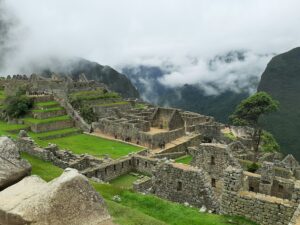
Machu Picchu was constructed around the middle of the 15th century, during the reign of Inca ruler Pachacutec. The site contains agricultural and urban sectors connected through terraces, pathways, plazas, staircases, and sophisticated stone structures.
One of the first things visitors notice is how closely the architecture follows the mountain.
Instead of completely reshaping the landscape, Inca builders incorporated cliffs, natural rock formations, slopes, and mountain contours into the design.
Stone walls fit together with remarkable precision, while terraces helped manage steep terrain and water drainage.
Walking through the citadel provides a close look at the engineering and planning behind one of the Inca civilization’s greatest surviving achievements.
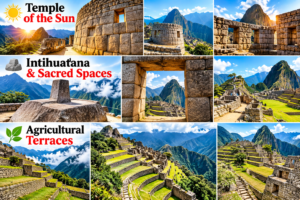
☀️ Temple of the Sun
The Temple of the Sun is among Machu Picchu’s most recognizable structures.
Its curved stone wall and carefully fitted masonry demonstrate the sophistication of Inca construction. The structure is associated with ceremonial and astronomical functions and is one of several locations demonstrating the importance of the sun within Inca culture.
Depending on your selected visitor route, views and access to particular structures can differ.
That makes choosing the correct Machu Picchu circuit an important part of planning your visit.
Intihuatana & Sacred Spaces
Machu Picchu contains numerous ceremonial spaces associated with the religious and astronomical traditions of the Inca civilization.
Among the most famous is Intihuatana, a carved ritual stone positioned within the archaeological complex.
Visitors can also encounter plazas, temples, ceremonial structures, terraces, and viewpoints that reveal how closely architecture, religion, astronomy, agriculture, and the surrounding mountains were connected.
The exact purpose of some areas remains uncertain, which is part of what continues to make Machu Picchu fascinating to archaeologists and travelers alike.
Explore the Agricultural Terraces
Machu Picchu’s terraces are much more than a beautiful foreground for photographs.
They demonstrate how Inca builders adapted steep mountain terrain for agriculture, drainage, stability, and settlement.
Rows of green terraces cascade down the slopes beneath the stone structures, creating one of the citadel’s defining landscapes.
These terraces also provide an excellent example of why Machu Picchu should be appreciated as both an archaeological site and an extraordinary feat of mountain engineering.
Machu Picchu Visitor Circuits
Visitors no longer simply wander throughout the entire archaeological site.
Machu Picchu currently operates with three main circuits containing 10 routes, a system that took effect in June 2024. Your ticket determines which areas you can visit.
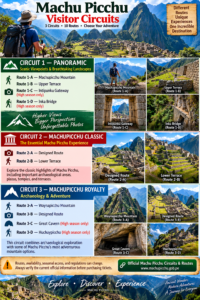
Circuit 1 — Panoramic
This circuit focuses heavily on elevated scenery and panoramic perspectives.
Routes include:
Route 1-A — Machupicchu Mountain
Route 1-B — Upper Terrace
Route 1-C — Intipunku Gateway — high season only
Route 1-D — Inka Bridge — high season only
This group can appeal especially to travelers interested in elevated viewpoints, landscapes, and photography.
Circuit 2 — Machupicchu Classic
Circuit 2 contains:
Route 2-A — Designed Route
Route 2-B — Lower Terrace
These routes focus on the classic Machu Picchu experience through important portions of the archaeological complex.
⛰️ Circuit 3 — Machupicchu Royalty
Circuit 3 includes:
Route 3-A — Waynapicchu Mountain
Route 3-B — Designed Route
Route 3-C — Great Cavern — high season only
Route 3-D — Huchuypicchu — high season only
This group combines archaeological exploration with some of Machu Picchu’s more adventurous mountain options.
Because routes, availability, seasonal access, and regulations can change, always verify the current official information before purchasing tickets.
Official Machu Picchu Circuits & Routes:
Machu Picchu Circuits and Routes
Reserve Your Machu Picchu Ticket Early
Machu Picchu uses timed admission and route-specific tickets.
For 2026 travel, Peru’s Ministry of Culture recommends advance planning, and official tickets can be purchased through the government’s Tu Boleto platform.
When purchasing, travelers choose a date, entry time, and route.
Popular dates and routes can have limited availability, so waiting until arriving in Peru can reduce your options.
Official Machu Picchu Tickets:
Purchase Official Machu Picchu Tickets
Limited in-person tickets are also sold in Machupicchu Pueblo for admission the following day, but availability is restricted.
For a major international trip, advance reservations provide considerably more certainty.
Getting to Machu Picchu
For many travelers, reaching Machu Picchu is an adventure of its own.
A common journey begins in Cusco, continues through the Sacred Valley, and eventually reaches Machupicchu Pueblo.

Peru’s official tourism information describes a typical route from Cusco to Ollantaytambo by road and then onward toward Machupicchu by train.
Train Adventure
Train travel is one of the most popular ways to reach the area.
The journey follows spectacular Andean landscapes as mountains, rivers, valleys, and increasingly lush vegetation surround the route.
Arriving in Machupicchu Pueblo also gives travelers an opportunity to spend a night near the citadel rather than attempting to fit the entire experience into a rushed day trip.
Inca Trail
For hikers, reaching Machu Picchu along the historic Inca Trail can transform the journey into a multi-day adventure.
The wider Inca road network around Machu Picchu connects numerous archaeological sites and mountain landscapes. Access to the regulated Inca Trail requires advance planning and is managed separately from ordinary citadel admission.
Explore Machupicchu Pueblo
Machupicchu Pueblo, historically known as Aguas Calientes, sits below the archaeological sanctuary along the Urubamba River.
Rather than viewing the town only as a transportation stop, consider giving yourself time to explore.
Visitors can find restaurants, accommodations, an artisan market, surrounding vegetation, nearby walks, and thermal baths. Peru’s tourism authority also highlights attractions such as the Manuel Chávez Ballón Site Museum and Mandor gardens.
Spending a night here can also make an early Machu Picchu visit considerably easier.
Wildlife Around Machu Picchu

Ancient ruins may receive most of the attention, but Machu Picchu is also surrounded by an exceptionally diverse natural environment.
The sanctuary lies where the tropical Andes meet the upper Amazon Basin, creating habitats ranging from high mountain environments to cloud forest. UNESCO notes the area’s rich diversity of plants and animals and its importance for endemic species.
Depending on location, season, and luck, wildlife enthusiasts may encounter or look for:
- Llamas
- Hummingbirds
- Colorful butterflies
- Andean birds
- Orchids
- Spectacled bears in the wider sanctuary
- Numerous cloud-forest plants and animals
Bring binoculars when exploring the broader region, but remember that wildlife should always be observed from a respectful distance.
Photography at Machu Picchu
Few places offer such an extraordinary combination of ancient architecture and mountain scenery.
Classic photographs often include the citadel terraces with Huayna Picchu rising dramatically behind them.
But don’t concentrate exclusively on the famous postcard view.

Look for:
- Stonework details
- Terraces
- Mountain ridges
- Clouds moving through the valleys
- Llamas among the ruins
- Ancient stairways
- Forest vegetation
- Wide Sacred Valley landscapes
- Morning mist
- Changing mountain light
Photography equipment must comply with site rules. Tripods, monopods, selfie sticks, and other stabilization or extension devices are prohibited inside the citadel.
A lightweight camera or phone is therefore much more practical than carrying a large photography setup.
What to Pack for Machu Picchu
Conditions in the Andes can change quickly, so lightweight layers are useful.
Consider packing:
Comfortable walking shoes
Expect stone pathways, steps, slopes, and uneven surfaces.

Lightweight rain protection
Rain and mountain mist can appear unexpectedly.
☀️ Sun protection
Bring sunscreen, sunglasses, and suitable clothing.
Water
Stay hydrated throughout your mountain adventures while following site restrictions.
Camera or phone
Keep photography equipment compact.
Binoculars
Useful for wildlife viewing elsewhere in the sanctuary and Sacred Valley.
Small daypack
Large bags are not permitted inside the archaeological site.
Current rules prohibit bags larger than 40 × 35 × 20 cm (16 × 14 × 8 inches) inside Machu Picchu. Umbrellas, tripods, selfie sticks and several other items are also prohibited, so check the current regulations before packing your day bag.
Official Visitor Code of Conduct:
Machu Picchu Visitor Rules
Prepare for Mountain Weather
Machu Picchu’s dramatic setting means visitors should prepare for changing conditions.
Sunshine, cloud cover, mist, and rain can all dramatically change the appearance of the surrounding mountains.
Instead of considering clouds a disappointment, photographers may find that mist drifting around the peaks creates some of the most atmospheric views of the entire trip.
Lightweight layers and weather-resistant clothing make it easier to adapt without carrying an oversized backpack.
Extend the Adventure Beyond the Citadel
Machu Picchu can easily become the beginning rather than the end of a Peru adventure.
Consider connecting your visit with:
Sacred Valley

Explore Andean villages, archaeological sites, mountain scenery, markets, hiking opportunities, and unique accommodations throughout the Sacred Valley.
Cusco
Discover former Inca sites, colonial architecture, museums, markets, restaurants, and the cultural heart of the region.
⛰️ Huayna Picchu
For travelers with the appropriate ticket, Huayna Picchu provides a much steeper mountain adventure and extraordinary elevated scenery.
Machu Picchu Mountain
Another option for hikers seeking expansive views over the sanctuary and surrounding Andes.
Inca Trail
Turn the journey itself into an adventure by approaching Machu Picchu along one of the world’s most famous historic trekking routes.
Where to Stay for Your Machu Picchu Adventure

Travelers have several ways to structure their stay.
Machupicchu Pueblo works well for visitors who want convenient access to the citadel and an opportunity for an early start.
Ollantaytambo and the Sacred Valley provide beautiful mountain surroundings and convenient connections with the rail route.
Cusco offers the largest selection of accommodations, restaurants, cultural attractions, and transportation options.
For a longer trip, combining several locations can provide a richer experience than staying in only one place.
A possible itinerary could look like:
Cusco → Sacred Valley → Ollantaytambo → Machupicchu Pueblo → Machu Picchu Citadel → Cusco
This turns a single archaeological visit into a complete Andean adventure.
Book Your Stay Near Machu Picchu
Make your Machu Picchu adventure easier by finding a comfortable place to stay near the legendary Inca citadel. Explore hotels and accommodations in Machupicchu Pueblo (Aguas Calientes), the primary gateway for travelers visiting Machu Picchu.
Compare available hotels, amenities, locations, and rates to find the right stay for your Peru adventure.
👉Search & Book Hotels Near Machu Picchu
Booking Disclosure
This website contains affiliate links. If you book a hotel or accommodation through one of these links, I may earn a commission at no additional cost to you. Your support helps maintain My Camping Vacation Sites and create more outdoor adventure and travel guides.
Travel Responsibly at Machu Picchu
Machu Picchu is both an archaeological treasure and a protected natural environment.
Visitors should remain on their designated route, avoid touching or climbing archaeological structures, never disturb wildlife, and carry out anything they bring into surrounding natural areas.
Current regulations prohibit littering, feeding animals, removing plants or wildlife, climbing or leaning on archaeological structures, smoking or vaping, and leaving established visitor circuits. Drones are also prohibited.
Responsible travel helps preserve this extraordinary destination for future generations.

Make Machu Picchu Part of a Bigger Adventure
Machu Picchu deserves more than a quick photograph.
Take time to notice the stonework, terraces, mountain peaks, cloud forest, wildlife, rivers, and extraordinary geography surrounding the ancient city.
Then continue exploring.
Travel through the Sacred Valley. Discover Cusco. Hike through the Andes. Explore local communities. Photograph waterfalls and mountain scenery. Stay in unique lodges, glamping retreats, or traditional accommodations.
Machu Picchu may be the destination that first brings travelers to this part of Peru, but the landscapes and adventures surrounding it can turn the journey into something much larger.
From ancient Inca engineering and legendary hiking routes to wildlife, mountain scenery, photography, and unforgettable cultural experiences, Machu Picchu remains one of the world’s great adventure destinations.
Explore the mountains. Discover the history. Experience the adventure.

Hiking Footwear for Machu Picchu Adventures
Exploring Machu Picchu involves stone pathways, ancient stairways, slopes, and uneven surfaces, making comfortable footwear an important part of your trip.
A lightweight hiking shoe or supportive trail shoe with reliable traction can work well for exploring the citadel, while travelers extending their adventure into the Sacred Valley, surrounding mountain trails, or longer hiking routes may prefer more supportive hiking footwear.
Whether you’re preparing for Machu Picchu itself or a larger Peru hiking adventure, explore our complete footwear guide for hiking boots, trail shoes, sandals, and other outdoor options.
👉Ultimate Hiking Footwear Guide: 50 Best Hiking Boots, Sandals & Sneakers for Every Adventure
As an Amazon Associate, I earn from qualifying purchases. This website may contain affiliate links, and we may earn a small commission from qualifying purchases at no extra cost to you.
Explore the Machu Picchu & Sacred Valley Adventure Hub
Want to experience more than the famous citadel?
Continue your journey through the Machu Picchu & Sacred Valley Adventure Hub, where you can discover more of this spectacular region through ancient Inca sites, mountain scenery, hiking adventures, cultural experiences, unique accommodations, wildlife, photography, and nearby destinations.
Explore connections to Machu Picchu, the Sacred Valley, Cusco, mountain trails, Inca history, outdoor adventures, hotels, and travel planning as this growing collection brings the region together in one place.
👉Explore the Machu Picchu & Sacred Valley Adventure Hub
Thank you for visiting MyCampingVacationSites! I hope this guide helps you plan an unforgettable outdoor adventure. If you enjoyed this article, feel free to leave a comment below and explore more travel guides, hiking destinations, camping adventures, and outdoor experiences throughout the site. Have a wonderful vacation wherever your next journey takes you!
— Jeffrey
 Explore More Hubs
 Water Adventure Gear
 50 Must-Have Water Adventure Items (Complete Gear Guide) Ultimate Jet Ski Gear & Accessories Guide
  (Top Picks for Speed & Fun) Best River Rafts & Floating Docks
  (Rafting & Floating Essentials)
 Camping & Tent Gear
Tents: Best Tents for Camping & Outdoor Adventures (Top-Rated Picks) Ultimate Glamping Gear: 50 Must-Have Tents & Adventure Essentials  (Luxury Setup Guide)
 RV & Camper Gear
RV Adventure Gear: Must-Have Essentials for Road Trips & Camping (Full Travel Setup) Ultimate Interior RV & Camper Gear Guide  (Comfort & Living Upgrades)
Leave a Reply