Discover Cozy Winter Lodging, Snowy Wilderness Tours, Frozen Waterfalls & Unforgettable Yellowstone Adventures
Yellowstone National Park transforms into a breathtaking winter wonderland when deep snow blankets its mountain valleys, frozen waterfalls decorate rugged canyon walls, and steaming geysers rise dramatically against the icy landscape.
While summer brings crowds exploring Yellowstone’s famous geothermal attractions, winter offers an entirely different experience. Snow-covered forests, peaceful wildlife valleys, scenic snowcoach journeys, and cozy mountain lodges create opportunities for visitors seeking adventure, relaxation, and spectacular natural scenery.
Imagine traveling through a quiet wilderness aboard a heated snowcoach, watching bison cross snowy meadows, photographing steaming geysers, and returning to a comfortable lodge after a day of exploring.
Whether you’re planning a romantic winter getaway, a wildlife photography vacation, a family adventure, or an unforgettable Yellowstone sightseeing trip, this guide explores some of the best winter lodges, snowcoach tours, scenic escapes, and essential travel tips.
🏔️ Why Visit Yellowstone National Park in Winter?
Winter reveals a quieter, more mysterious side of Yellowstone National Park.
Snow transforms familiar landscapes into spectacular scenes of white mountain peaks, frozen rivers, steaming thermal pools, and wildlife moving through deep winter conditions.
Unlike summer, when most park roads accommodate regular vehicles, winter access to much of Yellowstone’s interior requires authorized transportation, including guided snowcoach tours or permitted snowmobile excursions.
Highlights of a Yellowstone Winter Vacation
- Snow-covered valleys surrounded by towering mountain scenery
- Guided snowcoach tours through Yellowstone’s winter wilderness
- Cozy historic lodges and comfortable gateway accommodations
- Steaming geysers surrounded by snow and ice
- Wildlife photography featuring bison, elk, wolves, and other animals
- Frozen waterfalls and spectacular canyon viewpoints
- Cross-country skiing and snowshoeing opportunities
- Peaceful winter landscapes ideal for photography
For travelers who appreciate wilderness scenery, outdoor adventure, and comfortable lodging, Yellowstone offers a memorable winter escape.
🏨 Best Yellowstone Winter Lodges & Cozy Mountain Retreats
Choosing the right accommodation can make a significant difference when planning a Yellowstone winter vacation.
Some travelers prefer staying inside Yellowstone National Park, while others enjoy comfortable hotels, cabins, and mountain lodges in nearby gateway communities.
Winter lodging options are more limited than during summer, making advance reservations particularly important.
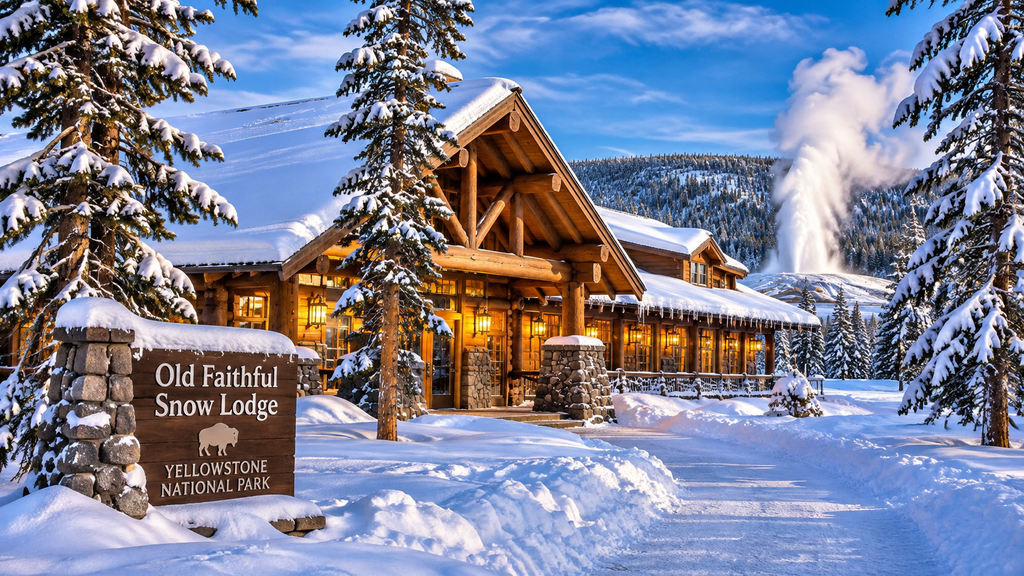
🏨 Old Faithful Snow Lodge & Cabins — A Winter Wilderness Retreat
Old Faithful Snow Lodge & Cabins is among Yellowstone’s most distinctive winter accommodations.
Located near the famous Old Faithful geyser, this lodge offers a convenient base for exploring the park’s geothermal landscapes during the winter operating season.
Visitors can enjoy snow-covered surroundings, access to guided winter activities, and opportunities to witness Old Faithful erupt against a backdrop of ice and snow.
What makes this lodge special?
- Convenient access to Old Faithful and nearby thermal attractions
- Rustic-inspired accommodations surrounded by winter scenery
- Opportunities for guided snowcoach sightseeing
- Nearby cross-country skiing and snowshoeing routes
- A peaceful atmosphere after many daytime visitors depart
Winter guests generally reach the lodge using authorized oversnow transportation rather than driving personal vehicles directly to the property.
Reservations, transportation arrangements, and seasonal operating dates should be confirmed before traveling.
🏨 Mammoth Hot Springs Hotel & Cabins — Historic Yellowstone Charm
Mammoth Hot Springs Hotel & Cabins offers another distinctive lodging experience within Yellowstone National Park during its winter operating season.
Situated near the park’s northern entrance, Mammoth provides access to fascinating geothermal terraces, wildlife viewing, and the northern Yellowstone landscape.
The nearby Mammoth Hot Springs terraces create remarkable winter scenery as steam rises above mineral formations and snow-covered surroundings.
Highlights include:
- Historic accommodations in a spectacular mountain setting
- Access to Mammoth Hot Springs terraces
- Opportunities to explore northern Yellowstone wildlife areas
- Winter sightseeing and guided activities
- Scenic surroundings for photography and relaxation
The northern entrance near Gardiner, Montana, provides an important access point for winter visitors.
Accommodation availability and services vary by season.
🏔️ Gardiner, Montana — Gateway to Northern Yellowstone
Gardiner is an excellent destination for travelers seeking convenient winter access to Yellowstone’s northern entrance.
Located just outside the park, this small Montana community offers hotels, cabins, restaurants, and access to some of Yellowstone’s most impressive winter wildlife viewing areas.
Visitors can explore the northern park road, weather permitting, while enjoying nearby views of snow-covered mountains and the Yellowstone River.
Why stay in Gardiner?
- Convenient access to Yellowstone’s North Entrance
- Hotels, cabins, and other accommodations
- Opportunities for Lamar Valley wildlife excursions
- Access to Mammoth Hot Springs
- Scenic mountain and river landscapes
Gardiner is especially appealing to travelers interested in wildlife photography and winter sightseeing.
🏔️ West Yellowstone, Montana — Snowcoach Adventure Headquarters
West Yellowstone is one of the most popular gateway communities for winter visitors.
Located near Yellowstone’s western entrance, this mountain town serves as a departure point for authorized snowcoach tours, snowmobile adventures, and other winter recreation.
Visitors can find comfortable hotels, cabins, restaurants, and outdoor adventure services.
Popular winter experiences include:
- Guided snowcoach excursions into Yellowstone
- Snowmobile adventures with authorized operators
- Cross-country skiing and snowshoeing
- Winter wildlife viewing
- Cozy mountain accommodations
West Yellowstone is a particularly convenient base for travelers who want organized tours to Old Faithful and other scenic destinations.
🏔️ Cooke City & Silver Gate — Remote Mountain Escapes
For visitors seeking a quieter winter mountain atmosphere, Cooke City and Silver Gate offer distinctive lodging opportunities near Yellowstone’s northeastern entrance.
These small communities are surrounded by spectacular mountain scenery and provide access to the northeastern Yellowstone region.
Winter accommodations may include rustic cabins, mountain lodges, and smaller guest properties.
The region is especially attractive to visitors interested in wilderness scenery, winter photography, and wildlife.
Road access can be challenging, and travelers should carefully check current conditions before visiting.
🚐 Yellowstone Snowcoach Tours — Explore the Winter Wilderness
One of the most memorable ways to experience Yellowstone during winter is aboard a guided snowcoach.
Snowcoaches are specially designed vehicles equipped to travel over snow-covered roads, allowing visitors to explore parts of Yellowstone that are otherwise inaccessible to ordinary passenger vehicles during winter.
These tours offer a comfortable way to enjoy spectacular winter scenery without needing to operate a snowmobile.
What Is a Yellowstone Snowcoach?
A snowcoach is an authorized oversnow passenger vehicle designed to travel across groomed winter routes.
Depending on the vehicle and operator, snowcoaches may use tracks or specialized low-pressure tires suitable for winter travel.
Most guided excursions include a professional driver or guide who explains Yellowstone’s natural history, geothermal features, wildlife, and winter environment.
Snowcoach tours are especially appealing to families, couples, photographers, and visitors who prefer a more sheltered sightseeing experience.
❄️ Best Yellowstone Snowcoach Tour Destinations
1. Old Faithful Geyser Basin Snowcoach Adventure
Old Faithful is among Yellowstone’s most famous attractions, and visiting during winter provides a completely different experience.
Snow surrounds the geyser basin while clouds of steam rise above geothermal pools and erupting geysers.
Guided snowcoach tours commonly depart from West Yellowstone or other authorized winter departure points, depending on the operator and itinerary.
Visitors may experience:
- Snow-covered forests and scenic winter landscapes
- Old Faithful geyser eruptions
- Steaming geothermal features
- Wildlife sightings along the route
- Winter photography opportunities
The contrast between white snow and rising geothermal steam creates extraordinary scenery.
2. Grand Canyon of the Yellowstone & Frozen Waterfalls
The Grand Canyon of the Yellowstone is another spectacular winter destination.
During colder months, the canyon’s colorful rock formations become surrounded by snow, while sections of its waterfalls and canyon walls develop dramatic ice formations.
Yellowstone’s Lower Falls can create a particularly striking scene as flowing water, frozen spray, and snow-covered canyon walls combine.
Some authorized snowcoach itineraries visit canyon viewpoints when routes and conditions permit.
Scenic highlights include:
- Snow-covered canyon overlooks
- Frozen spray and dramatic ice formations
- Views of Yellowstone’s Lower Falls
- Winter forest scenery
- Photography of colorful canyon walls against white snow
Not every canyon viewpoint is accessible during winter, so visitors should confirm the exact stops included in their tour.
3. Norris Geyser Basin Winter Landscapes
Norris Geyser Basin is one of Yellowstone’s most dynamic geothermal regions.
In winter, steam rising from geothermal features creates an almost otherworldly atmosphere.
Snow-covered trees, icy ground, and clouds of geothermal vapor produce dramatic photographic opportunities.
Certain snowcoach routes travel through the Norris area, although access to specific trails and features depends on winter conditions and operating restrictions.
4. Yellowstone Winter Wildlife Snowcoach Excursions
Wildlife viewing is another major attraction during Yellowstone’s winter season.
Bison frequently appear against snowy landscapes, while elk, coyotes, foxes, and occasionally wolves may be spotted in suitable habitats.
Guided winter excursions provide opportunities to observe wildlife from designated viewing areas while learning about how animals survive Yellowstone’s harsh winters.
Wildlife sightings are never guaranteed, and visitors should maintain safe distances at all times.
🦬 Yellowstone Winter Wildlife & Scenic Photography
Winter is an excellent season for photographing Yellowstone’s remarkable wildlife.
Snow-covered landscapes create beautiful natural backgrounds, making animals easier to notice in some open valleys.
Bison in Snow-Covered Valleys
Bison are among Yellowstone’s most recognizable winter animals.
Their thick coats and powerful bodies help them withstand harsh winter conditions.
Visitors may observe bison moving through snowy meadows, searching for vegetation beneath the snow, or resting near geothermal areas.
Wolves in Lamar Valley
Lamar Valley is one of Yellowstone’s best-known wildlife viewing regions.
During winter, visitors sometimes observe wolves moving through the valley, hunting, or interacting with their packs.
A spotting scope or binoculars can greatly improve the experience.
Elk, Coyotes & Red Foxes
Elk frequently inhabit parts of northern Yellowstone, while coyotes and foxes may be seen hunting across snowy landscapes.
Photographers should use telephoto lenses rather than approaching animals.
Wildlife safety: Remain at least 100 yards from bears and wolves and at least 25 yards from bison, elk, and other wildlife. Follow any stricter posted requirements.
🌲 Yellowstone’s Most Beautiful Winter Scenic Escapes
Beyond lodges and guided tours, Yellowstone offers remarkable scenic destinations that showcase its natural beauty.
🌄 Lamar Valley — Snowy Wilderness & Wildlife
Lamar Valley is one of the park’s premier winter wildlife viewing destinations.
Open meadows, surrounding mountains, and winding waterways create beautiful winter scenery.
Visitors may encounter bison, elk, wolves, and other wildlife from safe roadside viewing areas.
The northern road corridor offers an important winter access route, subject to weather and temporary closures.
♨️ Mammoth Hot Springs — Steam Rising Above Snow
Mammoth Hot Springs offers a fascinating combination of geothermal activity and winter scenery.
Mineral terraces, steaming water, and snowy surroundings create striking visual contrasts.
Visitors can explore designated accessible areas while observing the park’s unique geothermal environment.
Always remain on approved walkways and trails around thermal features.
🌊 Yellowstone River — Frozen Shorelines & Mountain Views
The Yellowstone River flows through some of the park’s most impressive landscapes.
During winter, sections of the river may remain open while surrounding banks become covered with snow and ice.
The combination of moving water, icy shorelines, wildlife, and mountain scenery creates excellent photography opportunities.
Visitors should never assume frozen rivers or lakes are safe to walk on.
🏔️ Snow-Covered Mountain Forests
Yellowstone’s forests become especially peaceful during winter.
Snow accumulates on evergreen branches, mountain peaks rise above forested valleys, and quiet winter trails offer opportunities for outdoor exploration.
Guided snowshoeing and cross-country skiing excursions can provide memorable ways to experience these environments.
🎿 Winter Activities Beyond Snowcoach Tours
Yellowstone’s winter recreation opportunities extend beyond sightseeing.
Cross-Country Skiing
Designated winter trails allow visitors to explore snowy forests and open landscapes at a slower pace.
Routes vary in difficulty, making it important to choose trails appropriate for your experience and physical condition.
Snowshoeing Adventures
Snowshoeing provides an enjoyable way to explore winter landscapes while experiencing Yellowstone’s quieter natural surroundings.
Guided excursions may be available near Mammoth Hot Springs and Old Faithful.
Winter Landscape Photography
Yellowstone offers spectacular photography opportunities throughout the winter season.
Popular subjects include:
- Steaming geysers surrounded by snow
- Bison crossing winter valleys
- Frozen waterfalls and canyon scenery
- Snow-covered forests
- Sunrise and sunset over mountain landscapes
Scenic Winter Drives
The road between Yellowstone’s North and Northeast entrances, through the northern park corridor, generally remains open to regular vehicles year-round, weather permitting.
This route provides opportunities for wildlife viewing and scenic sightseeing.
Most other park roads are closed to ordinary vehicle travel during winter and are accessible only through authorized winter transportation where permitted.
📅 Best Time to Visit Yellowstone for Winter Lodges & Snowcoach Tours
Yellowstone’s winter scenery changes throughout the season.
December — Early Winter Beauty
December brings growing snow coverage, festive mountain-town atmospheres, and the beginning of the main winter oversnow travel season.
Some lodging and tour operations begin in mid-December, depending on annual schedules and conditions.
January — Deep Snow & Peaceful Landscapes
January often provides dramatic winter scenery, cold temperatures, and excellent opportunities to photograph steaming geothermal features.
Visitors should prepare for extreme cold and rapidly changing weather.
February — Wildlife & Winter Photography
February can be particularly rewarding for wildlife photography, snowcoach sightseeing, and exploring snowy mountain landscapes.
Bison and other wildlife remain active throughout Yellowstone’s winter environment.
March — Late-Winter Adventures
Early March can offer beautiful winter conditions, although many oversnow travel services begin ending their seasons around mid-March.
Visitors should verify tour schedules and accommodation availability before planning a trip.
Best overall planning window: January and February are excellent months for travelers seeking established winter tour operations and deep-snow scenery, although conditions vary from year to year.
🚗 How to Get to Yellowstone National Park in Winter
Winter travel requires more planning than summer travel because most Yellowstone park roads are closed to ordinary passenger vehicles.
Arriving Through Gardiner, Montana
Gardiner provides access to Yellowstone’s North Entrance.
Visitors can reach Mammoth Hot Springs and continue through the northern road corridor toward Lamar Valley and the Northeast Entrance when conditions allow.
This route is especially useful for winter wildlife viewing.
Arriving Through West Yellowstone, Montana
West Yellowstone is a major departure point for guided snowcoach and snowmobile tours.
Visitors typically park in town and travel into the park with authorized operators.
Private vehicles generally cannot enter Yellowstone’s interior through the West Entrance during the winter oversnow season.
Arriving Through Regional Airports
Travelers may consider airports serving Bozeman, Montana, and Jackson, Wyoming, depending on their lodging plans and winter itinerary.
Bozeman Yellowstone International Airport is a common choice for visitors traveling toward Gardiner or West Yellowstone.
Jackson Hole Airport may be convenient for some southern-region travel plans, but Yellowstone’s South Entrance is not open to ordinary through-traffic during winter.
Always account for winter driving conditions, road closures, and possible weather delays.
🏨 Where to Stay — Yellowstone Winter Hotels, Cabins & Mountain Lodges
Finding the right winter accommodation depends on your preferred activities.
For Old Faithful and geothermal adventures: Consider Old Faithful Snow Lodge during its operating season, with authorized oversnow transportation arranged in advance.
For historic park lodging and northern scenery: Mammoth Hot Springs Hotel & Cabins offers access to the Mammoth area when open.
For snowcoach tours and organized excursions: West Yellowstone provides convenient tour departures and gateway accommodations.
For wildlife photography and Lamar Valley: Gardiner is a practical base for exploring Yellowstone’s northern road corridor.
For quiet mountain retreats: Cooke City and Silver Gate offer smaller-scale accommodations surrounded by dramatic winter scenery.
🛏️ Book Your Yellowstone Winter Stay
Turn your Yellowstone winter adventure into a comfortable mountain getaway.
Explore lodging options in Gardiner, West Yellowstone, and other nearby gateway communities. Compare hotels, cabins, amenities, and locations to find accommodations that suit your winter travel plans.
[Book Your Yellowstone Winter Stay — Add Your Expedia Creator Collection Link Here]
Affiliate disclosure: This article may contain affiliate booking links. If you make a qualifying reservation through these links, we may earn a commission at no additional cost to you.
🎒 What to Pack for a Yellowstone Winter Vacation
Yellowstone winters can be extremely cold, with heavy snow, icy surfaces, and changing weather conditions.
Packing appropriate clothing and equipment is essential.
Essential Winter Clothing
- Insulated winter jacket or parka
- Thermal base layers
- Waterproof or water-resistant winter pants
- Insulated waterproof boots
- Warm wool or synthetic socks
- Winter gloves or mittens
- Warm hat and neck gaiter
- Sunglasses for bright snow conditions
Photography & Wildlife Gear
- Binoculars for wildlife viewing
- Camera with telephoto lens
- Extra camera batteries
- Protective camera bag
- Lens-cleaning supplies
- Tripod where permitted and practical
Travel Essentials
- Reusable water bottle
- Snacks and energy-rich food
- Sunscreen and lip balm
- Personal medications
- Portable power bank
- Winter emergency supplies for road travel
Cold temperatures can reduce battery performance, so keep electronics and spare batteries protected whenever possible.
🗺️ Suggested 3-Day Yellowstone Winter Lodge & Snowcoach Itinerary
A three-day Yellowstone winter vacation offers a combination of guided sightseeing, wildlife viewing, and relaxing mountain accommodations.
Day 1 — Arrive in West Yellowstone
Arrive in West Yellowstone and check into your hotel or mountain cabin.
Explore the town, confirm your snowcoach reservation, and prepare winter clothing and photography equipment.
Enjoy a relaxing evening before your guided excursion.
Day 2 — Old Faithful Snowcoach Adventure
Join an authorized snowcoach tour departing from West Yellowstone.
Travel through snow-covered forests and scenic winter landscapes toward the Old Faithful area.
Photograph geothermal features, observe wildlife from a safe distance, and enjoy the unique winter scenery.
Return to West Yellowstone after your tour, depending on the operator’s itinerary.
Day 3 — Scenic Gateway Exploration
Spend your final day enjoying winter activities around West Yellowstone, such as a guided snowshoe outing, cross-country skiing, or scenic photography.
For travelers wanting Lamar Valley and Mammoth Hot Springs, consider adding one or two separate days based in Gardiner.
Driving between West Yellowstone and Gardiner in winter generally requires traveling outside the park on public highways rather than crossing Yellowstone’s interior in a private vehicle.
📸 Yellowstone Winter Photography Tips
Yellowstone’s winter landscapes offer some of the most spectacular photography opportunities in the American West.
Photograph Geysers in Cold Weather
Steam rising from geothermal features becomes particularly dramatic against cold winter air.
Try capturing the contrast between white snow, blue skies, and geothermal steam.
Use a Telephoto Lens for Wildlife
A telephoto lens allows photographers to capture detailed images without disturbing animals.
Never approach wildlife for a better photograph.
Protect Your Camera From Cold
Carry spare batteries in an insulated pocket and protect camera equipment from moisture and condensation.
Look for Early Morning Light
Soft morning light can illuminate snow-covered valleys, mountain peaks, and drifting geothermal steam.
Tour schedules and safe access should determine when and where you photograph.
⚠️ Yellowstone Winter Travel Safety & Important Tips
Yellowstone’s winter environment is beautiful but requires preparation.
- Check official road conditions before traveling.
- Reserve snowcoach tours and winter lodging well in advance.
- Dress in multiple warm layers.
- Stay on designated boardwalks near geothermal features.
- Never approach or feed wildlife.
- Carry emergency supplies when driving outside the park.
- Allow additional travel time during snowstorms.
- Follow ranger instructions and authorized tour guidance.
Important: Winter lodging, oversnow transportation, road access, and tour operations are seasonal. Confirm current conditions and opening dates with the National Park Service and your chosen lodging or tour operator before departure.
Official park information: https://www.nps.gov/yell/planyourvisit/visiting-yellowstone-in-winter.htm
❓ Frequently Asked Questions About Yellowstone Winter Lodges & Snowcoach Tours
Can you stay inside Yellowstone National Park during winter?
Yes. Yellowstone has historically offered winter lodging at Old Faithful Snow Lodge and Mammoth Hot Springs Hotel during designated operating periods. Availability, dates, and services should be verified for your travel season.
What is a Yellowstone snowcoach tour?
A snowcoach tour is a guided excursion using an authorized vehicle designed to travel over snow-covered park roads. Tours may visit Old Faithful, canyon areas, and other destinations depending on the route and conditions.
Are Yellowstone snowcoach tours suitable for families?
Many snowcoach tours accommodate families and visitors who prefer enclosed transportation. Age restrictions, accessibility, duration, and amenities vary by operator.
Can you drive your own vehicle through Yellowstone in winter?
Regular passenger vehicles can generally use the northern road corridor between the North and Northeast entrances, subject to weather and closures. Most other park roads are closed to ordinary vehicles during winter.
Is Yellowstone worth visiting in January or February?
Absolutely. January and February offer spectacular snow-covered landscapes, wildlife viewing opportunities, geothermal scenery, and guided winter adventures.
Where is the best place to stay for Yellowstone snowcoach tours?
West Yellowstone is a convenient base for many guided snowcoach excursions. Old Faithful Snow Lodge may be ideal for travelers wanting an overnight experience inside the park.
Can you see wolves in Yellowstone during winter?
Yes, wolves inhabit Yellowstone year-round, and Lamar Valley is a well-known viewing area. Sightings depend on wildlife activity, weather, and visibility.
Do you need to book snowcoach tours in advance?
Advance reservations are strongly recommended, particularly during popular winter travel periods when transportation and lodging capacity are limited.
🌎 Explore More Yellowstone Winter Adventures
Continue exploring Yellowstone National Park with these additional winter travel guides from MyCampingVacationSites.com.
❄️ Yellowstone Winter Snowmobile Adventures
Discover exciting guided snowmobile experiences, snow-covered trails, geothermal landscapes, and winter wilderness scenery throughout Yellowstone National Park.
🦬 Yellowstone Winter Wildlife Adventures: Bison, Wolves & Snowy Landscapes
Explore Yellowstone’s incredible winter wildlife, including bison, wolves, elk, and other animals surviving among snowy valleys and rugged mountain landscapes.
🌊 Yellowstone Frozen Waterfalls & Steaming Geysers
Discover dramatic frozen waterfalls, spectacular geothermal steam, colorful hot springs, and some of Yellowstone’s most breathtaking winter natural wonders.
🏔️ Yellowstone Winter Adventures — Complete Travel Guide
Return to the main Yellowstone winter hub to explore all five winter adventure guides, seasonal activities, lodging opportunities, and travel inspiration.
Add your published article and winter hub links to the titles above.
🌅 Final Thoughts — Experience the Magic of Yellowstone in Winter
Yellowstone National Park offers one of America’s most extraordinary winter travel experiences.
From comfortable mountain lodges and guided snowcoach tours to steaming geysers, frozen waterfalls, wildlife-filled valleys, and peaceful snow-covered forests, winter reveals an unforgettable side of this remarkable national park.
Whether you’re staying near Old Faithful, exploring Mammoth Hot Springs, photographing wildlife in Lamar Valley, or enjoying a scenic snowcoach journey through Yellowstone’s interior, every experience offers a different perspective on the park’s natural beauty.
With thoughtful planning, warm clothing, advance reservations, and a spirit of adventure, your Yellowstone winter vacation can become a memorable journey through one of North America’s most spectacular wilderness destinations.
Plan your Yellowstone winter escape, discover cozy mountain lodging, and experience the breathtaking beauty of America’s first national park.
Leave a Reply