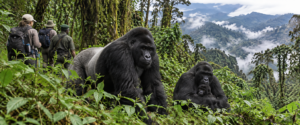
Few wildlife experiences compare withstanding quietly in a rainforest and encountering wild gorillas in their natural habitat. African gorilla trekking combines adventure, conservation, hiking, photography, and extraordinary wildlife encounters in some of the continent’s most beautiful forests.
Thank you for reading this post, don't forget to subscribe!From the mountain gorillas of Uganda and Rwanda to the western lowland gorillas of Central Africa, each destination provides a different experience. Travelers may hike through mist-covered mountains, explore dense tropical forests, cross rivers, watch colorful birds and monkeys, and discover an ecosystem containing far more than gorillas alone.
This guide explores some of Africa’s major gorilla trekking destinations, what travelers can expect, other wildlife they may encounter, when to travel, what to bring, and ways to combine gorilla trekking with a larger African safari adventure.
🌍 Why Go Gorilla Trekking in Africa?
Gorilla trekking is very different from a traditional game drive.
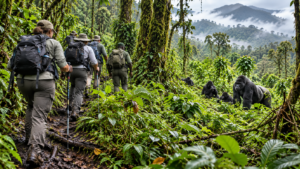
Instead of watching wildlife from a safari vehicle, visitors generally travel on foot with trained guides and trackers through forests where gorilla groups live.
The journey itself is part of the adventure.
Depending on the destination and location of the gorillas, trekking may involve:
- Dense rainforest trails
- Mountain slopes
- Muddy or uneven terrain
- River and stream crossings
- Thick vegetation
- High elevations
- Humid tropical conditions
Then comes the moment trekkers have been waiting for—the opportunity to quietly observe gorillas in their forest habitat.
Watching gorillas feed, rest, climb, interact, and care for their young can become one of the most memorable experiences of an African journey.
🇺🇬 Uganda – Mountain Gorilla Trekking
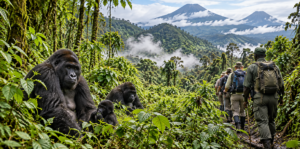
Uganda is one of Africa’s best-known destinations for mountain gorilla trekking.
🌿 Bwindi Impenetrable National Park
Bwindi Impenetrable National Park protects a spectacular landscape of mountains and dense forest in southwestern Uganda.
Treks begin with a briefing before visitors enter the forest with guides and trackers.
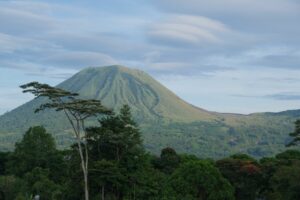
The amount of hiking required varies because gorillas move throughout their habitat. Some groups may be reached relatively quickly, while other encounters require a much longer trek.
Along the way, visitors can experience enormous trees, vines, ferns, streams, butterflies, birds, and other forest wildlife.
The combination of hiking and wildlife makes Bwindi much more than simply a place to photograph gorillas.
🌋 Mgahinga Gorilla National Park
Uganda’s Mgahinga Gorilla National Park provides another opportunity for mountain gorilla adventures.
The park forms part of the larger Virunga landscape and is characterized by volcanic mountains and beautiful high-elevation scenery.
Visitors may combine gorilla trekking with hiking and other wildlife experiences, including opportunities to explore habitat associated with golden monkeys.
🇷🇼 Rwanda – Volcanoes National Park
Rwanda’s Volcanoes National Park is another internationally recognized mountain gorilla destination.
The dramatic landscape includes rainforest, bamboo vegetation and volcanic mountains.
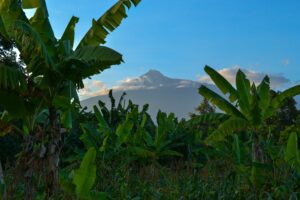
Gorilla treks are conducted with guides and trackers, with visitors hiking into the mountains in search of habituated gorilla groups.
The scenery alone makes the experience remarkable.
Clouds can drift across forested volcanic slopes while thick vegetation creates the feeling of entering a remote wilderness.
🐒 More Than Gorillas
Gorillas may be the main attraction, but the region supports many other forms of wildlife.
Depending on the location and itinerary, travelers may encounter or look for:
- Golden monkeys
- Forest birds
- Chameleons
- Butterflies
- Small mammals
- Numerous plant species
Combining several activities provides a broader appreciation of the ecosystem surrounding the gorillas.
🇨🇩 Democratic Republic of the Congo – Gorilla Wilderness
The Democratic Republic of the Congo contains important gorilla habitat and some of Africa’s most extraordinary wilderness.
However, security and park access can change.
Travelers considering gorilla experiences in the country should check current official travel advisories, park conditions, permit availability, border requirements, and reputable local operators before making plans.
This is one destination where current conditions should always determine whether a trip is appropriate.
🇬🇦 Gabon – Western Lowland Gorilla Adventures
Gabon provides a very different gorilla experience from the mountainous landscapes of Uganda and Rwanda.
Here, tropical rainforest stretches toward rivers, lagoons, wetlands, and the Atlantic coast.
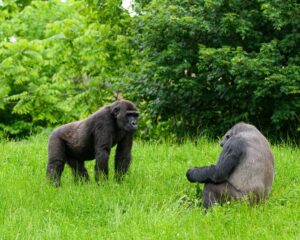
The gorillas found in this part of Africa are western lowland gorillas.
🌴 Loango National Park
Loango National Park is one of Gabon’s extraordinary wilderness destinations.
Rainforest, lagoons, savanna, wetlands, rivers, and Atlantic beaches create an unusual combination of habitats.
Gorilla-focused experiences can become part of a much larger wildlife adventure involving travel through the forest and waterways.
This makes Gabon especially useful within a West and Central Africa itinerary because travelers can combine gorilla experiences with the river, ground, and aerial safari adventures available throughout the region.
👉 Explore West & Central Africa River Safaris
👉 Explore West & Central Africa Ground Safaris
👉 Explore West & Central Africa Aerial Safaris
🦍 Mountain Gorillas vs. Western Lowland Gorillas
Both provide extraordinary wildlife encounters, but their environments can feel very different.
Mountain gorillas inhabit higher-elevation forests in parts of Uganda, Rwanda, and the Democratic Republic of Congo. Trekking can involve steep slopes, thick vegetation, and cooler mountain conditions.
Western lowland gorillas inhabit lower-elevation tropical forests across portions of Central and West Africa. Their habitat can include dense rainforest, swampy areas, forest clearings, rivers, and other lowland environments.
Including both in one African wildlife collection greatly expands the range of landscapes and experiences represented on your site.
🥾 What Is a Gorilla Trek Like?
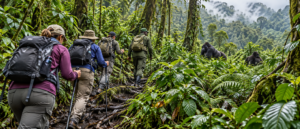
A typical gorilla trekking day begins early.
Visitors usually meet guides for a briefing covering safety, behavior around gorillas, and what to expect during the trek.
Groups then enter the forest with guides and trackers.
The length and difficulty of the hike can vary substantially.
Once gorillas are located, visitors must follow the instructions of their guides carefully. Viewing time, group size, distance requirements, photography rules, and other regulations depend on the park and permit.
The return hike completes the adventure.
Travelers should avoid assuming that a gorilla trek will be an easy walk. Preparing for several hours of hiking can make the experience much more enjoyable.
🐘 Wildlife Beyond the Gorillas
One of the advantages of visiting Africa’s gorilla regions is the enormous diversity of surrounding wildlife.
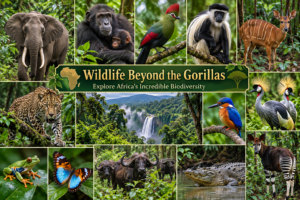
Different forests may contain monkeys, forest elephants, antelope, reptiles, amphibians, butterflies, and hundreds of bird species.
Potential wildlife experiences can include:
🐒 Monkeys and Primates
Africa’s tropical forests support numerous primates. Monkeys moving through the canopy can provide excellent wildlife viewing and photography between gorilla encounters.
🐦 Tropical Birds
Colorful forest birds add another dimension to a gorilla trekking adventure.
Birdwatchers should bring binoculars because dense vegetation can make distant wildlife difficult to see clearly.
🐘 Forest Wildlife
Central African forests can support forest elephants and other mammals adapted to dense rainforest environments.
Wildlife sightings are never guaranteed, but this diversity is an important reason to explore beyond the gorilla trek itself.
📸 Gorilla Trekking Photography
Photographing gorillas in a rainforest can be challenging.
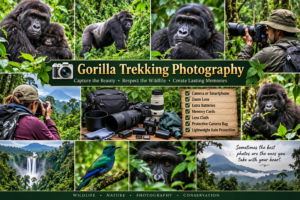
Light beneath the forest canopy may be limited, while gorillas can move between bright openings and deep shadows.
Travelers should become familiar with their camera before beginning the trek rather than learning settings during the encounter.
Useful equipment can include:
- Camera or smartphone
- Appropriate zoom lens
- Extra batteries
- Additional memory cards
- Lens cloth
- Protective camera bag
- Lightweight rain protection
Always follow current park rules regarding photography and flash.
Sometimes the best choice is to put the camera down for a few minutes and simply experience the encounter.
🌦️ Best Time for Gorilla Trekking
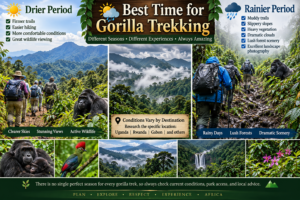
Gorilla trekking is possible during different parts of the year, but weather can strongly influence trail conditions.
Drier periods can mean firmer trails and somewhat easier hiking.
Rainier periods can bring:
- Muddy trails
- Slippery slopes
- Heavy vegetation
- Dramatic clouds
- Lush forest scenery
- Excellent landscape photography
Conditions differ among Uganda, Rwanda, Gabon, and other destinations, so travelers should research the specific location rather than assuming there is one perfect season for every gorilla trek.
🎒 What to Bring Gorilla Trekking
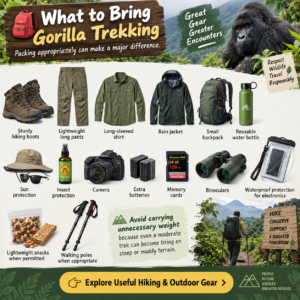
Packing appropriately can make a major difference.
Consider bringing:
- Sturdy hiking boots
- Lightweight long pants
- Long-sleeved shirt
- Rain jacket
- Small backpack
- Reusable water bottle
- Sun protection
- Insect protection
- Camera
- Extra batteries
- Memory cards
- Binoculars
- Waterproof protection for electronics
- Lightweight snacks when permitted
- Walking poles when appropriate
Avoid carrying unnecessary weight because even a moderate trek can become tiring on steep or muddy terrain.
👉 Explore Useful Hiking & Outdoor Gear
🛡️ Gorilla Trekking Safety
Gorilla trekking should always be conducted through authorized park programs and reputable operators.
Visitors should listen carefully to guides and follow all current rules concerning distance, group behavior, food, photography, illness, and interaction with wildlife.
Gorillas are powerful wild animals, and their habitat deserves respect.
Visitors should never attempt to approach, touch, feed, or attract gorillas independently.
Health-related requirements can also be important because gorillas are closely related to humans and can be vulnerable to human illnesses. Check the current rules for your specific destination before traveling.
🌱 Gorilla Conservation & Responsible Tourism
Gorilla tourism and conservation are closely connected.
Protected habitats, trained rangers, researchers, trackers, conservation organizations, and local communities all play important roles in protecting gorilla populations.
Travelers can contribute by choosing authorized experiences, following park regulations, avoiding wildlife exploitation, respecting local communities, and leaving natural environments undisturbed.
A gorilla trek should be about more than obtaining photographs. It is an opportunity to experience an ecosystem whose continued protection matters.
🏕️ Lodges, Camps & Forest Stays
Gorilla destinations offer accommodations ranging from comfortable lodges to remote forest camps and luxury wilderness properties.
Location can be particularly important because gorilla treks often begin early in the morning.
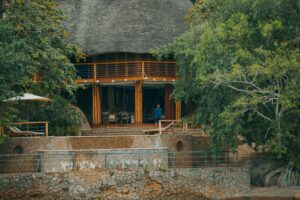
Staying reasonably close to the trekking departure area can reduce travel time and make the morning considerably easier.
Depending on the destination, travelers may choose:
- Forest lodges
- Safari camps
- Eco-lodges
- Mountain retreats
- Luxury wilderness stays
- Hotels in nearby towns
🏨 Book Your Gorilla Trekking Stay
Turn your gorilla trekking adventure into a complete African getaway by finding accommodations near the forests, national parks, and wildlife destinations included in your itinerary.
Whether you’re looking for a rainforest lodge, comfortable hotel, eco-retreat, or a convenient base before and after your trek, compare available stays for your destination.
👉 Book Your Gorilla Trekking Stay
🗺️ Sample 10-Day Gorilla & Wildlife Adventure
Days 1–3 – Uganda
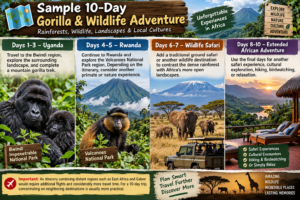
Travel to the Bwindi region, explore the surrounding landscape, and complete a mountain gorilla trek.
Days 4–5 – Rwanda
Continue to Rwanda and explore the Volcanoes National Park region. Depending on the itinerary, consider another primate or nature experience.
Days 6–7 – Wildlife Safari
Add a traditional ground safari or another wildlife destination to contrast the dense rainforest with Africa’s more open landscapes.
Days 8–10 – Extended African Adventure
Use the final days for another safari experience, cultural exploration, hiking, birdwatching, or relaxation.
Important: An itinerary combining distant regions such as East Africa and Gabon would require additional flights and considerably more travel time. For a 10-day trip, concentrating on neighboring destinations is usually more practical.
🌊 Combine Gorilla Trekking With Other Safari Adventures
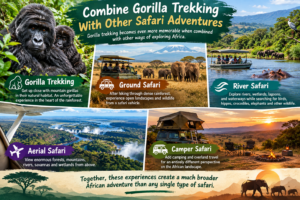
Gorilla trekking becomes even more memorable when combined with other ways of exploring Africa.
🚙 Ground Safari
After hiking through dense rainforest, experience open landscapes and wildlife from a safari vehicle.
🌊 River Safari
Explore rivers, wetlands, lagoons, and waterways while searching for birds, hippos, crocodiles, elephants, and other wildlife.
✈️ Aerial Safari
View enormous forests, mountains, rivers, savannas, and wetlands from above.
🚐 Camper Safari
Add camping and overland travel for an entirely different perspective on the African landscape.
Together, these experiences create a much broader African adventure than any single type of safari.
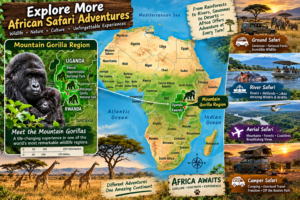
🦁 Explore More African Safari Adventures
Continue exploring Africa through the complete Safari collection:
👉 East Africa River Safaris
👉 East Africa Aerial Safaris
👉 East Africa Ground Safaris
👉 Southern Africa River Safaris
👉 Southern Africa Aerial Safaris
👉 Southern Africa Ground Safaris
👉 West & Central Africa River Safaris
👉 West & Central Africa Aerial Safaris
👉 West & Central Africa Ground Safaris
👉 African Camper Safaris
Once those links are inserted, this section becomes a powerful internal-navigation point connecting the Gorilla article with the rest of your Safari ecosystem.
🌍 Final Thoughts
African gorilla trekking is more than a wildlife sighting.
It combines hiking, rainforest exploration, conservation, photography, and the rare opportunity to observe one of the world’s most remarkable animals in its natural environment.
Uganda and Rwanda provide extraordinary mountain gorilla experiences, while Central Africa introduces travelers to western lowland gorillas and a completely different rainforest environment.
Combine these encounters with river, aerial, ground, and camper safaris, and gorilla trekking becomes another important piece of a much larger African wildlife adventure.
Respect the wildlife, protect the forests, and enjoy every moment of the journey.
Thank you for visiting MyCampingVacationSites! I hope this guide helps you plan an unforgettable outdoor adventure. If you enjoyed this article, feel free to leave a comment below and explore more travel guides, hiking destinations, camping adventures, and outdoor experiences throughout the site. Have a wonderful vacation wherever your next journey takes you!
— Jeffrey
 Explore More Hubs
 Water Adventure Gear
 50 Must-Have Water Adventure Items (Complete Gear Guide) Ultimate Jet Ski Gear & Accessories Guide
  (Top Picks for Speed & Fun) Best River Rafts & Floating Docks
  (Rafting & Floating Essentials)
 Camping & Tent Gear
Tents: Best Tents for Camping & Outdoor Adventures (Top-Rated Picks) Ultimate Glamping Gear: 50 Must-Have Tents & Adventure Essentials  (Luxury Setup Guide)
 RV & Camper Gear
RV Adventure Gear: Must-Have Essentials for Road Trips & Camping (Full Travel Setup) Ultimate Interior RV & Camper Gear Guide  (Comfort & Living Upgrades)
Leave a Reply